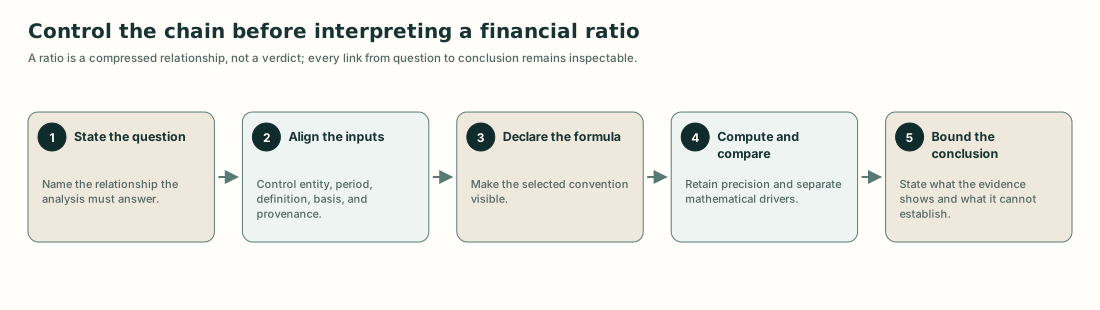
A financial ratio compares amounts, so the choice of amounts matters as much as the division. Income from one reporting period should not be compared with an unrelated company's asset balance or with amounts expressed in different units. Begin by identifying the company, period, and meaning of each input.
Choose the comparison you need
The first lesson checks ratio inputs against the financial statements. It explains why a period's income may need an average balance rather than only the balance at the end of the period.
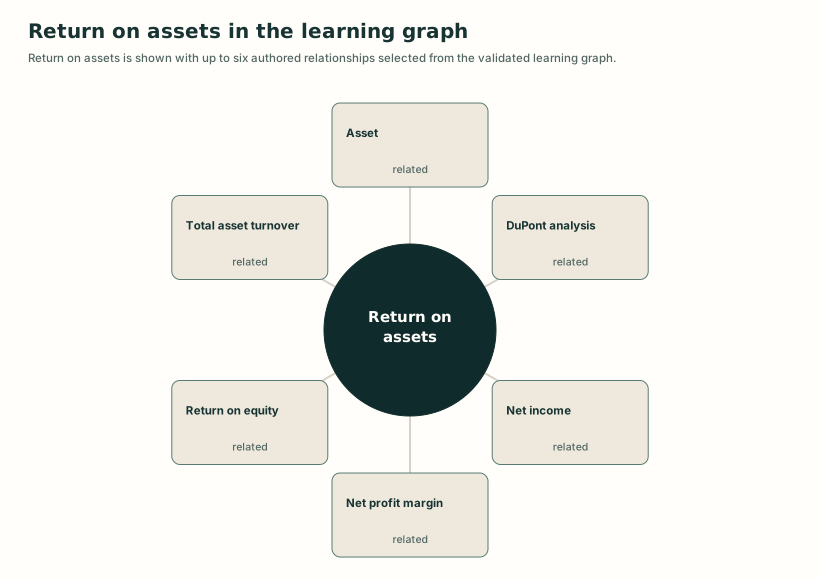
The return-on-assets lesson connects profitability with asset use. Return on assets (ROA) compares income with the assets supporting the business. The lesson states the particular formula used and separates the result into margin and asset turnover. Margin relates income to sales; asset turnover relates sales to the assets used.
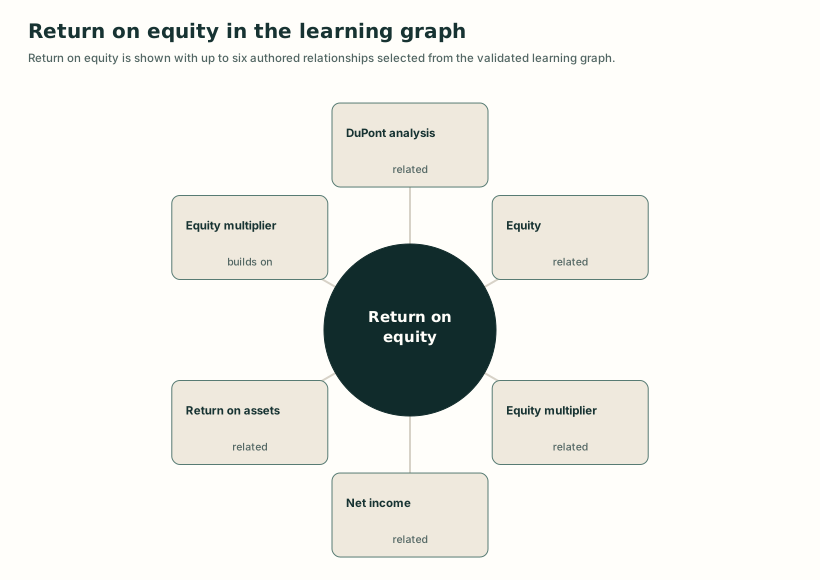
The return-on-equity lesson adds the financing relationship. Return on equity (ROE) compares income with accounting equity. A higher ROE can reflect a smaller equity base relative to assets, not better operating performance. The lesson uses the equity multiplier to describe that relationship and states the balances used in its calculation.
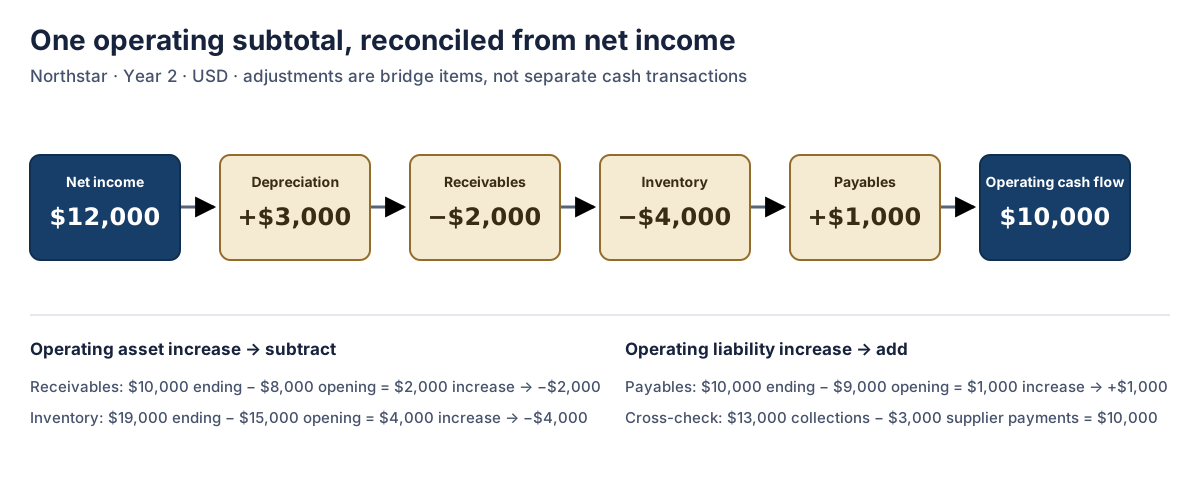
The final lesson compares net income with operating cash flow, cash provided or used by operating activities. It also explains the chosen definition of free cash flow. That label has more than one use, so the calculation must state what has been deducted.
Explain what a ratio does not establish
A calculation can show where two companies' ratios differ without explaining why the businesses differ. A margin difference may require information about prices, costs, or product mix. An equity difference may require information about borrowing, losses, or distributions to owners.
Use the linked lessons to rebuild the calculation before judging the result. The case asks for an explanation of the relationships and the additional evidence needed. It does not turn the highest reported return into an automatic recommendation.
These lessons use stated analytical conventions, not universal ratio definitions prescribed by accounting standards. They introduce return and cash-flow comparisons; more detailed valuation and financing analysis requires additional information.
Module outcomes
Trace each ratio input to its source and check the company, period, units, definition, and suitability of the balances used.
Calculate profit margin, asset turnover, returns on assets and equity, and the stated debt and equity relationships without treating a calculation as proof of its cause.
Reconcile the statements, changes in equity, return calculations, and operating cash flow as separate checks.
Explain the accounting and business conclusions separately, state the free-cash-flow formula used, and identify evidence still needed to assess risk and compare performance.
Learning sequence
Follow the dependency order, or open the lesson you need.
Capstone and summative assessment
Use the cumulative case first, then test each transfer without exposing answer keys.