Concept
Absolute advantage
The ability of one producer to create more of a specified output with the same inputs, or the same output with fewer inputs, than another producer under comparable conditions.
Find a definition, an example, and links to related lessons and practice.
Try a broader title, topic, or phrase.
The ability of one producer to create more of a specified output with the same inputs, or the same output with fewer inputs, than another producer under comparable conditions.
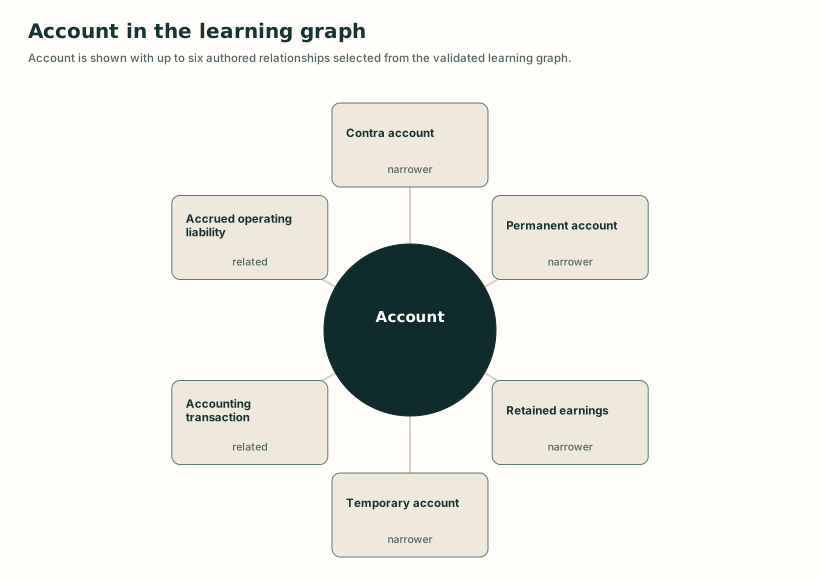
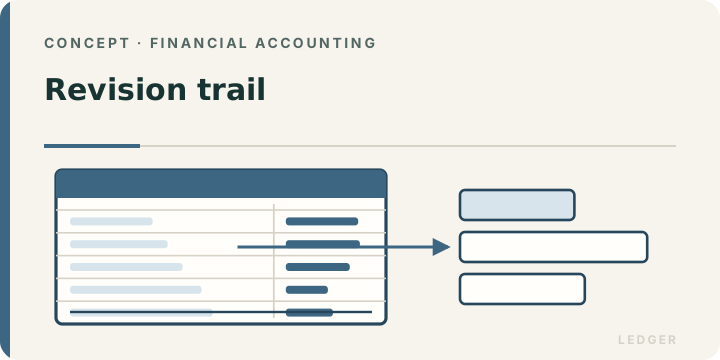
A record of the increases, decreases, and balance for a specific reporting item, such as Cash, Accounts Payable, or Service Revenue.
The entity identified as obtaining control for acquisition accounting after considering the applicable control model and combination facts, which may differ from the legal issuer or…
A change in an accounting principle, an accounting estimate, or the reporting entity; correction of an error in previously issued statements is a separate route.
A controlled label that distinguishes a verified conclusion from an estimate dependent conclusion, a viable alternative, and an unresolved question.
The use of the same accounting methods for the same items, either across periods within an entity or across entities in one period.
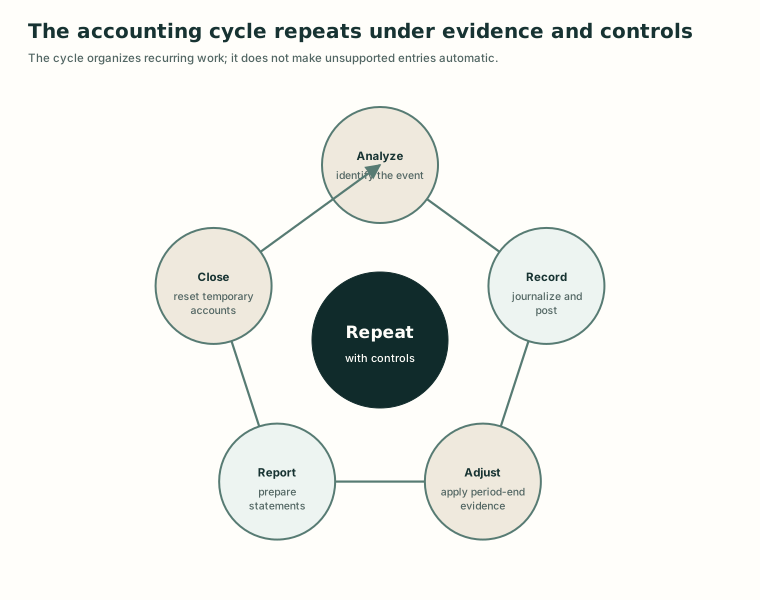
The recurring sequence through which an entity identifies and analyzes events, records and posts entries, checks and adjusts balances, prepares financial statements, and closes or…
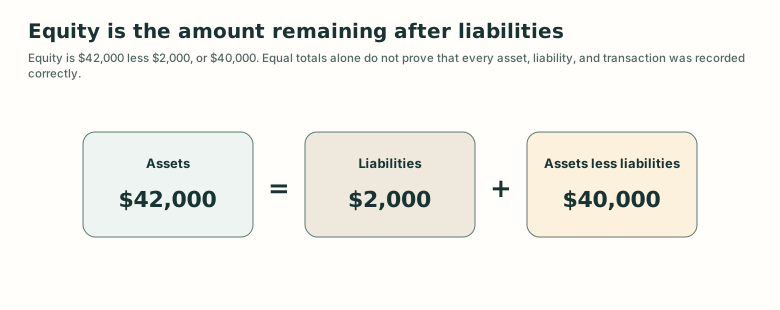
The relationship Assets = Liabilities + Equity, expressing that an entity's recognized resources are financed by creditor claims and the residual claims represented in equity.
A reported or input amount determined using current information, assumptions, and judgment when the relevant economic characteristic cannot be measured with complete precision at the…
Intentional deception involving accounting records, estimates, statements, disclosures, or controls for the purpose of causing another party to rely on materially false or misleading…
A note explanation of the recognition, measurement, presentation, consolidation, or other accounting principles and methods necessary for a reader to understand the entity's financial…
An entity's documented representation of supported economic effects in its accounting system and related records.
A reviewable professional record that defines a reporting issue, establishes material facts and authority, analyzes alternatives and uncertainty, states a supported conclusion, and…
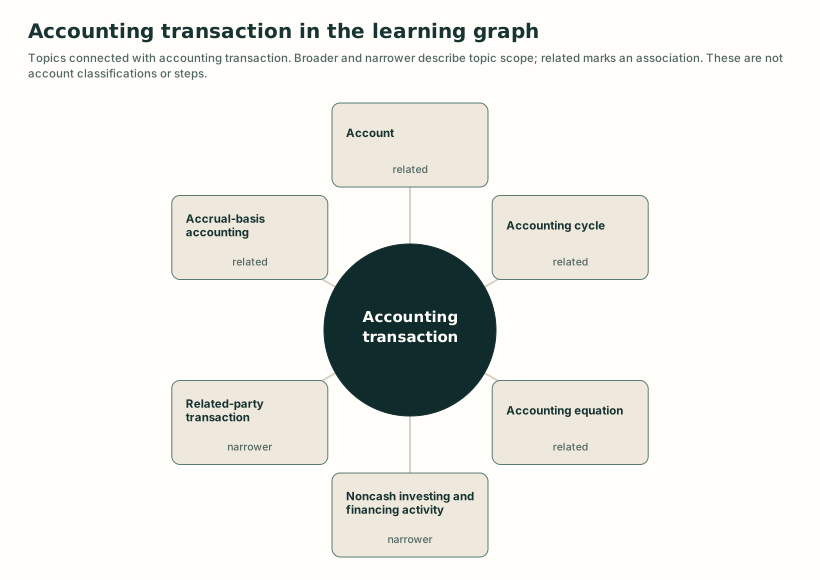
An economic event or condition that meets the applicable recognition requirements and changes one or more financial statement elements.
The final cross functional control that reconciles classification, authority, calculations, statements, disclosures, digital reporting, audit, filing, tax, legal, and internal control…
The note information that explains a supported accounting change's nature, reason, method, affected periods and line items, opening equity effect, per share effects, and any applicable…
The date on which an entity first applies new accounting requirements under the pronouncement's effective date and early adoption provisions.
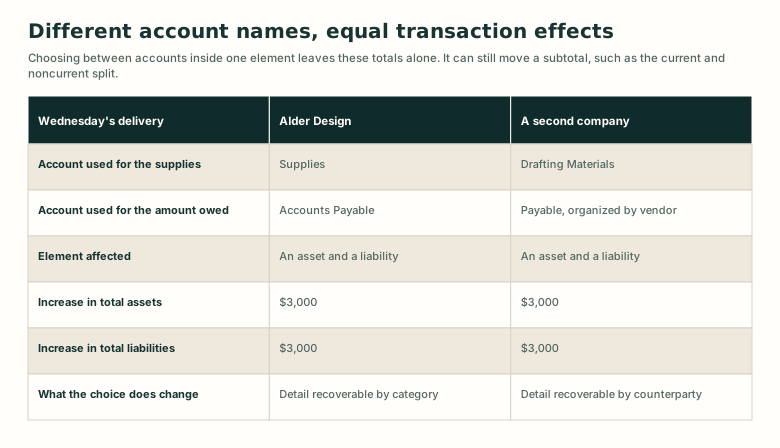
A liability account representing amounts owed to suppliers for goods or services received on ordinary credit terms before payment.
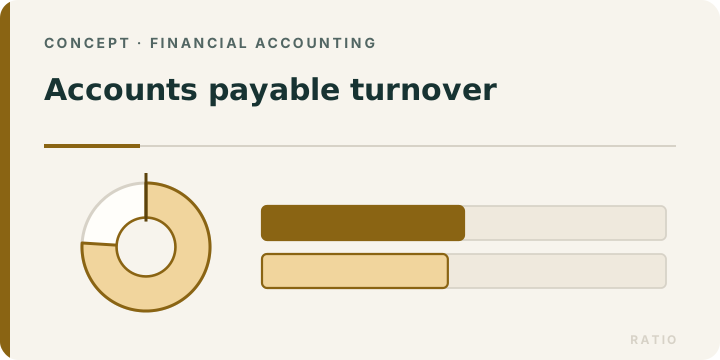
A period ratio that divides a declared supplier credit purchase flow by a representative average trade payable balance to describe settlement cycle frequency under the stated convention.
An asset account for unconditional rights to payment from customers. Only the passage of time remains before payment is due; the right does not depend on further performance.
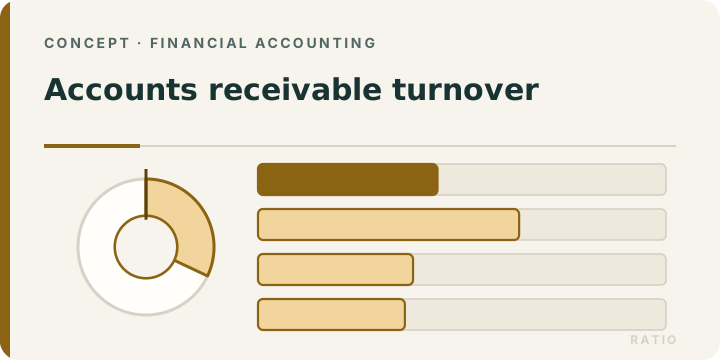
A period ratio that divides a declared receivable creating sales flow, preferably net credit sales, by a representative average trade receivable balance to describe collection cycle…
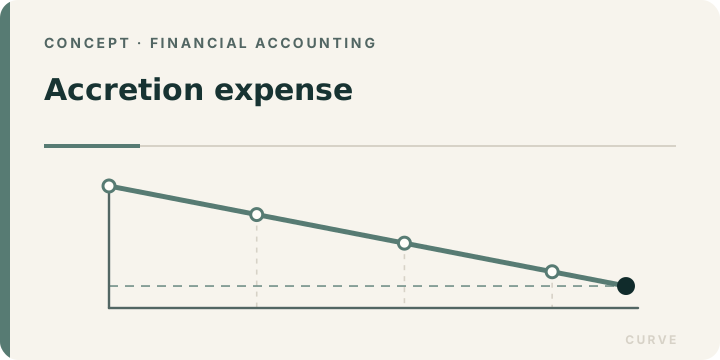
The increase in the carrying amount of an asset retirement obligation from the passage of time, computed by applying the credit adjusted risk free rate used at initial measurement to the…
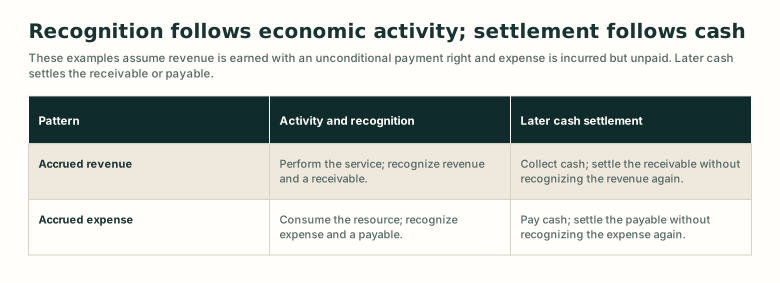
An accounting basis that recognizes the effects of transactions and other events in the periods in which the relevant economic activity occurs, even when the related cash receipt or…
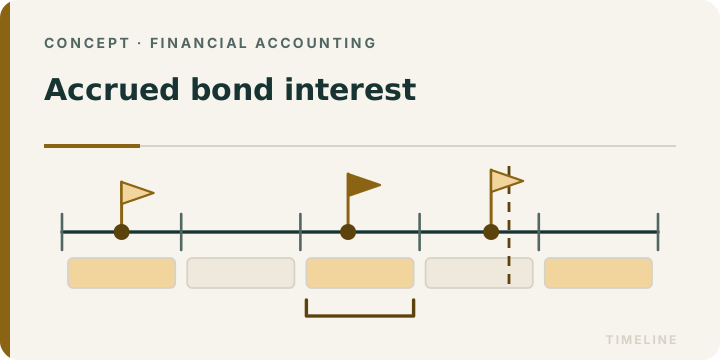
Interest attributable to the issuer's elapsed period between contractual payment dates, recorded separately from principal, unamortized discount or premium, and issuance costs.
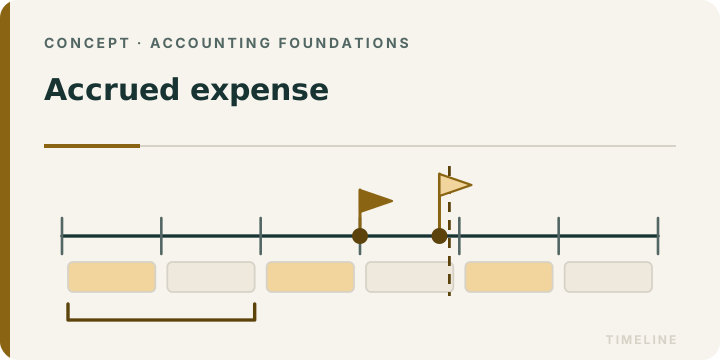
An expense recognized for resources or services used in the current period before the related cash payment, with a corresponding liability for the unsettled amount.
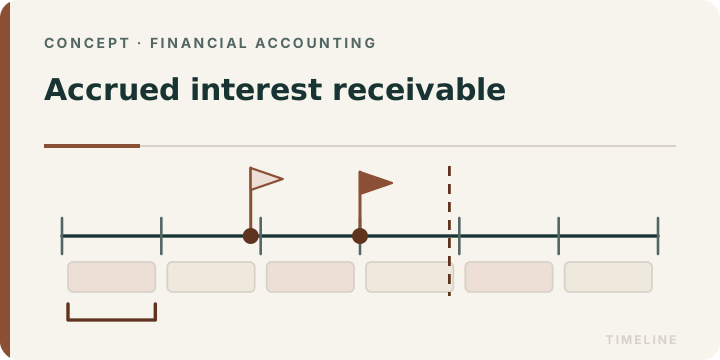
Interest earned under a financial instrument through the reporting date but not yet received, controlled separately when its presentation, nonaccrual, writeoff, or credit loss policy…
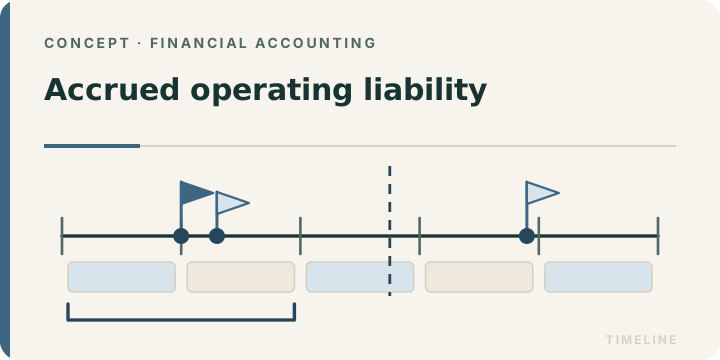
A present obligation for goods or services already received in operations whose invoice, payment, or final measurement follows the reporting date.
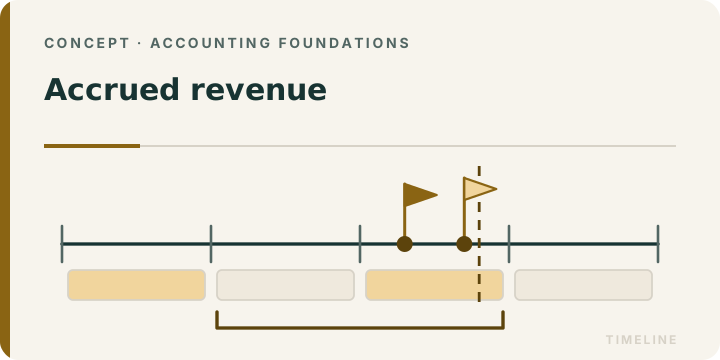
Revenue recognized for performance occurring in the current period before the related cash is collected and, in a basic fact pattern, before the customer is billed, with a corresponding…
The actuarial present value of pension benefits attributed to service to date using current compensation levels.
A credit normal contra asset that accumulates depreciation recognized on a related depreciable asset through the reporting date and is deducted from the related gross carrying amount in…
The cumulative equity balance of other comprehensive income components after their recognized period changes, tax effects, reclassifications, and other required adjustments.
The portion of the expected postretirement benefit obligation attributed to employee service through the measurement date.
An identifiable research and development project acquired in a transaction for which the applicable business combination or asset acquisition model determines initial and subsequent…
A controlled acquisition date schedule connecting consideration, previously held interests, noncontrolling interests, identifiable assets, assumed liabilities, measurement evidence, and…
An allocation pattern that charges depreciation in proportion to the asset's measured use during the period rather than to the passage of time.
The economic return that reconciles opening and ending plan assets after contributions, benefit payments, purchases, settlements, and other controlled cash flows.
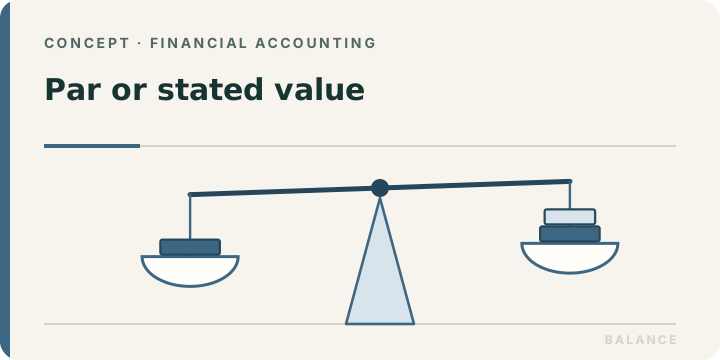
Contributed equity recognized beyond par or stated capital or from another specifically identified equity transaction.
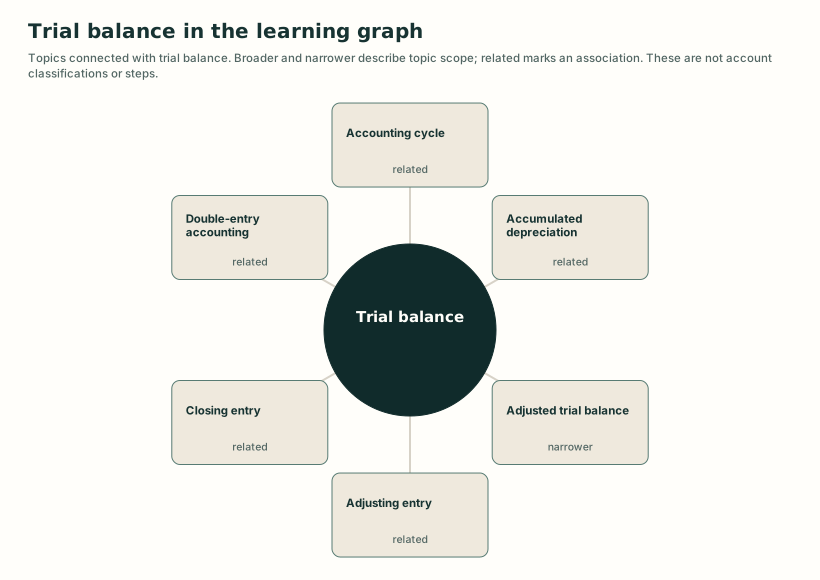
A trial balance drawn after the period's adjusting entries have been posted, listing the account balances from which the financial statements are prepared.
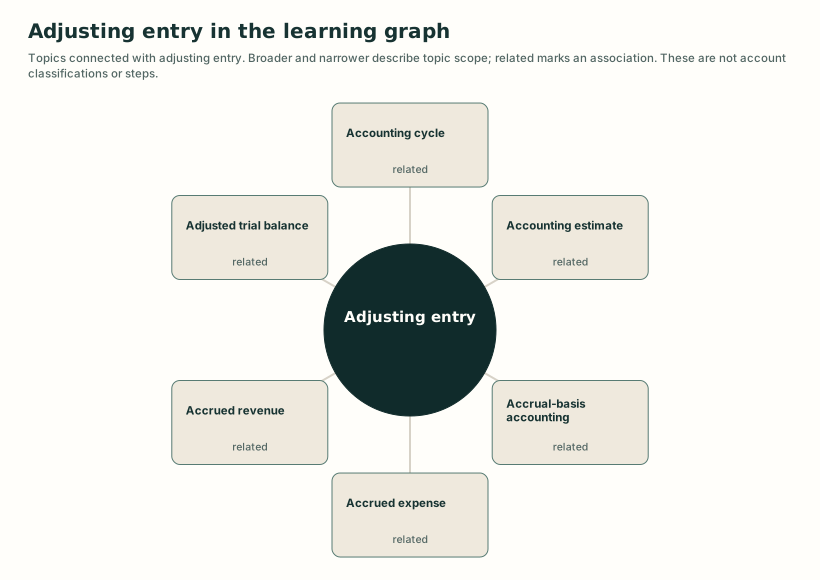
A journal entry recorded as part of period end reporting to bring account balances up to date for economic activity, estimates, or classifications not fully reflected in the unadjusted…
A condition in which the selected mix or quantity maximizes a stated surplus or objective because the marginal value of the last unit is aligned with its marginal opportunity cost under…
A valuation account deducted from the financial asset's amortized cost basis to present the amount expected to be collected, subject to the applicable measurement model.
A supported use of R&D materials, equipment, or facilities in another project or operating activity beyond the current research and development effort.
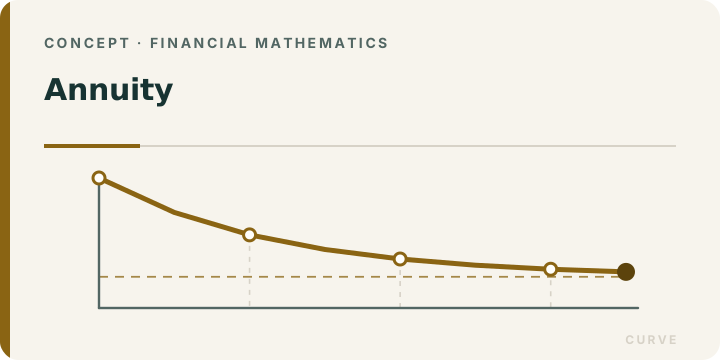
A finite sequence of equal cash flows separated by equal periods, with a declared first payment date and valuation date.
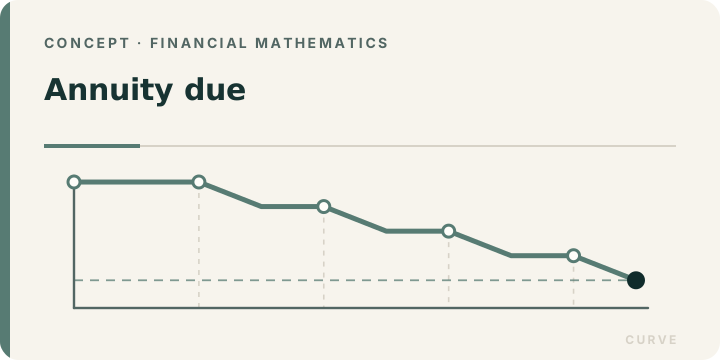
An annuity whose equal payments occur at the beginning of each equal period, including one payment on the valuation date.
The exclusion of a potential common share effect when its inclusion would increase EPS or reduce loss per share under the applicable control number test.
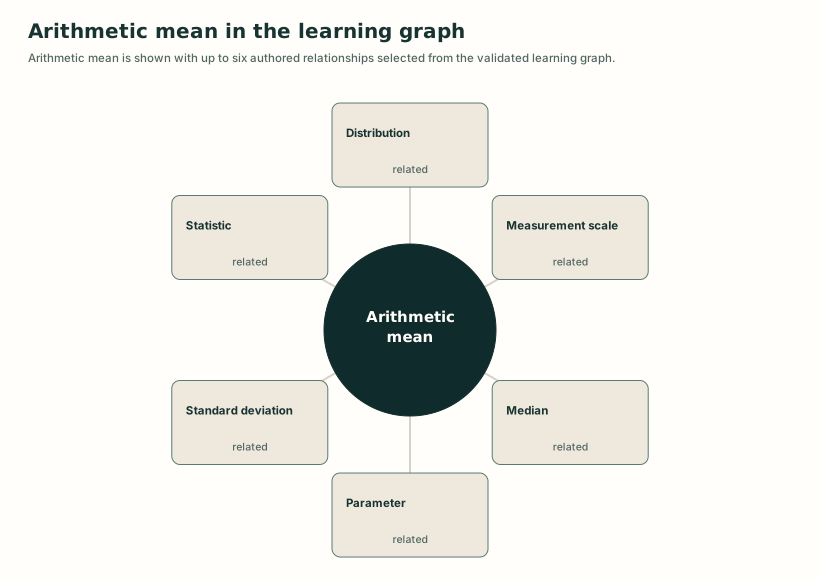
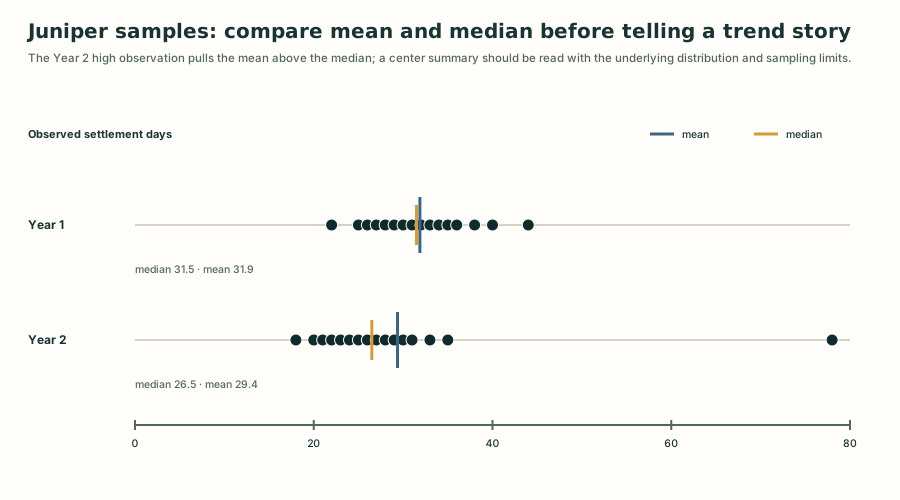
A measure of center equal to the sum of quantitative observations divided by their count, with every observation contributing to the result.
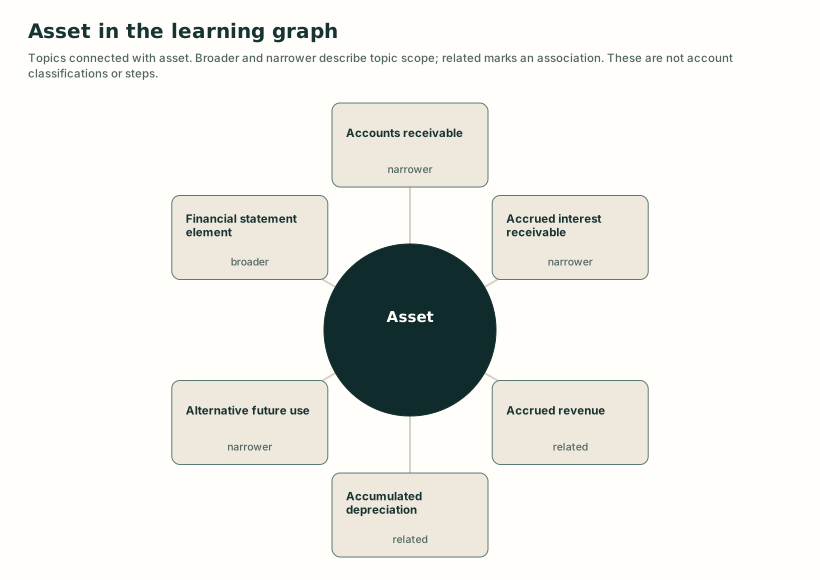
A present right of an entity to an economic benefit; whether that right is recognized and how it is measured depend on the applicable reporting requirements.
The supported amount initially assigned to an acquired long lived asset, including consideration and qualifying directly attributable costs required to bring the asset to the location…
The supported removal of an asset and its related cumulative balances from an entity's accounts when a sale or other qualifying disposition ends the entity's recognized asset position…
The amount added to a tangible long lived asset when a qualifying asset retirement obligation is initially recognized, then allocated over the related service period or productive units.
A liability for a legal obligation associated with the retirement of a tangible long lived asset when the recognition and measurement conditions of the applicable guidance are met.
An estimated obligation for qualifying warranty coverage that assures a sold product complies with agreed specifications rather than providing a distinct additional service.
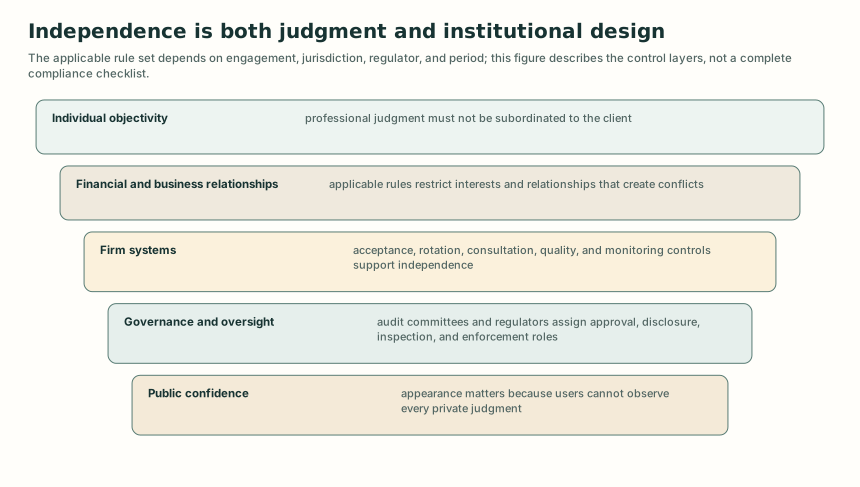
The auditor's freedom from relationships, interests, services, and influences that impair—or would reasonably appear to impair—objective judgment in an assurance engagement under the…
Accounting requirements and interpretations that govern an entity's financial reporting under the applicable reporting system and effective dates.
The separately supported credit component of an available for sale debt security's decline, recognized through the applicable allowance and earnings while qualifying noncredit change…
A debt security classified in the available for sale lane and reported at fair value with applicable credit effects in earnings and qualifying noncredit changes in other comprehensive…
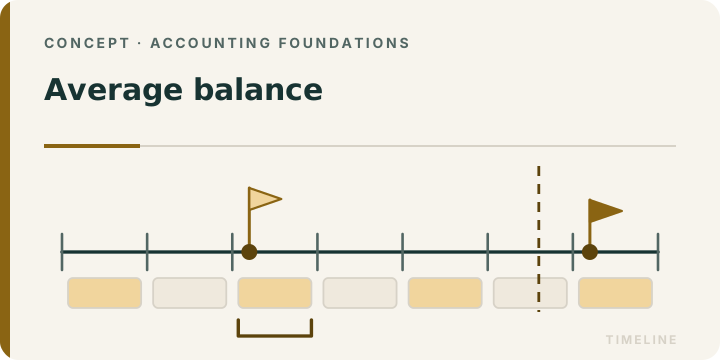
A stated approximation of the stock of an account available during a period, often computed as the arithmetic mean of aligned beginning and ending balances when more representative…
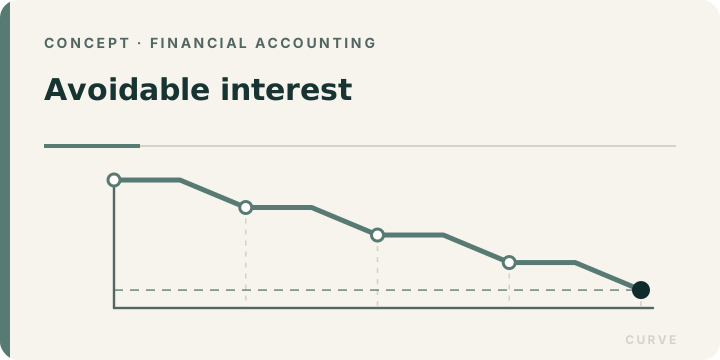
The interest cost that theoretically could have been avoided if qualifying asset expenditures had not been made, subject to the entity's actual interest cost and the supported…
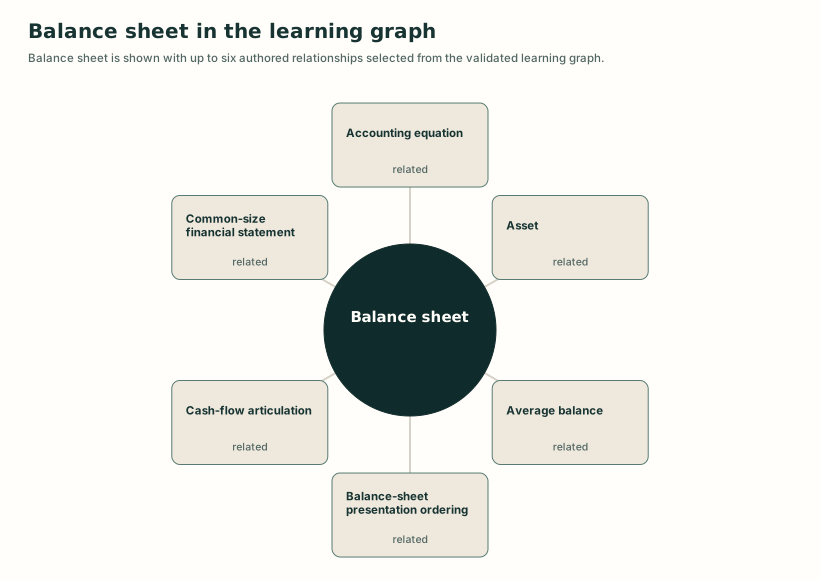
A financial statement that presents an entity's recognized assets, liabilities, and equity at a specified date under the applicable reporting framework.
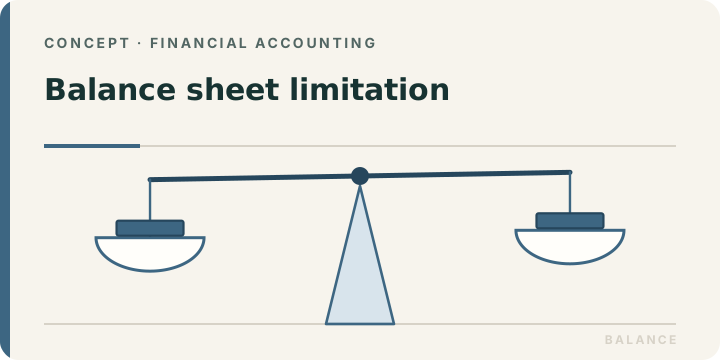
A constraint on what a reported balance sheet can show, arising from resources and obligations it does not recognize, from amounts measured on bases other than current value, and from…
The stated sequencing of classified balance sheet line items and subtotals, selected under the applicable presentation framework and entity facts without changing recognition,…
A schedule that explains the difference between the cash balance in an entity's ledger and the balance on its bank statement at the same date, and that identifies which differences…
A fee a bank deducts directly from an entity's account for account maintenance or transaction handling, which the entity learns of from the bank statement and records as an expense when…
The gain recognized when the fair value of identifiable net assets acquired in a business combination exceeds the consideration transferred, recorded in earnings after the acquirer…
Conditions that make timely, likely, or sufficient entry or expansion by potential rivals difficult relative to incumbent participation in a defined market and period.
Income available to common shareholders divided by weighted average common shares outstanding for the period, with two class allocation when required.
The legally and financially distinct benefit plan whose own statements and assets must not be confused with the sponsor's Topic 715 employer accounting.
The amount by which a bond's face amount exceeds its issue price, incorporated into the debt's carrying amount and amortized through effective interest rather than treated as a separate…
The contractual principal amount used to determine stated cash interest and the amount due at maturity, subject to the instrument's complete terms.
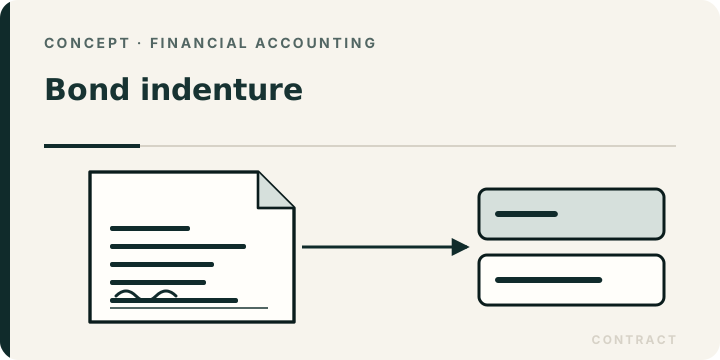
The legal agreement governing a bond issue, including payment terms, covenants, collateral, trustee provisions, and rights or options that can affect accounting analysis.
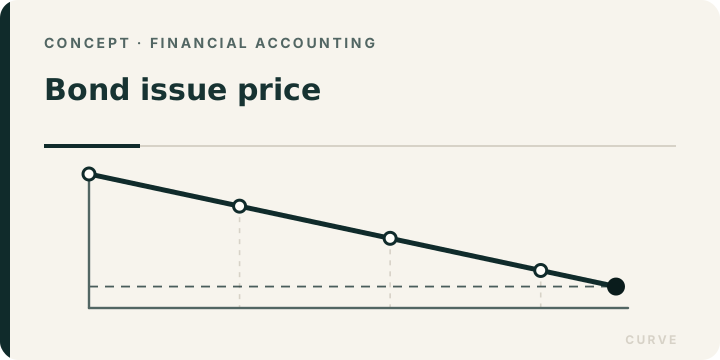
The present value at issuance of the bond's supplied contractual cash flows discounted at the supplied effective market yield, before separately identified issuance costs unless guidance…
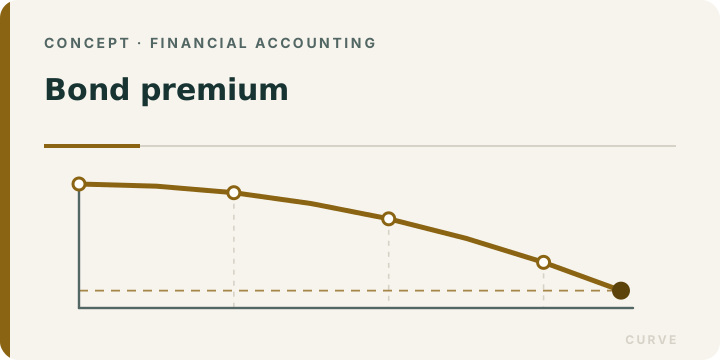
The amount by which a bond's issue price exceeds its face amount, incorporated into the debt's carrying amount and amortized through effective interest.
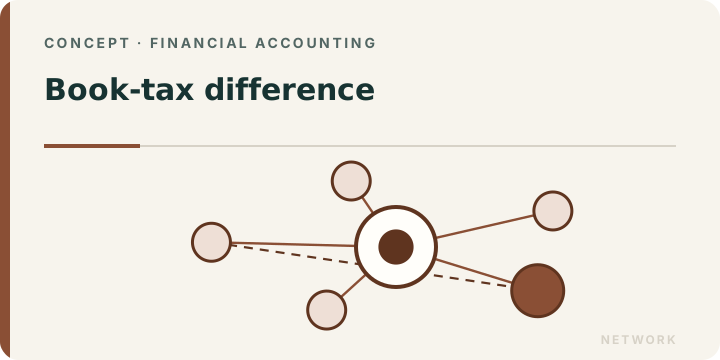
A difference between financial reporting and tax amounts that must be classified by current effect, future reversal, permanence, jurisdiction, and statement location.
A property, plant, and equipment account holding the cost of a structure an entity uses in operations, including the costs of acquiring or constructing it and readying it for its…
Broad, recurring but irregular expansions and contractions in aggregate economic activity, identified from multiple indicators over time.
The legal structure under which a business operates, such as a sole proprietorship, partnership, corporation, or limited liability company.
An identifiable intangible asset recognized in a transaction stipulated to be a business combination and measured from supplied acquisition date evidence under the applicable acquisition…
The investing cash effect of cash consideration transferred in a supported business combination after separately deducting cash and cash equivalents acquired, while noncash consideration…
The cash effect of disposing of a business or component after separating gross cash proceeds, cash and cash equivalents transferred with the disposed operation, transaction costs, and…
The scope determination that separates an acquired business accounted for under the acquisition method from an asset acquisition and other transactions with different recognition and…
The amount at which an asset or liability is recognized in the statement of financial position after applicable accumulated allocations, allowances, or other measurement adjustments at…
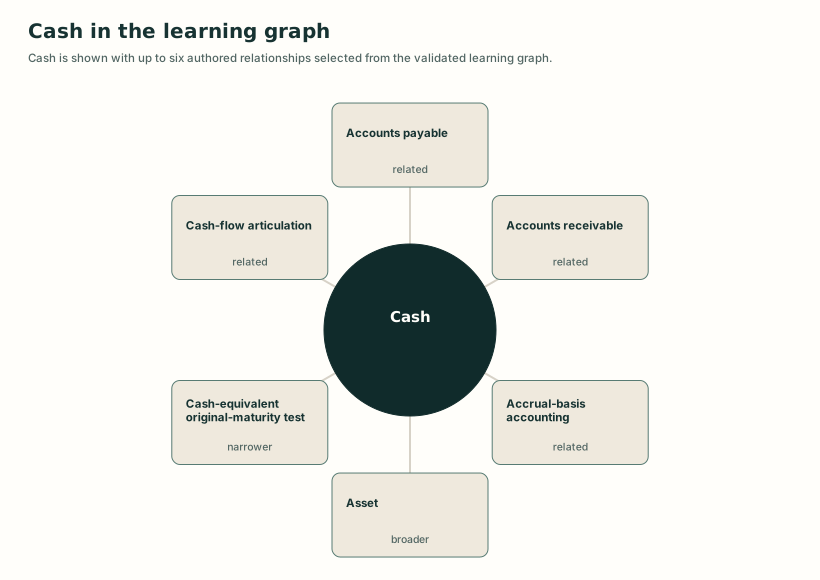
An asset consisting of currency and deposits available for withdrawal on demand, subject to the reporting entity's rights, restrictions, and the applicable accounting framework.
A basis of accounting that records revenue when cash is received and expense when cash is paid, without regard to the period in which the underlying performance or benefit occurred.
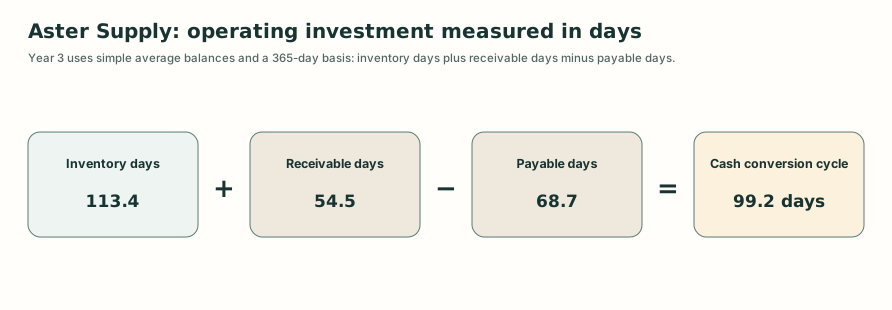
A linked operating efficiency measure that adds declared Inventory and receivable days and subtracts declared payable days to estimate the interval for which operating resources are…
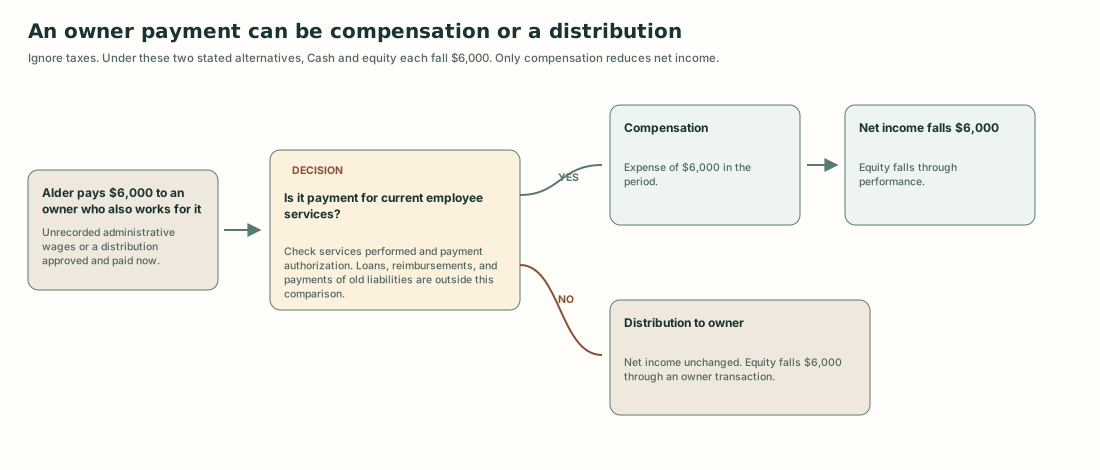
A distribution of cash to owners that follows supported declaration, record, and payment dates and class priorities.
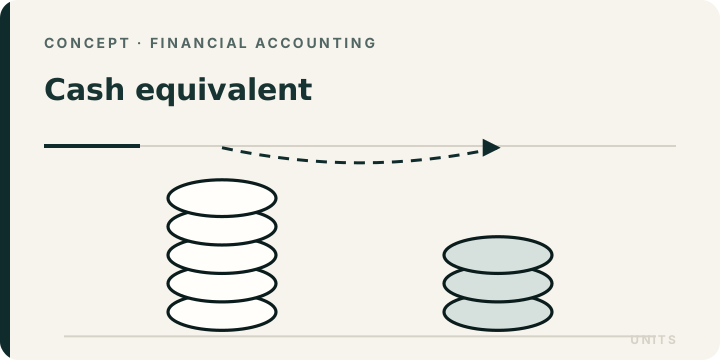
A short term, highly liquid investment readily convertible to a known amount of cash and so near maturity that it presents insignificant risk of change in value from interest rate movement.
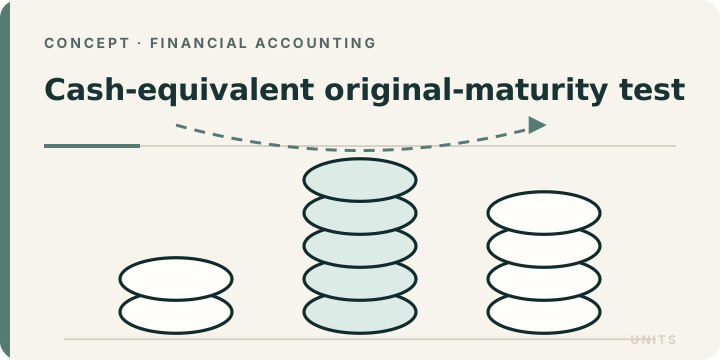
The policy and instrument fact analysis that tests a highly liquid investment's maturity from its acquisition date, rather than its remaining maturity at a later reporting date, within…
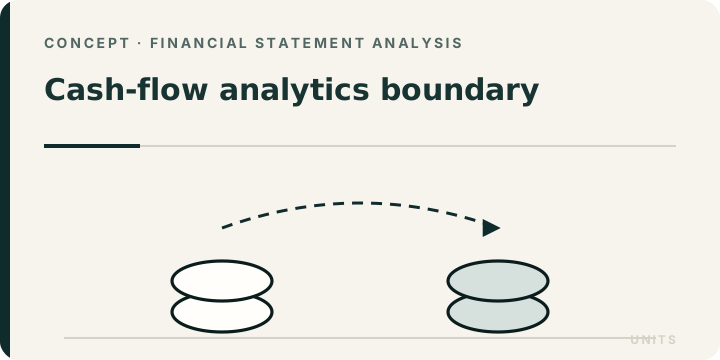
The limit on conclusions drawn from cash flow amounts and ratios when classification policy, timing, seasonality, acquisitions, noncash activity, restrictions, financing access, and…
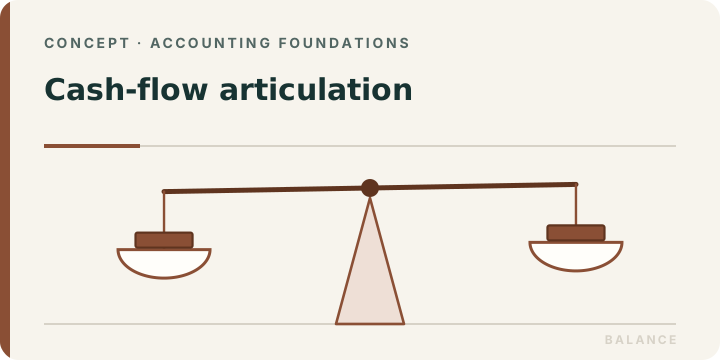
The linkage by which classified operating, investing, and financing cash flows reconcile the beginning cash related total to the corresponding ending total reported with the financial…
The mapping of a completed cash flow statement and its disclosures to concepts, contexts, units, signs, calculation relationships, and dimensions that preserve section and reconciliation…
The control that ties cash flow statement lines to required cash population, noncash, cash interest, cash tax, acquisition, disposal, restriction, policy, and other applicable…
A qualifying hedge model that initially records specified derivative effects in OCI and later reclassifies or basis adjusts them when the hedged forecast cash flows affect earnings or a…
The Topic 230 classification step used for a mixed receipt or payment that has aspects of more than one class and cannot be separated into identifiable sources or uses after specific…
The cross functional release gate that requires the cash population, transaction ledger, operating methods, section classifications, foreign currency effect, noncash activity, notes,…
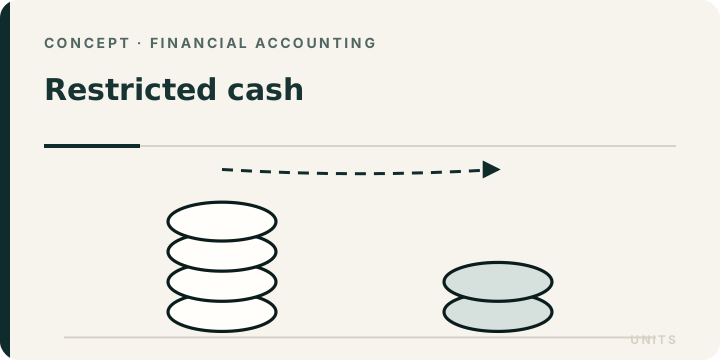
The entity , period , currency , and policy specific total of cash, cash equivalents, and applicable amounts generally described as restricted cash or restricted cash equivalents whose…
A dated separation of current Topic 230 authority, effective amendments, historical architecture, research projects, tentative decisions, proposals, and entity specific adoption status.
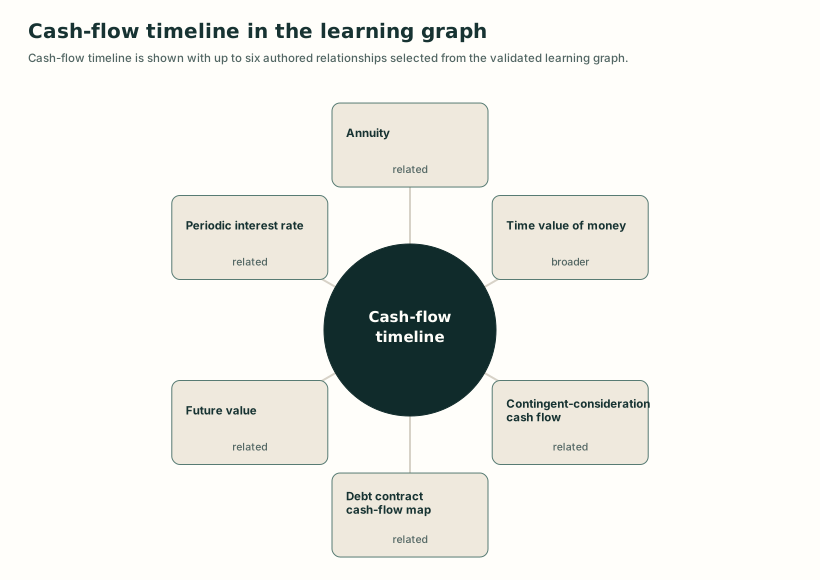
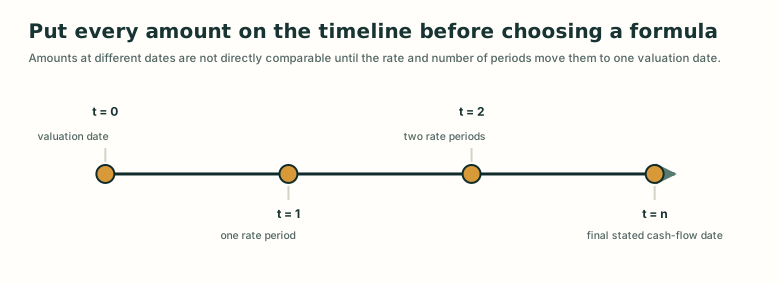
An ordered representation that places each cash amount at a stated date or period boundary and records the valuation date, interval convention, and direction before time value…
A source backed schedule of gross cash receipts and payments that retains date, counterparty, account, transaction purpose, currency, section conclusion, specialized guidance, and…
A revision of a reported amount or estimation input caused by new information, new experience, or later developments rather than by correcting a prior misuse or omission of information…
A change from one generally accepted accounting principle to another, or a change in the method of applying an accepted principle, for similar events or transactions.
A change in estimate whose effect cannot be separated from a related change in accounting principle, such as a supported change in depreciation method for a long lived nonfinancial asset.
A change that makes the financial statements, in effect, those of a different reporting entity and is presented retrospectively for comparative periods under the supported facts.
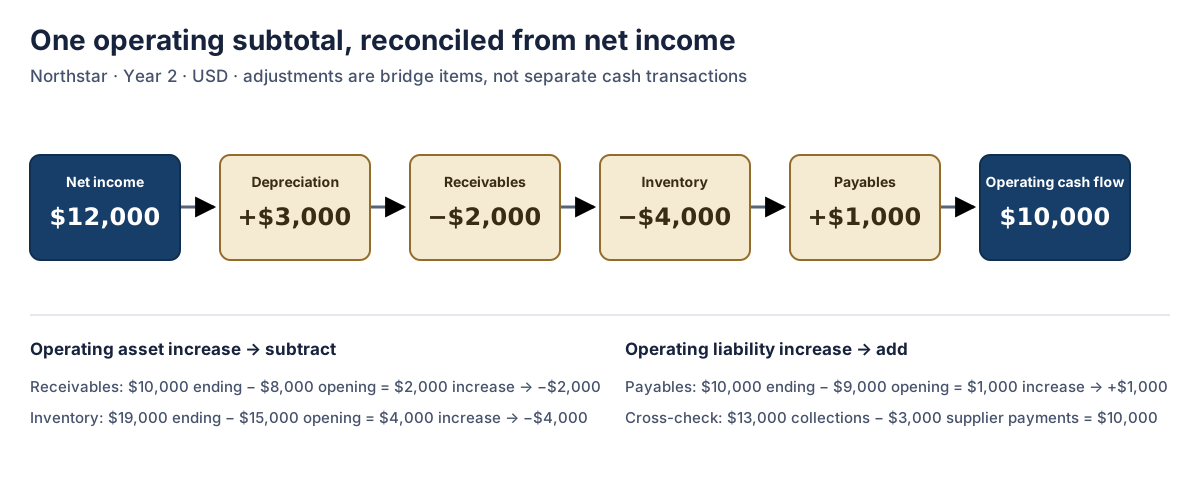
Period changes in relevant operating asset and liability balances that, after controlling for scope and noncash movements, help reconcile accrual basis net income with operating cash flow.
The function that allocates resources to and assesses the performance of an entity's operating segments under Topic 280, performed by an individual or group identified from actual…
A selection among feasible alternatives by an individual, organization, or institution under stated constraints, objectives, information, and decision rights.
A financial statement that organizes recognized items into decision relevant categories, line items, and subtotals under applicable presentation criteria while preserving the statement's…
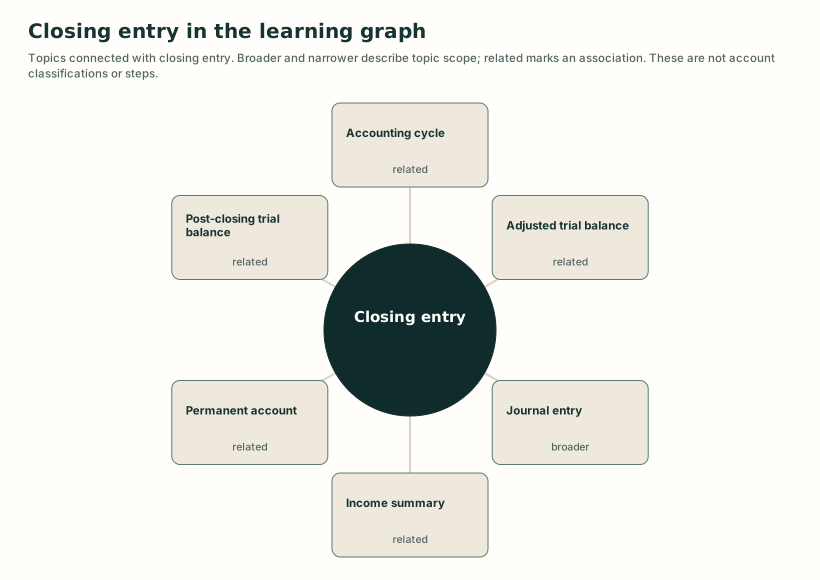
A journal entry that brings a temporary account to zero and transfers its balance to equity, directly or through an intermediate closing account.
A customer cost of implementing a hosting or cloud arrangement whose accounting depends first on whether the arrangement contains a software license or is a service contract and then on…
A financial asset whose repayment is expected to be provided substantially through operation or sale of collateral and whose expected loss measurement follows the applicable collateral…
Information in the notes about an agreement to take a future action, including the nature, amount, timing, and other details required by applicable accounting guidance.
An equity class ownership interest whose holders ordinarily receive the residual rights specified by the instrument and applicable law after senior claims.
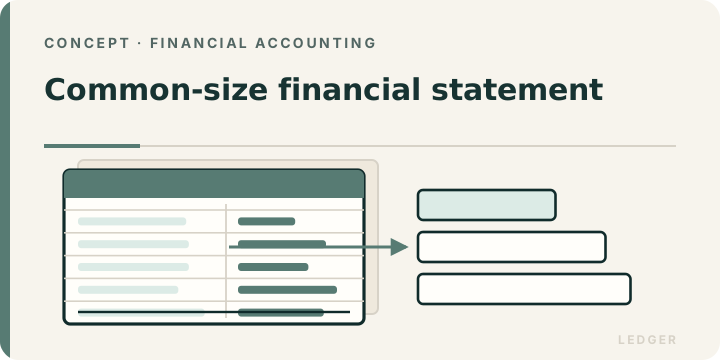
A financial statement presentation that expresses each selected line as a proportion of a declared statement specific base, commonly net sales for an income statement and total assets…
The quality that helps users identify and understand similarities and differences among reported items, including across companies and periods.
The ability of one producer to perform an activity at a lower opportunity cost than another producer, even when that producer lacks an absolute productivity advantage.
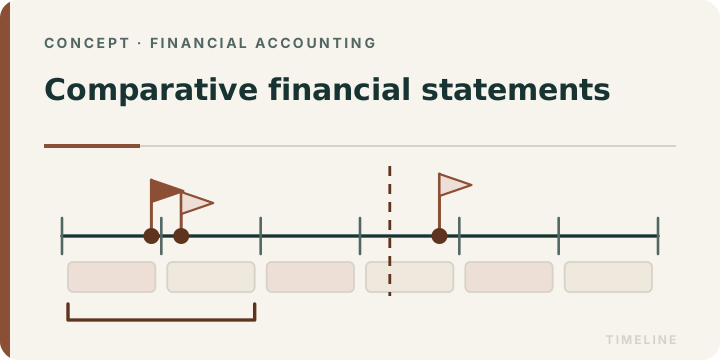
Financial statements that present corresponding amounts for two or more periods or entities under an identified comparison basis so changes and composition can be analyzed without losing…
A period by period reconciliation from amounts as reported to corrected amounts across every affected statement, tax layer, per share amount, and opening equity balance.
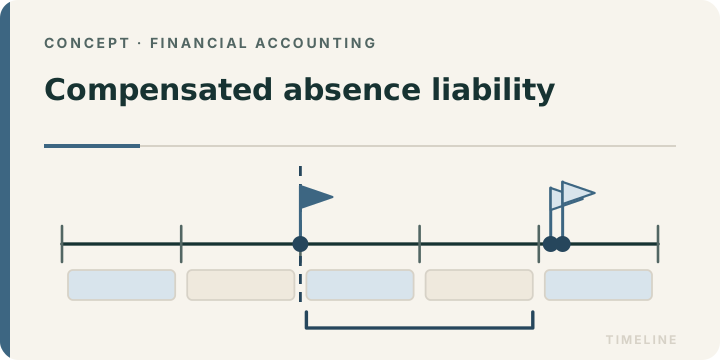
An obligation for qualifying paid absences attributable to employee service already rendered, measured under the plan's vesting or accumulation and payment facts.
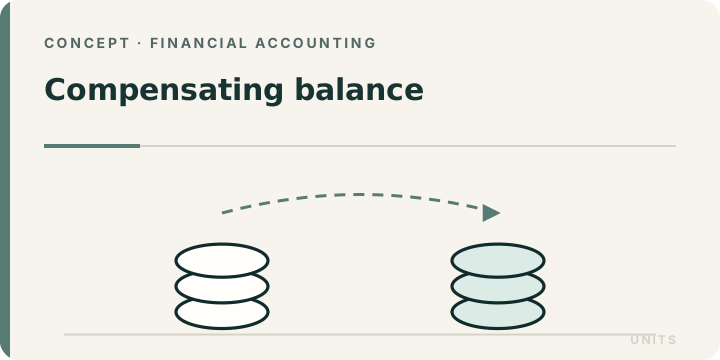
A minimum cash balance a borrower agrees to maintain with a lender as a condition of a credit arrangement, which reduces cash actually available and raises the effective cost of the…
A good related to another such that, under a stated market relationship, a rise in one good's price is associated with lower quantity demanded of the other, all else held as specified.
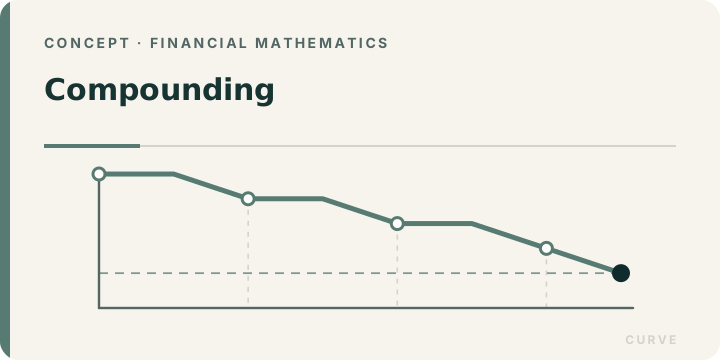
An accumulation process in which each period's rate applies to the opening balance for that period, including prior accumulated amounts that remain in the base.
The change in equity of a business entity during a period from transactions and other events and circumstances from nonowner sources, presented as net income plus other comprehensive…
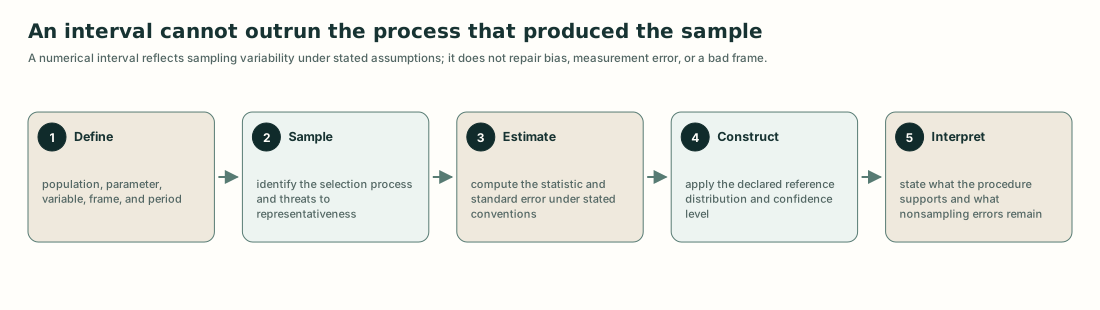
An interval produced by a stated sampling procedure whose confidence level describes the procedure's long run coverage of a fixed population parameter under its conditions.
Goods delivered to another party for sale while the consignor retains ownership until the agreement's sale or other transfer condition occurs.
The determination of which Topic 810 model and scope provisions apply before evaluating whether a reporting entity consolidates a legal entity.
An entry made in the reporting worksheet to remove the parent's investment against subsidiary equity and eliminate internal balances or transactions from the consolidated view.
A statistical index tracking price change for a defined basket of consumer goods and services, population, geography, and measurement convention.
The modeled difference between buyers' willingness to pay and the amount they pay for units traded, aggregated over those units under stated demand, allocation, price, and market…
Measurement of a recognized loss contingency using the best estimate within a supported range, or the minimum only when no amount within that range is a better estimate.
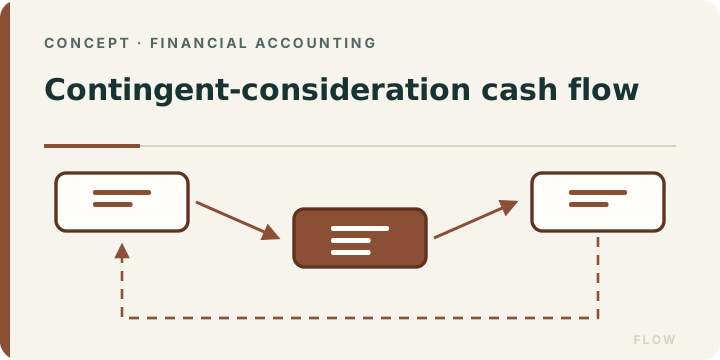
The acquirer's classification of cash paid to settle a business combination contingent consideration liability based on settlement timing, the acquisition date recognized liability…
Common shares issuable after specified conditions are satisfied and included in EPS under Topic 260's contingent share tests.
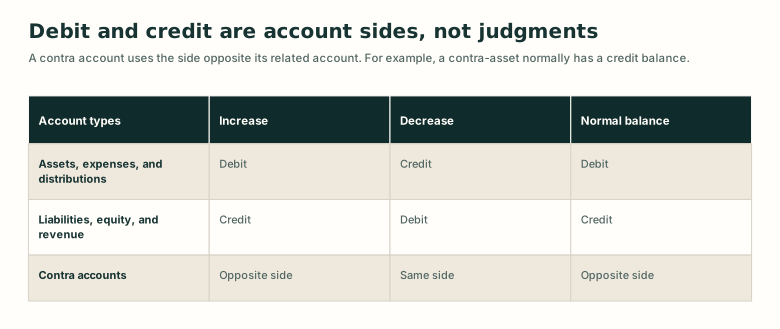
An account linked to a related account or class that ordinarily carries the opposite normal balance and is used to present or analyze an offset without erasing the related gross amount…
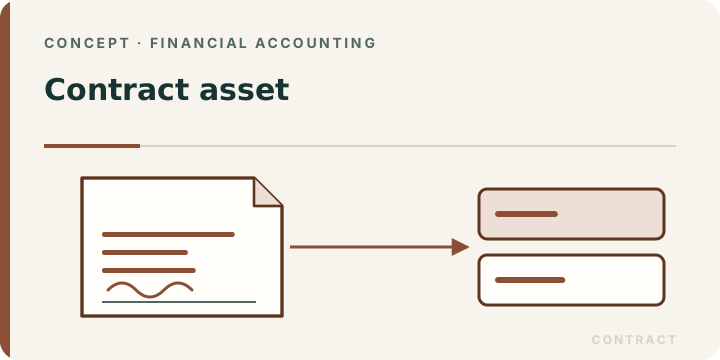
An entity's right to consideration for transferred goods or services when that right is conditional on something other than only the passage of time.
The treatment of two or more contracts entered into at or near the same time with the same customer or related parties as one contract when the specified Topic 606 relationship criteria…
A qualifying incremental cost of obtaining or eligible cost to fulfill a customer contract that is expected to be recovered and is subsequently amortized and tested for impairment.
A controlled extraction of settlement terms, underlyings, notionals, optionality, net settlement features, dates, currencies, counterparties, collateral, and embedded provisions from a…
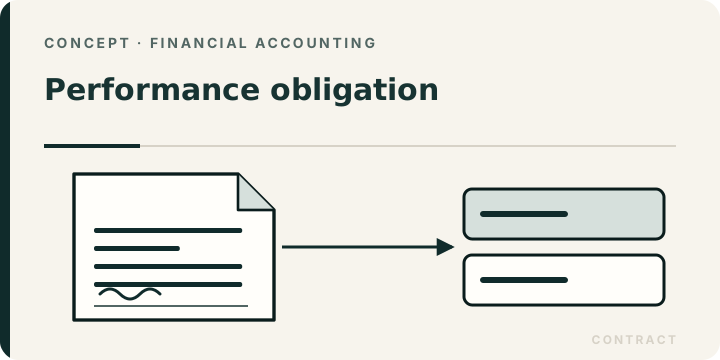
An obligation to transfer goods or services to a customer for which the entity has received consideration or consideration is due from the customer.
An approved change in contract scope, price, or both, accounted for as a separate contract, prospectively as termination and creation, or through a cumulative catch up depending on…
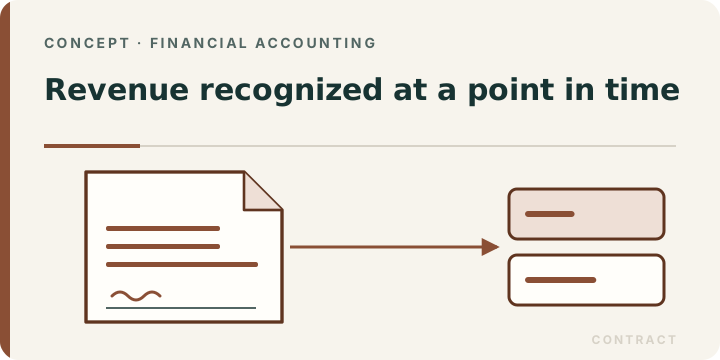
An agreement within Topic 606 between parties that creates enforceable rights and obligations and satisfies the model's contract criteria for an exchange with a customer.
An asset received in a nonreciprocal transfer, requiring the recipient to identify the transferor relationship, entity type, restrictions, measurement evidence, and corresponding credit…
The allocation of decision rights, oversight duties, incentives, information flows, and accountability among owners, boards, management, and other parties involved in directing and…
The classification of settlement proceeds from corporate or bank owned life insurance policies as investing inflows and the entity's supported classification policy for related premium…
The journal entry that brings current ledger balances to their supported corrected amounts without duplicating effects already recognized or substituted in comparative presentation.
The constraint that the benefits of financial information should justify the costs of preparing, checking, distributing, and using it.
The recognized cost of inventory transferred out in connection with goods sold during a reporting period under the applicable accounting policies and scope.
An error whose income statement effect reverses in one or more later periods if left uncorrected, while each affected period remains misstated until the error is resolved.
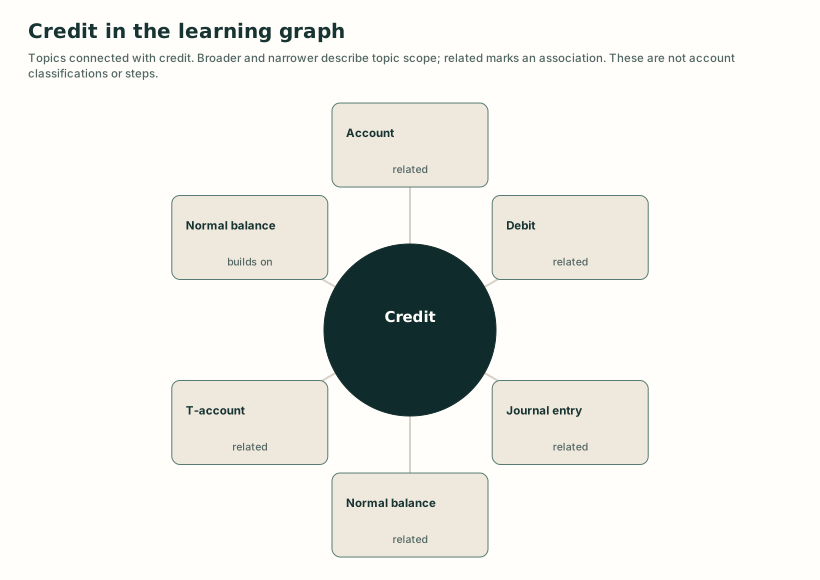
An amount entered on the right side of an account or journal entry; it increases credit normal accounts and decreases debit normal accounts.
Qualifying goods or services received during a period that create ordinary trade payables rather than being settled in cash at receipt, under the declared analytical scope.
The period effect needed, together with writeoffs, recoveries, and other changes, to move the allowance from its opening amount to the current required estimate.
A measure or attribute used to communicate a financial asset's credit quality, controlled for definition, source, date, class, update policy, and relation to expected loss.
A creditor's analysis of changed receivable terms, including whether a new asset arises, how carrying amount and yield change, how expected credit loss is updated, and what modification…
The proportional responsiveness of quantity demanded for one good to a proportional change in another good's price, holding the stated determinants fixed over a defined market, range,…
A set of linked assertions that tests the accounting equation, retained earnings, OCI/AOCI, supporting rollforwards, statement of cash flows, earnings per share, and selected disclosures…
The accumulated OCI component arising from translating a foreign entity's functional currency statements into the reporting currency, subject to the applicable ownership and disposal rules.
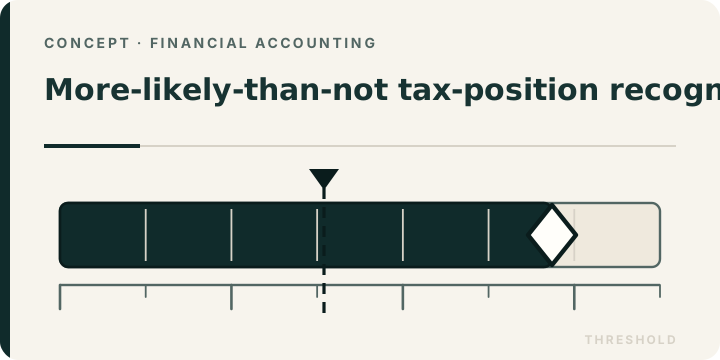
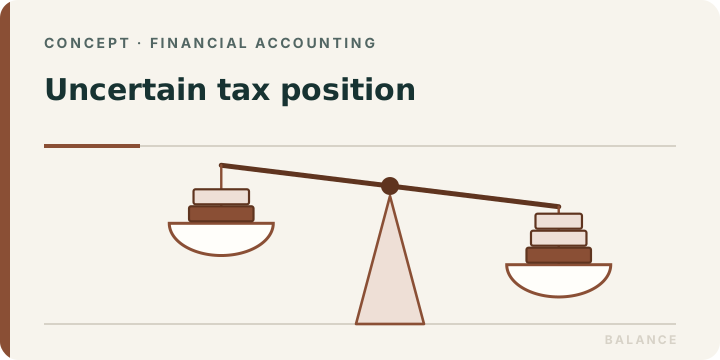
The measurement of a recognized tax position at the largest benefit amount whose cumulative probability of ultimate settlement exceeds 50 percent.
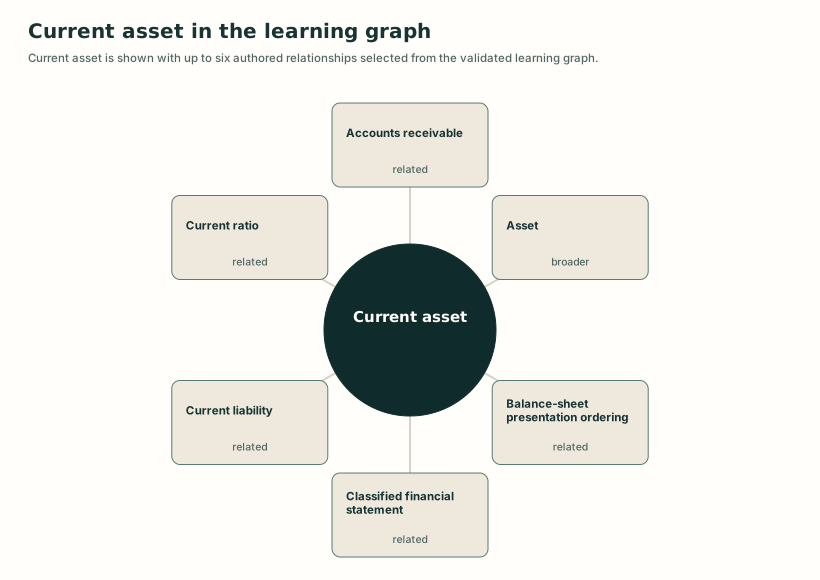
An asset classified within the current section of a classified balance sheet because it meets the applicable realization, sale, consumption, availability, or operating cycle criteria of…
The portion of income tax expense or benefit attributable to the current period tax payable or refundable consequence, adjusted for recognized uncertain position effects as applicable.
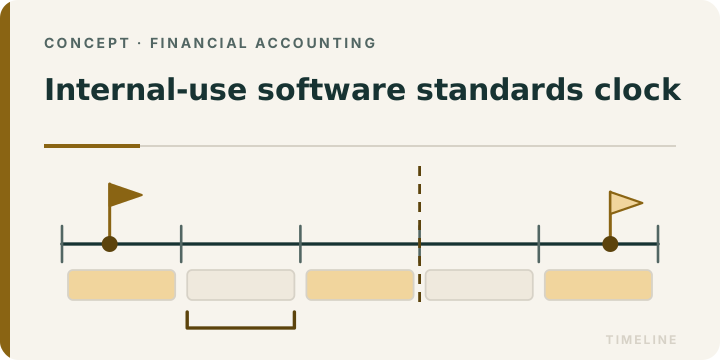
Classification of internal use software costs under the current Subtopic 350 40 project stage model before ASU 2025 06 adoption.
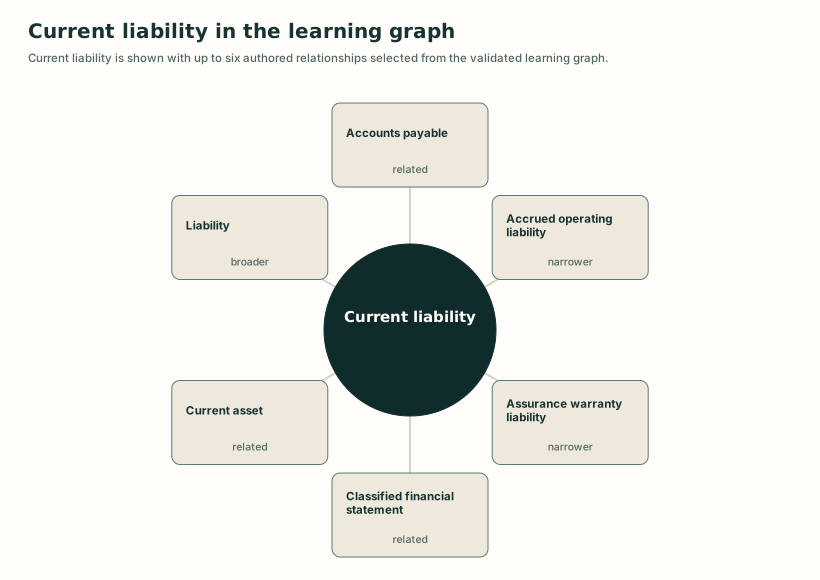
A liability classified within the current section of a classified balance sheet because it meets the applicable settlement, operating cycle, maturity, or other current classification…
The portion of a longer term borrowing classified current because it is contractually due within the applicable current horizon, after applying relevant refinancing and other…
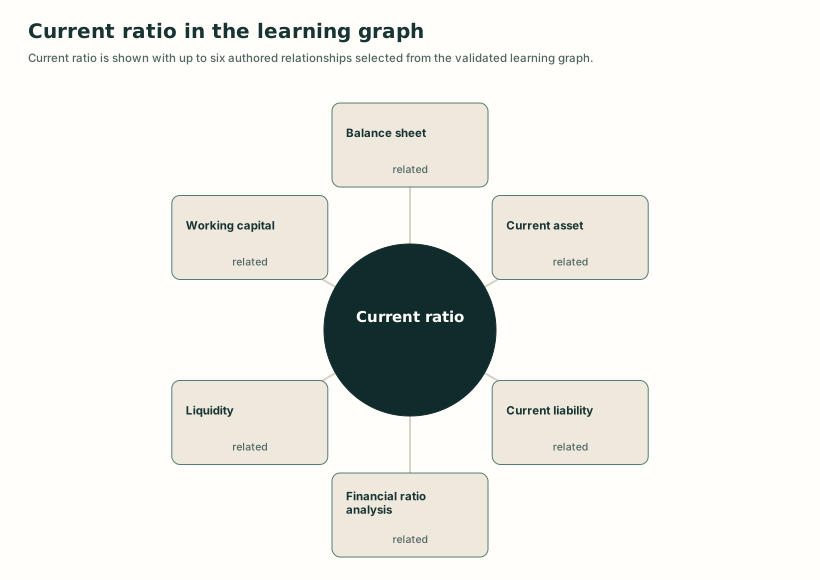
A date specific liquidity indicator computed by dividing total current assets by total current liabilities under a stated classification and measurement basis.
A documented bridge from relevant historical credit loss information to conditions at the reporting date, reasonable and supportable forecasts, and a controlled return to historical…
A contractual opportunity to acquire additional goods or services that is a performance obligation when it provides a material right the customer would not receive without entering the…
The declared days equivalent of Inventory turnover, computed from the period's day count and the same cost flow and average Inventory convention.
The declared days equivalent of Accounts Payable turnover, computed from the period's day count and the same supplier credit purchase and average payable convention.
The declared days equivalent of Accounts Receivable turnover, computed from the period's day count and the same numerator and denominator convention.
The reduction in modeled total surplus relative to a stated efficient benchmark because mutually beneficial units are not traded or other modeled distortions prevent the benchmark…
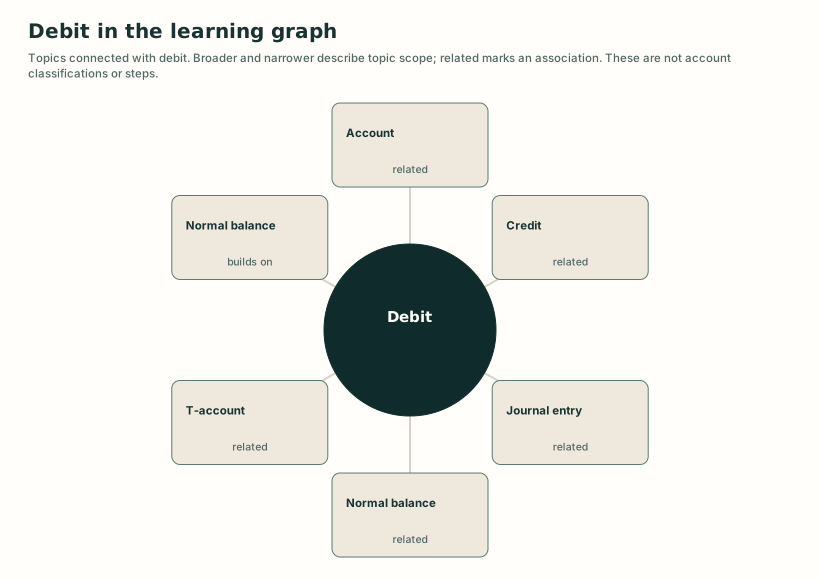
An amount entered on the left side of an account or journal entry; it increases debit normal accounts and decreases credit normal accounts.
A dated representation of a debt instrument's principal, coupon, payment frequency, maturity, options, fees, collateral, and other contractual cash flow terms before accounting…
Noncompliance with a debt provision that can alter the lender's rights, borrower classification, disclosure, waiver analysis, and future compliance assessment under current guidance.
A supplied qualifying event that removes an existing debt obligation and recognizes the difference between its net carrying amount and attributable reacquisition consideration under the…
A qualifying incremental cost of issuing debt that is presented and amortized under the applicable debt guidance rather than automatically expensed or recorded as an unrelated asset.
A disclosure support schedule that preserves contractual principal maturities by period and reconciles them to recognized debt while separately identifying interest, current portions,…
A supplied conclusion that changed debt terms continue the existing liability rather than extinguishing it, leading to prospective or otherwise specified accounting under the applicable…
The supplied consideration attributable to retiring or reacquiring debt, including relevant cash and other consideration under the applicable extinguishment guidance.
An investor's creditor interest represented by a debt instrument within the applicable debt security accounting scope.
A dated change between debt security classification categories accounted for under the transfer date requirements and supported by contemporaneous facts.
The measurement bridge from a debt security's updated amortized cost to a supplied reporting date fair value, routed according to classification and applicable credit guidance.
The classification of cash paid to prepay, extinguish, or settle debt, including the required separation of accreted interest and principal portions for specified zero or insignificant…
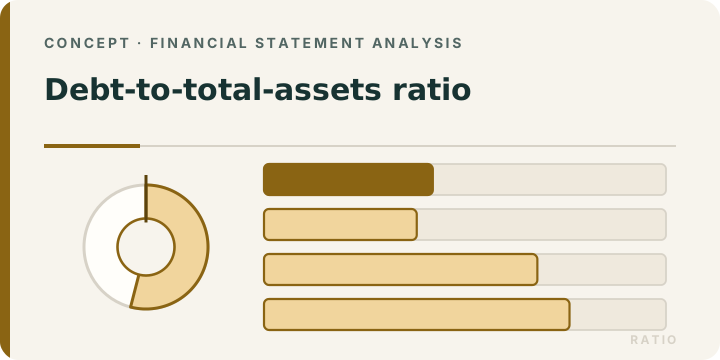
A leverage and solvency indicator that divides a stated total debt measure by total assets at the same reporting date under a declared definition and reporting basis.
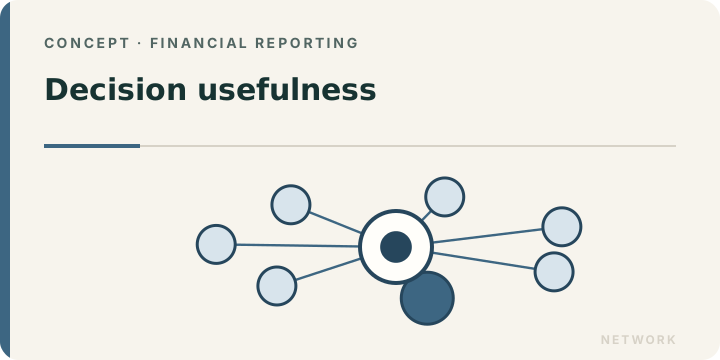
The ability of relevant, faithfully represented financial information to help users make judgments and decisions about an entity.
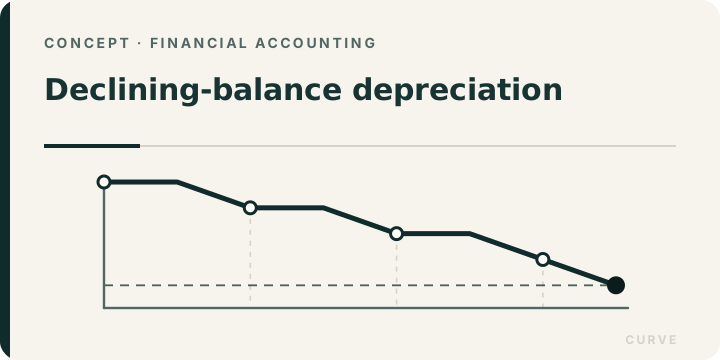
An accelerated allocation pattern that applies a constant rate to an asset's carrying amount, producing larger charges in early periods and smaller ones later.
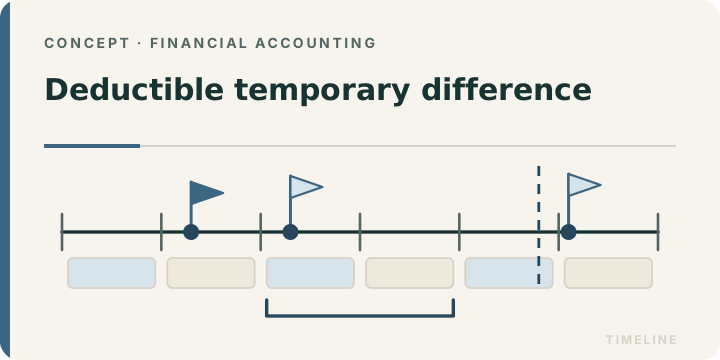
A temporary difference that will produce deductible amounts in future periods when the related asset is recovered or liability is settled.
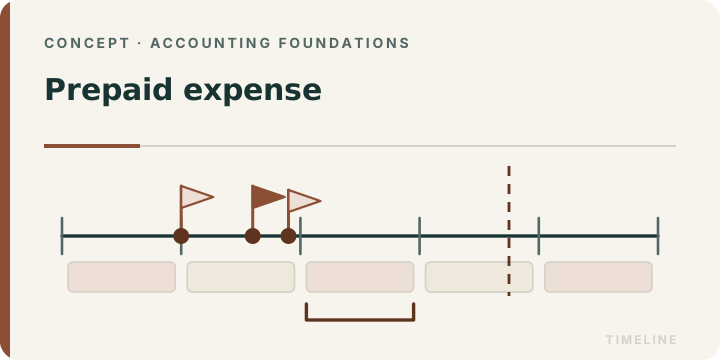
A timing pattern in which cash is paid or received before the related resource consumption or performance is recognized, so an asset or liability carries the unrecognized portion into a…
The recognized future tax benefit of deductible temporary differences and qualifying carryforwards before reduction by any valuation allowance.
Positive and negative evidence used to assess whether deferred tax assets will be realized within jurisdictional, character, and expiration constraints.
A contra asset that reduces gross deferred tax assets when available evidence supports a more likely than not conclusion that some portion will not be realized.
The recognized future tax consequence of taxable temporary differences measured using enacted tax rates for expected reversal periods.
The presentation of deferred tax assets, liabilities, and related allowances as noncurrent, with offsetting limited to the same tax paying component and jurisdiction.
An acquisition of an asset settled by a note or other deferred payment rather than by cash at the acquisition date, recorded at the cash equivalent price with the difference from the…
A pension arrangement that promises retirement benefits under a formula or other stated terms and places measurement and funding risk on the sponsor.
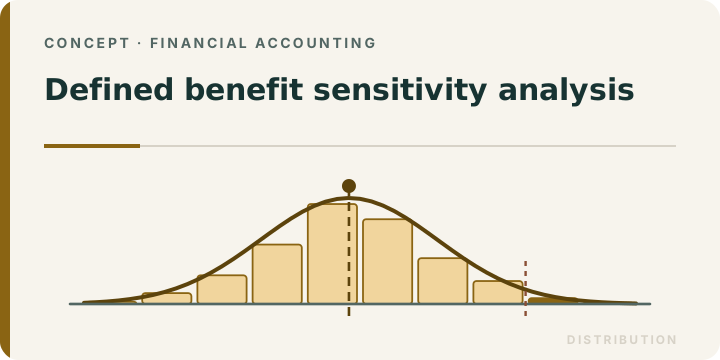
A conditional recomputation showing how a supplied change in one assumption affects a supplied benefit measure while holding the stated model and other assumptions constant.
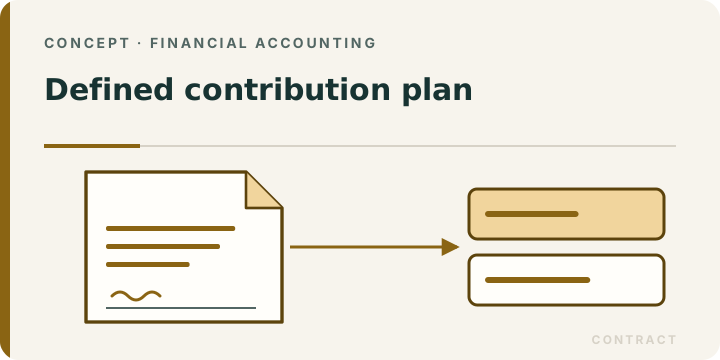
A retirement arrangement that specifies employer contributions rather than a promised level of retirement benefit, subject to the actual plan terms.
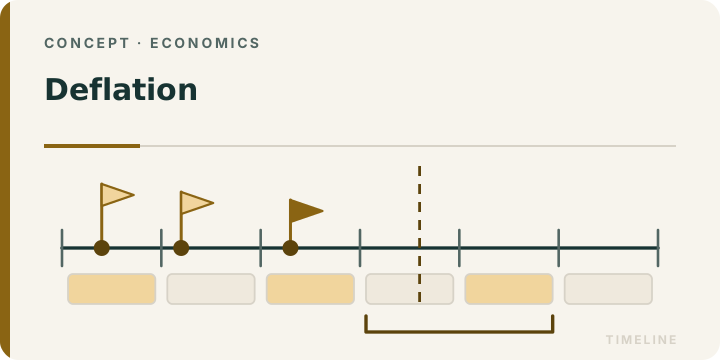
A decrease in a specified broad price index over a stated comparison period, represented by a negative inflation rate.
A relationship showing the quantities potential buyers are willing and able to purchase at alternative prices during a stated period, holding specified nonprice determinants constant.
A graphical or algebraic representation of a demand relationship, usually placing price and quantity on axes while specified nonprice determinants are held constant.
The systematic allocation of a natural resource asset's supported depletable amount to units extracted, followed by assignment between inventory and expense based on unit disposition.
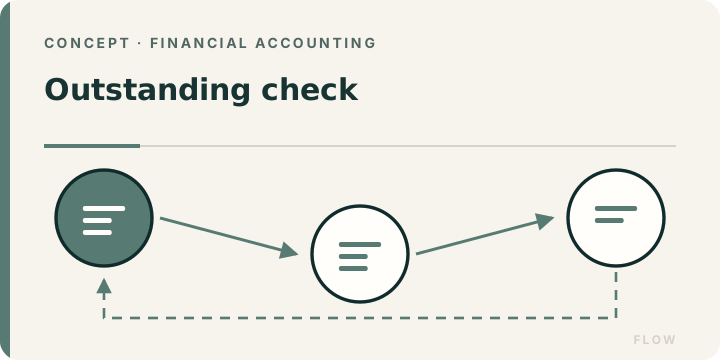
A receipt recorded as cash by an entity and delivered to its bank but not yet reflected on the bank statement at the reconciliation date, added to the bank balance on a bank reconciliation.
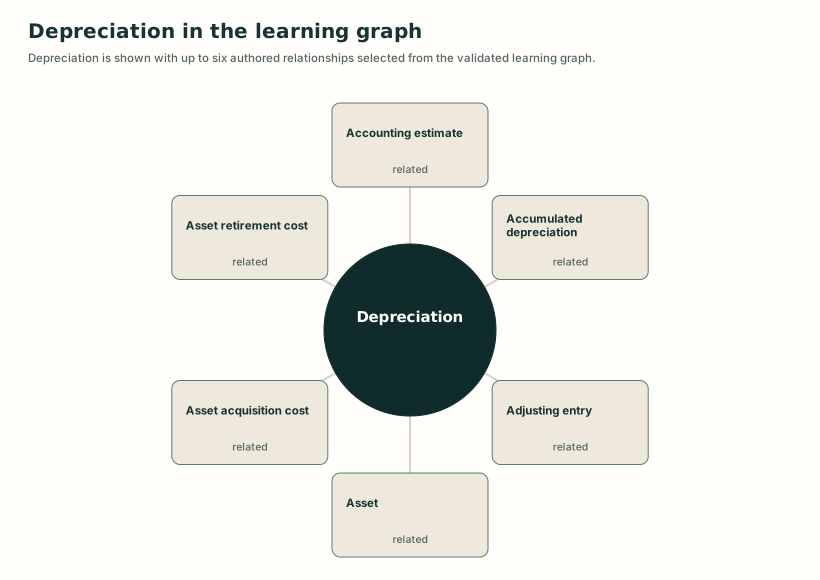
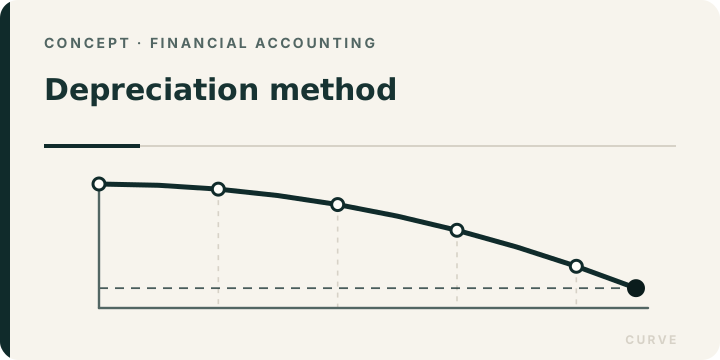
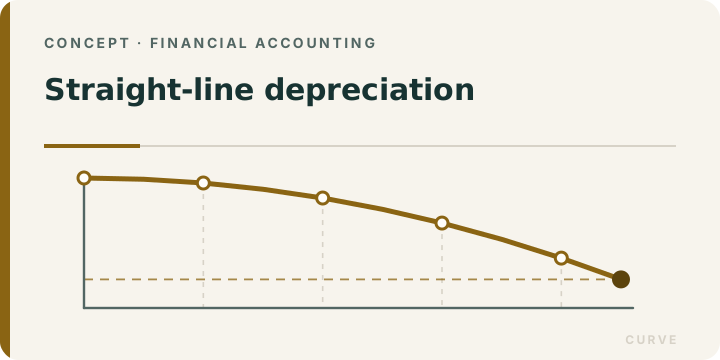
The systematic allocation of a tangible long lived asset's depreciable amount over its estimated useful life. The allocated cost may be reported as expense immediately or included in…
The systematic pattern used to allocate an asset's depreciable amount across service periods or activity units based on the supported consumption pattern.
The process of removing all or part of a previously recognized asset or liability from financial statement totals when the applicable criteria for continued recognition are no longer met…
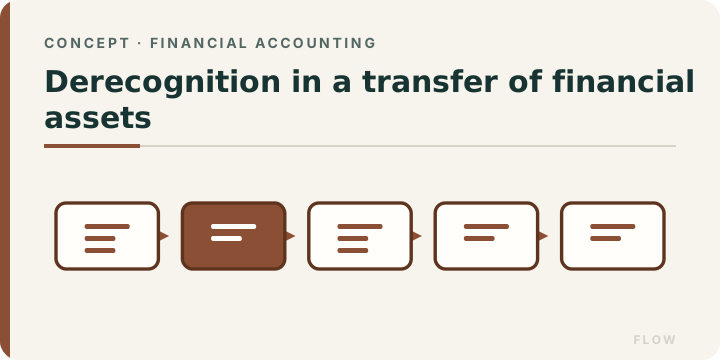
Removal of transferred financial assets when the applicable transfer conditions are satisfied, with recognition of proceeds, retained interests, obligations, servicing, and gain or loss…
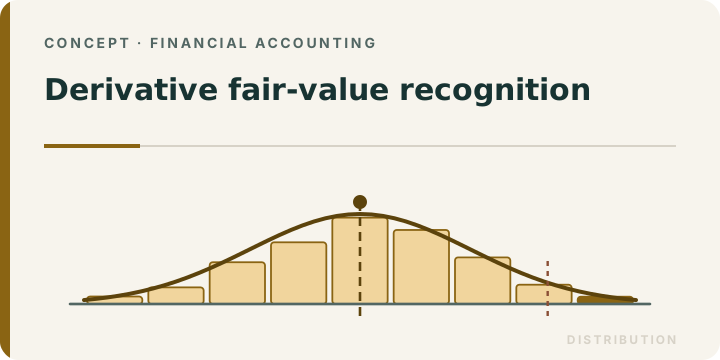
Recognition of a derivative as an asset or liability at fair value, with changes routed under the applicable nonhedge or qualifying hedge model.
A documented sequence that tests a contract's underlying, notional or payment provision, initial net investment, net settlement characteristic, embedded features, and applicable scope…
The detailed tagging and dimensional representation of transition or error correction facts after the authoritative accounting, statements, and disclosures are complete.
The final tie among the accounting conclusion, rendered disclosure, XBRL facts, taxonomy version, validation results, review evidence, and authorized filing package.
A per share measure reflecting the assumed effect of dilutive potential common shares on the required numerator and denominator.
The sequential inclusion of potential common share instruments from most dilutive to least dilutive until the next instrument would be antidilutive.
A recognized asset or liability change necessary to apply the new accounting principle, including related income tax or measurement consequences that directly follow from that change.
A lessor lease that does not meet a sales type criterion but meets the Topic 842 collectibility and residual value support conditions, with selling profit and qualifying initial direct…
An operating section presentation of major classes of gross operating cash receipts and gross operating cash payments for the reporting period.
The control that the direct method and the indirect reconciliation produce the same operating cash flow subtotal for the same entity, period, currency, cash population, and statement…
The reconciliation of each selected note table, narrative amount, policy statement, rollforward, maturity table, cash flow disclosure, and digital fact to its supporting ledger or…
A disposed or held for sale component or group of components that meets the current US GAAP presentation criteria for separate reporting as a strategic shift with a major effect on the…
The difference between a note's face amount and its initial present value carrying amount when contractual cash flows and the supported effective yield differ.
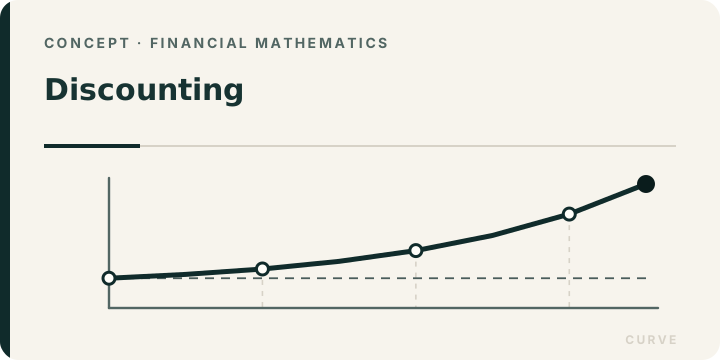
The process of translating a later dated amount to an earlier valuation date by applying the reciprocal of the relevant compound growth factor.
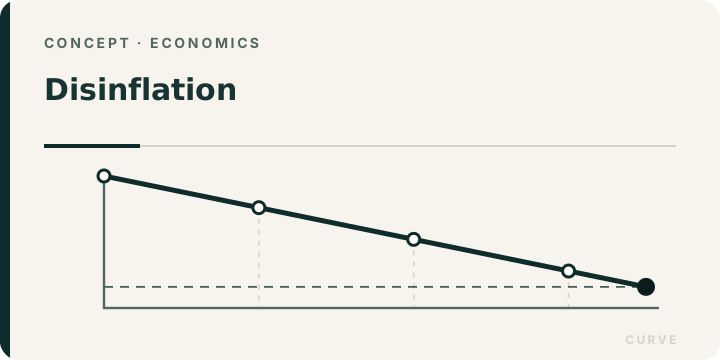
A decline in a positive inflation rate, so the measured broad price level continues to rise but at a slower rate than in the comparison interval.
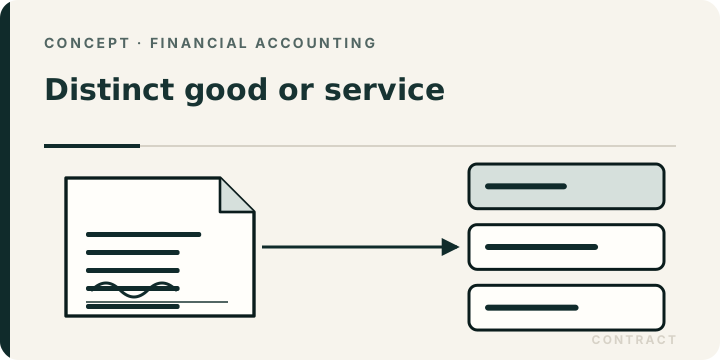
A promised good or service from which the customer can benefit on its own or with readily available resources and that is separately identifiable from the other promises in the contract…
The pattern of values a variable takes, including their frequencies, location, spread, shape, gaps, clusters, and unusual observations.
A decrease in an entity's equity resulting from transferring assets, rendering services, or incurring liabilities to owners in their capacity as owners.
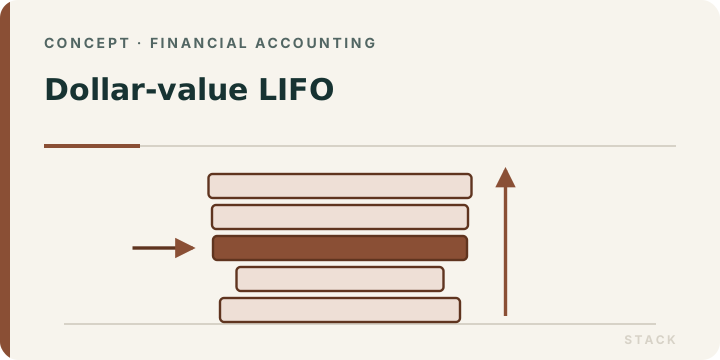
A LIFO method that measures an inventory pool in base year dollars, identifies layers from changes in that base year amount, and prices each layer with the index from the year in which…
A recording system in which each transaction affects at least two accounts and the total amount recorded as debits equals the total amount recorded as credits.
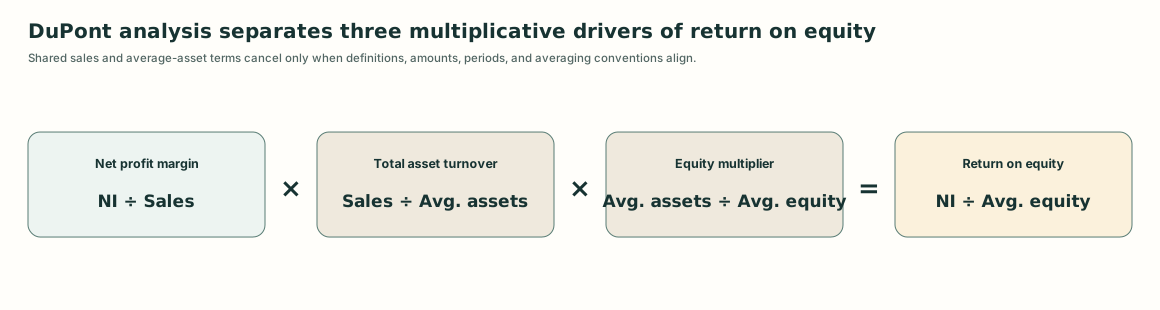
An identity based framework that decomposes return on equity into net profit margin, total asset turnover, and the equity multiplier under mutually consistent numerator, denominator,…
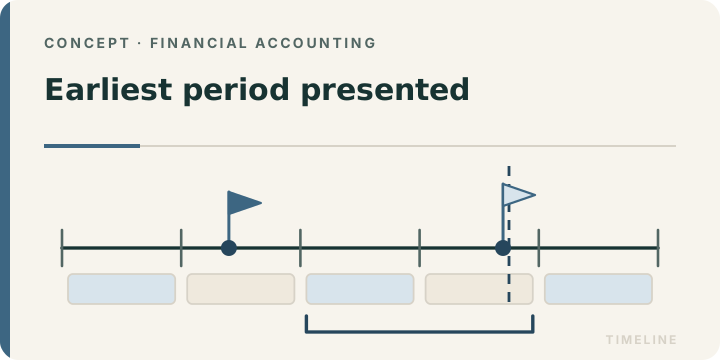
The first comparative reporting period included in the issued financial statements, whose opening balances separate earlier cumulative effects from period specific effects.
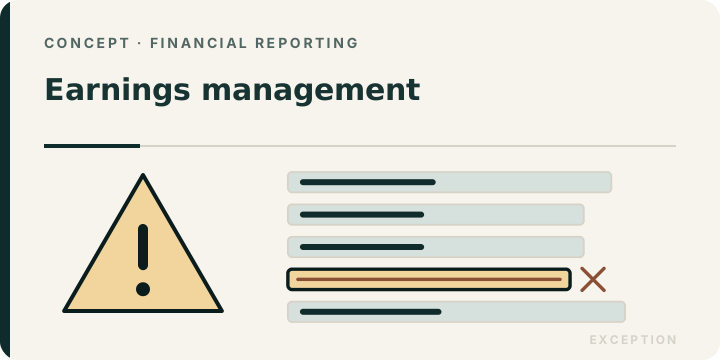
The purposeful use of accounting judgments, estimates, classifications, or transaction timing to influence reported earnings or related perceptions, across a spectrum that can include…
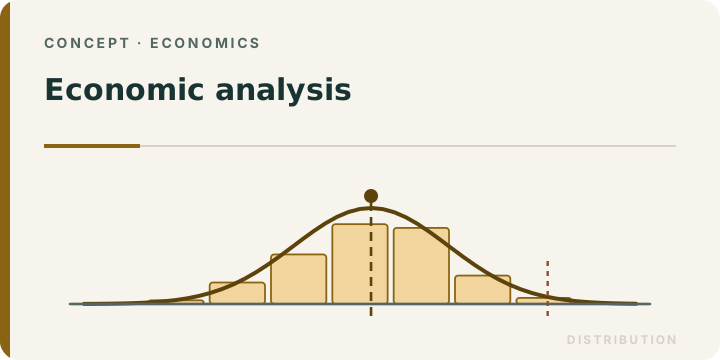
A structured use of economic concepts, models, data, and counterfactuals to describe constraints and behavior, explain possible mechanisms, compare consequences, or evaluate claims…
A family of criteria for judging how completely scarce resources produce feasible outputs or how well the resulting mix aligns with stated values, preferences, or marginal comparisons…
The accounting assumption that a business's activities are recorded separately from the personal activities of its owners.
An occurrence or change in conditions that can affect the resources, claims, activities, or decisions of a person or entity.
An increase in inflation adjusted productive output or capacity over a stated period, commonly measured with real GDP and qualified by population, horizon, and measurement limits.
A deliberately simplified representation of actors, constraints, relationships, mechanisms, or outcomes used to answer a defined economic question under explicit assumptions and a stated…
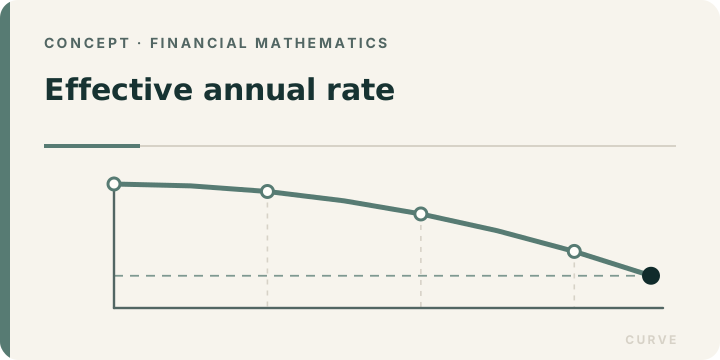
The one year growth rate that incorporates the effect of compounding at the declared periodic rate for the declared number of intervals in a year.
Reported income tax expense or benefit divided by the matched pretax income or loss denominator under a stated scope and sign convention.
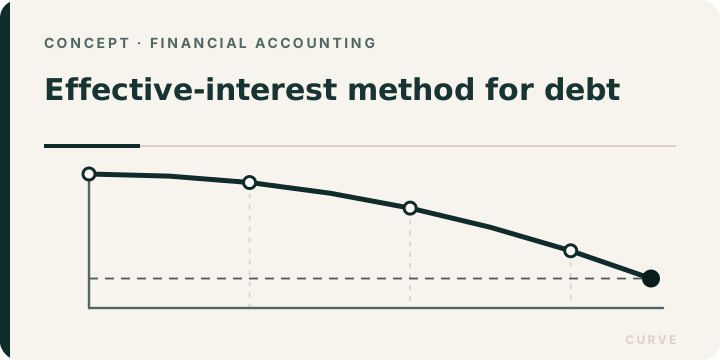
A carrying amount method that recognizes periodic interest expense using the debt's opening net carrying amount and matched effective periodic rate, with the difference from contractual…
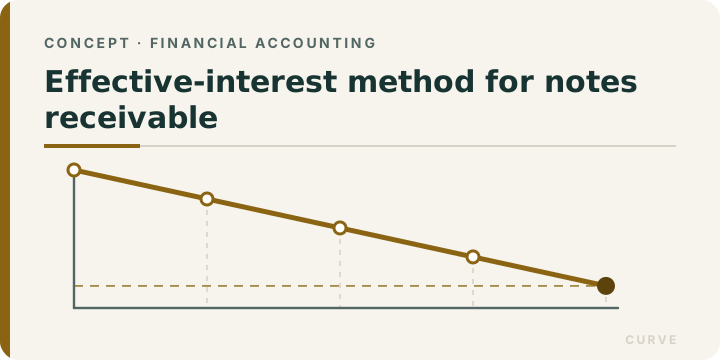
A method that recognizes interest by applying the effective periodic yield to the note's opening carrying amount and updating that amount for cash interest and accretion or amortization.
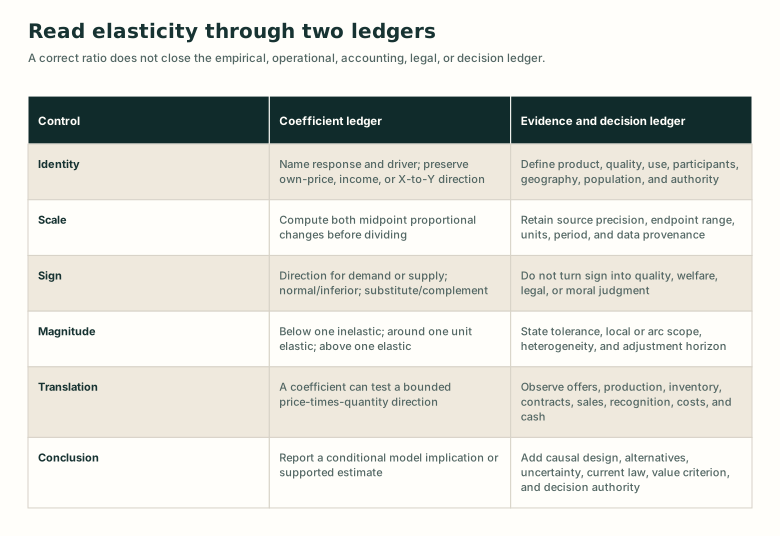
A unit free measure of how strongly one economic quantity responds proportionally to a proportional change in a specified driver, over a stated range, market, population, and period.
The controlled handoff triggered when a host contract contains a provision that may require separate derivative analysis or another specialized instrument classification model.
An arrangement under which an employer provides compensation or benefits for employee service, with accounting determined by the plan's terms, timing, risk allocation, and applicable…
Cash or other assets transferred by the sponsor to the benefit trust, distinct from benefit cost and from benefit payments.
A reconciled employer schedule linking obligation, plan assets, cost, OCI/AOCI, contributions, benefit payments, funded status, and the general ledger entry.
The period of enactment remeasurement of existing current or deferred tax balances caused by a change in enacted tax law or rates.
A tax rate contained in enacted law and expected to apply when current taxable income is taxed or a temporary difference reverses or carryforward is realized.
Income or loss from continuing operations available to common shareholders used to determine whether potential common shares are dilutive or antidilutive.
The disclosure and control bridge from basic to diluted income and shares, including each instrument's adjustments and excluded antidilutive effects.
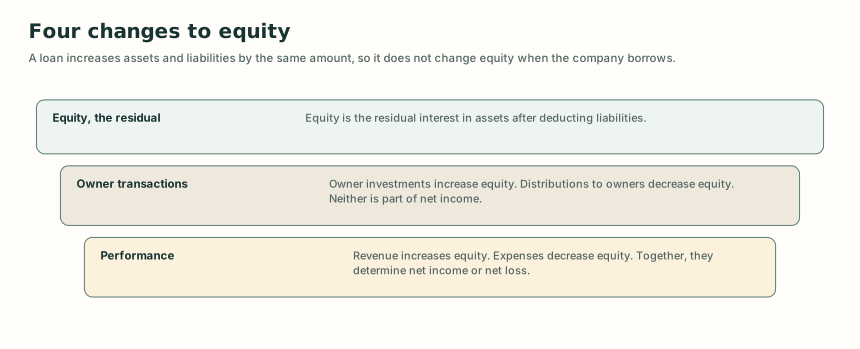
The residual interest in an entity's assets after deducting its liabilities, as represented under the applicable financial reporting model.
A leverage relationship that divides average total assets by average total equity under aligned definitions to show recognized asset dollars supported per average equity dollar.
An in scope equity security without an equity method or consolidation route, generally measured at fair value with changes recognized in earnings.
A share based payment award classified in equity under current guidance and generally measured at grant date fair value without later share price remeasurement.
The investor's acquisition date excess or deficit of investment basis relative to its share of the investee's underlying book amounts, assigned to identifiable causes and accounted for…
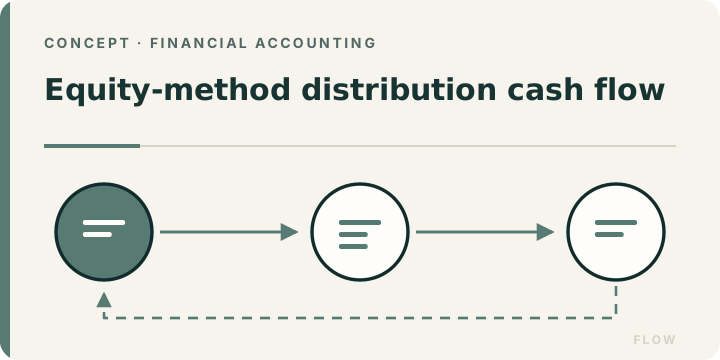
The investor's classification of distributions from an equity method investee under its disclosed cumulative earnings or nature of distribution policy and the information available for…
The investor's share of an investee distribution that generally reduces the equity method investment carrying amount rather than creating ordinary dividend income.
An investment accounted for by beginning at cost and adjusting the carrying amount for the investor's share of applicable investee results and other required basis changes.
An election for qualifying equity securities without readily determinable fair values to use cost adjusted for impairment and observable price changes from qualifying same issuer…
An error in recognition, measurement, presentation, or disclosure caused by a mathematical mistake, misapplication of GAAP, or oversight or misuse of facts existing when the statements…
The note information that identifies the nature of an error, the effect of its correction on each affected statement line and per share amount, and the cumulative opening equity…
A dated register of missing evidence, responsible owner, reason needed, affected conclusion, requested format, due date, response, and release consequence.
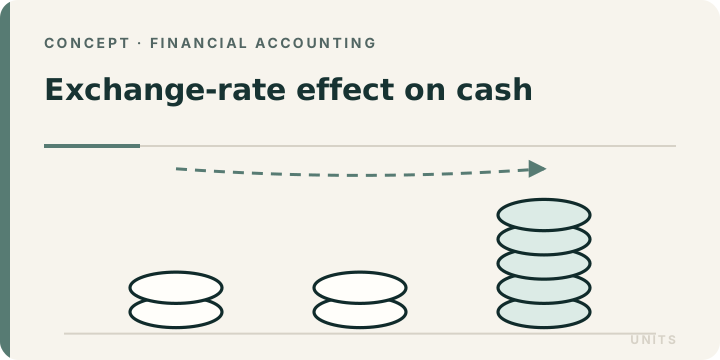
The separate reconciliation amount needed to bridge translated beginning cash, period cash flows, and translated ending cash when exchange rates change; it is not itself an operating,…
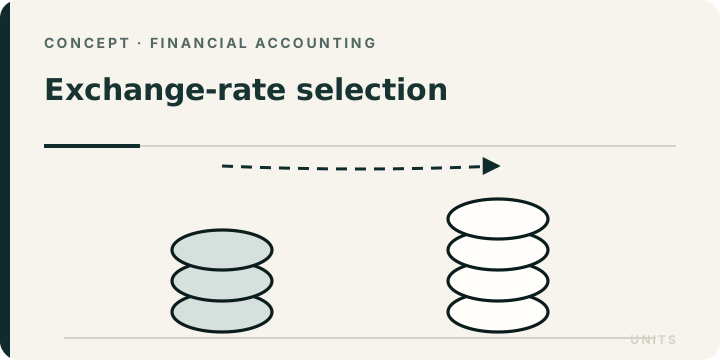
The documented matching of an exchange rate to the transaction, account, date or period, currency quotation, and reporting purpose required by the applicable currency model.
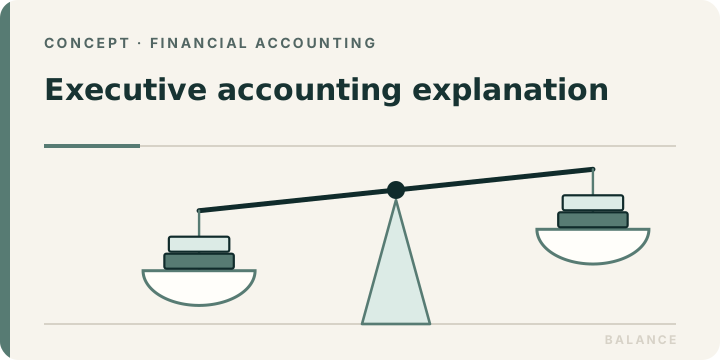
A concise decision communication that distinguishes verified amounts, material estimates, considered alternatives, unresolved facts, statement effects, sensitivities, recommended action,…
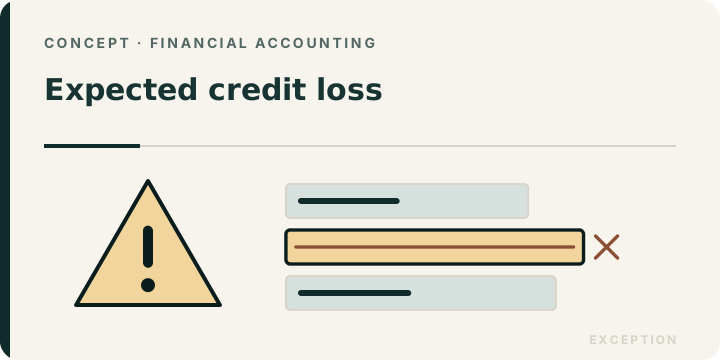
A current estimate of contractual cash flows not expected to be collected over the financial asset's contractual term, using relevant historical experience, current conditions, and…
The supported long horizon assumption used with the applicable asset base to determine expected return in periodic benefit cost.
The actuarial present value of expected future postretirement benefits for current participants before allocation to service periods.
The periodic cost component based on the applicable expected long term rate and market related asset base rather than the current period's actual return.
An outflow or other use of assets, an incurrence of liabilities, or a combination of both that results from delivering or producing goods, rendering services, or carrying out other…
A note presentation that decomposes specified costs and expenses included in relevant income statement captions, with the required categories, remaining amounts, selling expense…
The determination of the period in which a cost is reported as expense under applicable accounting requirements. Matching relates an expense to associated revenue when that relationship…
A receivable transfer arrangement with a factor that may provide collection, financing, servicing, credit risk, holdback, and recourse features but does not by its label establish sale…
The Topic 820 hierarchy that prioritizes fair value measurement inputs by observability and classifies the measurement using its lowest level significant input.
The ASC 820 objective of estimating the price that market participants would receive to sell an asset or pay to transfer a liability in an orderly transaction at the measurement date.
An instrument specific election, when supplied as eligible and made at a permitted election date, to measure qualifying debt at fair value with the applicable presentation of changes.
The market, income, and cost approaches used to translate available market evidence and supported assumptions into a fair value estimate.
A qualifying hedge model in which the derivative's change in fair value and the hedged item's change attributable to the designated risk are recognized in current earnings, subject to…
The quality of describing a reported item completely, neutrally, and free from error, without requiring estimates to predict outcomes exactly.
The Financial Accounting Standards Board's organized source of authoritative generally accepted accounting principles for US nongovernmental entities, arranged by Topic, Subtopic,…
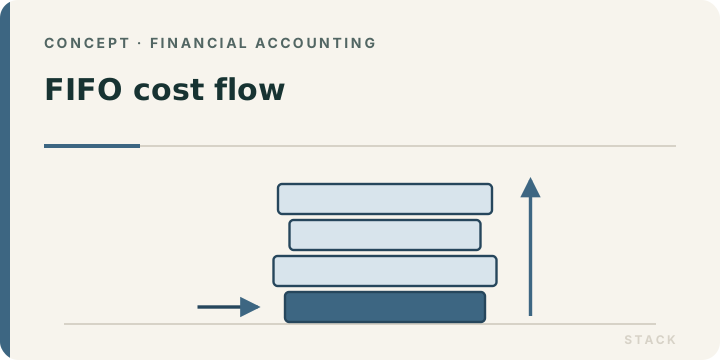
A cost flow assumption that assigns the earliest available inventory costs to cost of goods sold and leaves the most recent costs in ending inventory.
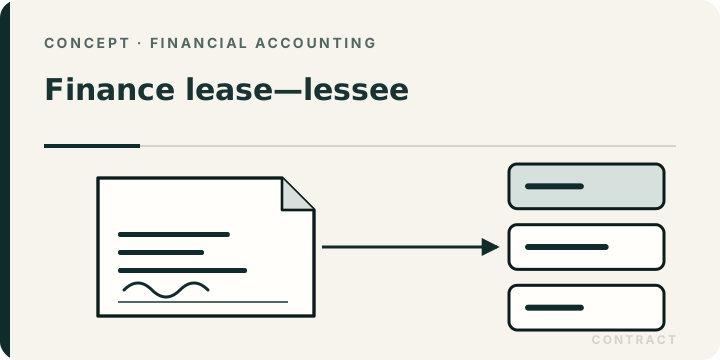
A lessee lease meeting at least one Topic 842 finance classification criterion, with separate interest and ROU asset amortization after commencement.
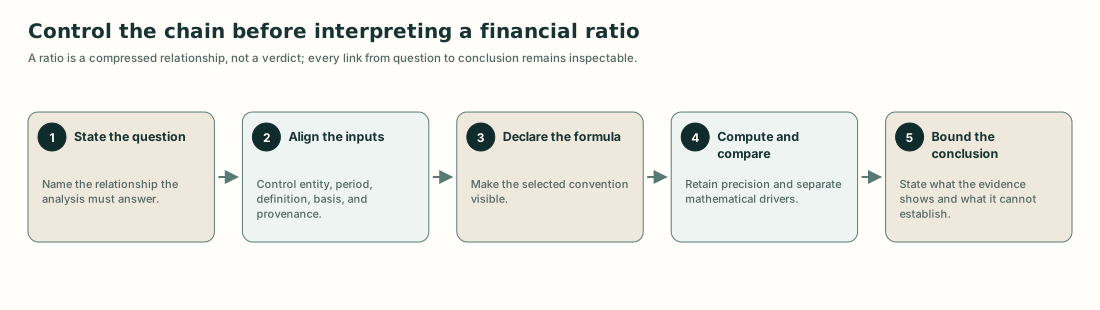
A controlled method of relating financial statement amounts to answer a stated question, with explicit definitions, periods, bases, calculations, comparisons, and limits on interpretation.
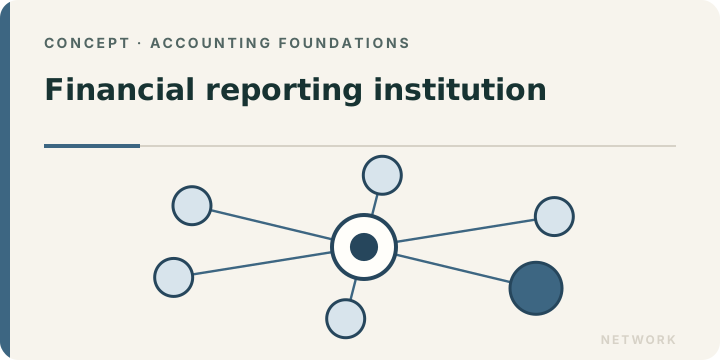
An organization with a role in preparing financial reports, setting reporting requirements, auditing reports, or overseeing compliance with the requirements.
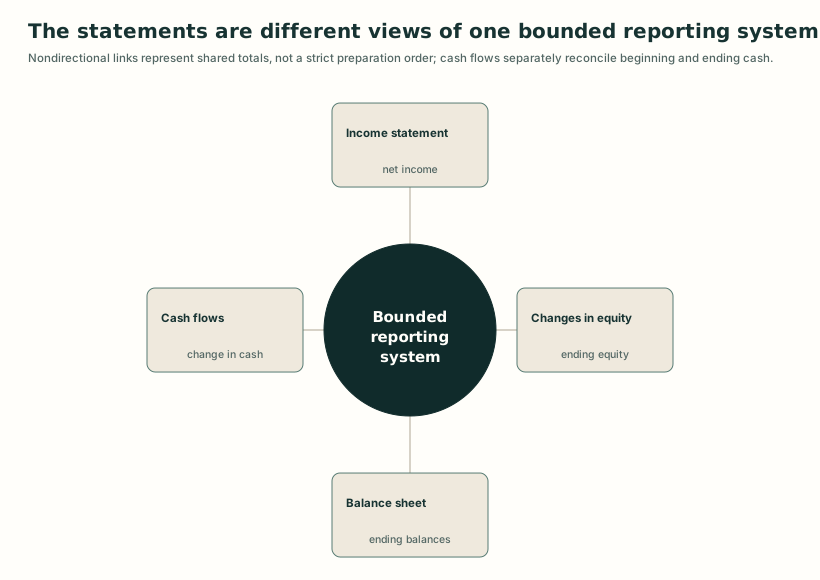
The coherent linkage by which recognized period performance and owner or other equity changes reconcile beginning to ending equity, and ending equity appears consistently within a…
Information communicated with the financial statements to explain recognized amounts, unrecognized phenomena, policies, assumptions, uncertainties, concentrations, changes, and other…
A broad class of economic phenomena represented in general purpose financial statements, such as assets, liabilities, equity, revenues, and expenses.
The process of organizing recognized assets, liabilities, equity, income, expenses, and cash flows into statements, line items, subtotals, and relationships that communicate a reporting…
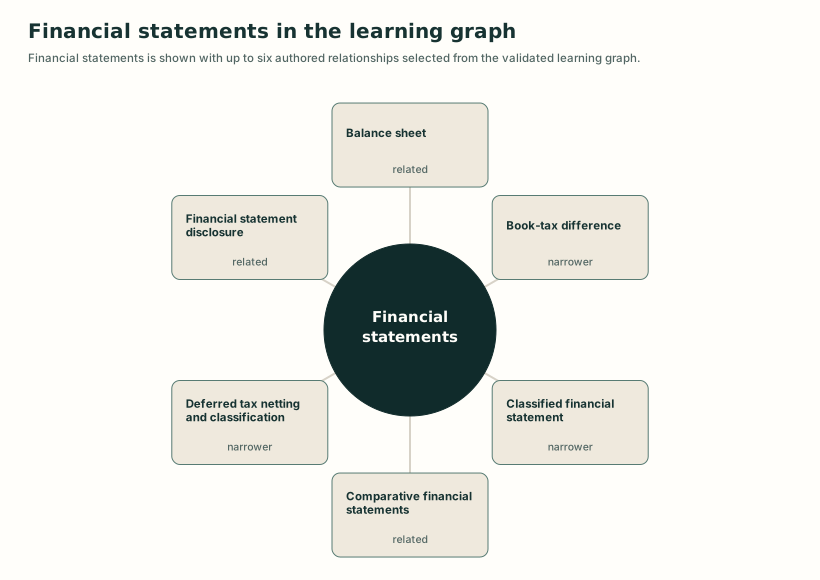
Structured reports that present an entity's recognized financial position, performance, cash flows, and changes in equity for specified dates or periods, together with required notes and…
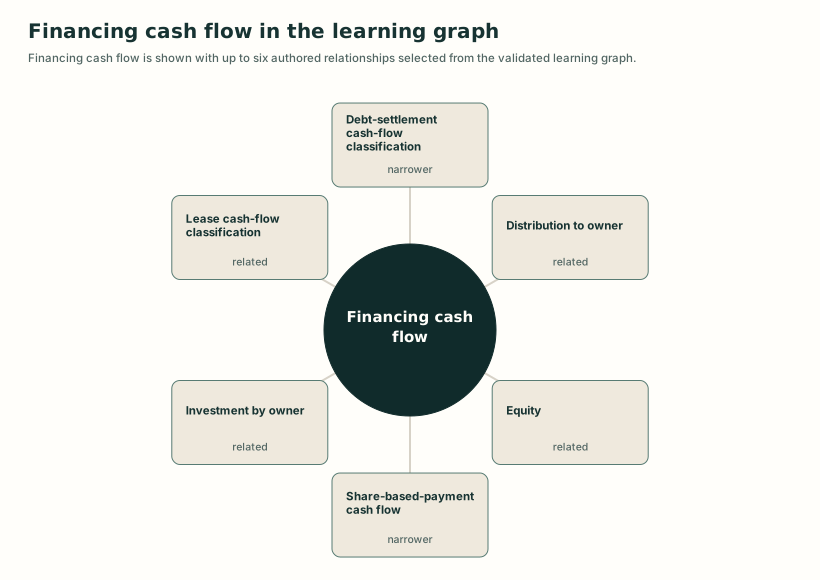
The net cash inflow or outflow from activities classified as financing under the applicable reporting framework, including specified cash transactions through which owners and creditors…
A recognized intangible asset whose useful life to the reporting entity is limited by economic, legal, contractual, competitive, renewal, obsolescence, or other supported factors.
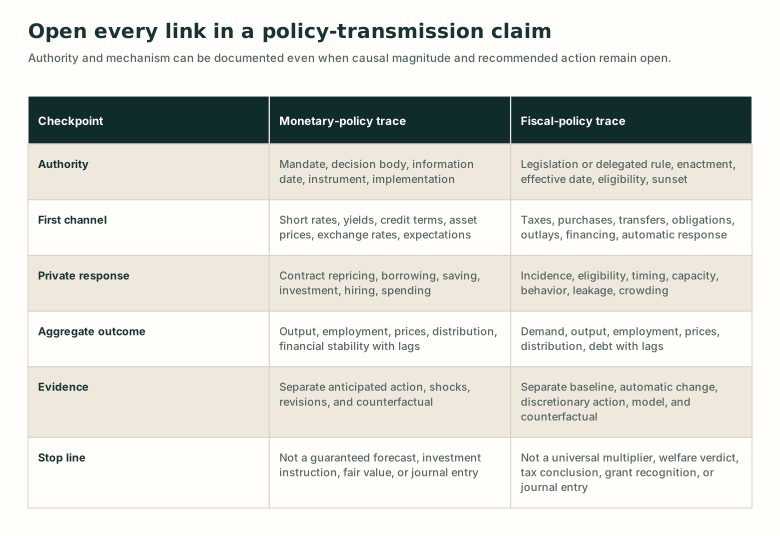
Legislated or rule based government taxation, spending, and transfer choices that affect public budgets, private resources, incentives, and aggregate demand under a specified…
The removal of a qualifying cash flow hedge amount from AOCI and its inclusion in the initial carrying amount of a recognized nonfinancial asset or liability when the applicable model…
A cash receipt or payment denominated in a foreign currency that is classified from its underlying activity and translated into the reporting currency using the supported transaction…
The updating of a foreign currency denominated monetary asset or liability into the entity's functional currency using the applicable rate, with the resulting transaction gain or loss…
The conversion of a foreign entity's functional currency financial statements into the reporting currency using the rate conventions assigned to statement elements under Topic 830.
A non GAAP, nonuniform cash flow measure commonly presented as net cash provided by operating activities less capital expenditures, with the issuer's exact definition, reconciliation,…
The currency of the primary economic environment in which an entity generates and expends cash, determined from the applicable indicators and facts rather than chosen for convenience.
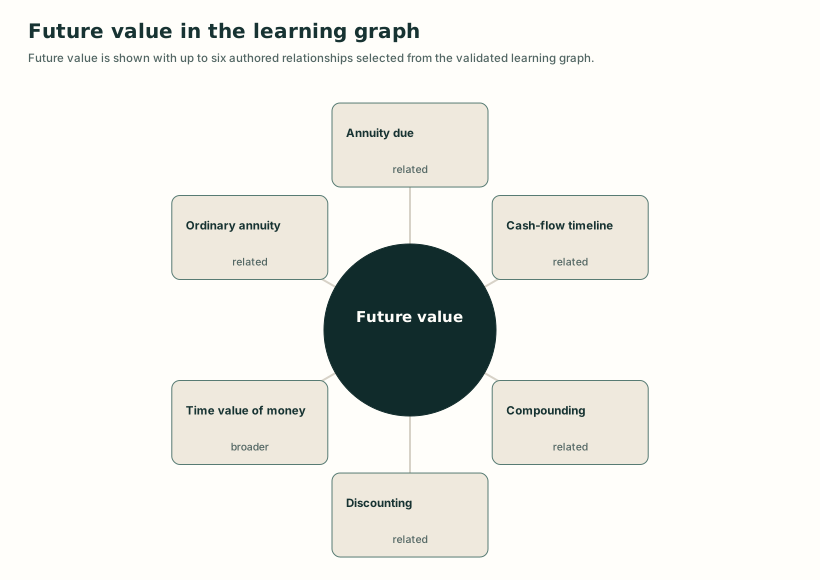
The amount at a specified later date that is equivalent, under declared assumptions, to one or more amounts at earlier dates after applying the relevant accumulation process.
An existing uncertain condition whose resolution may confirm an asset or reduction of a liability, generally kept out of income until realization is appropriately assured under the…
The income effect arising when supported net consideration from an asset disposition differs from the asset's carrying amount at derecognition.
An increase in feasible consumption, output value, or another stated objective made possible when parties specialize according to differing opportunity costs and exchange on terms each…
An implicit price measure relating nominal GDP to real GDP for the same period and release basis, commonly expressed as nominal GDP divided by real GDP times 100.
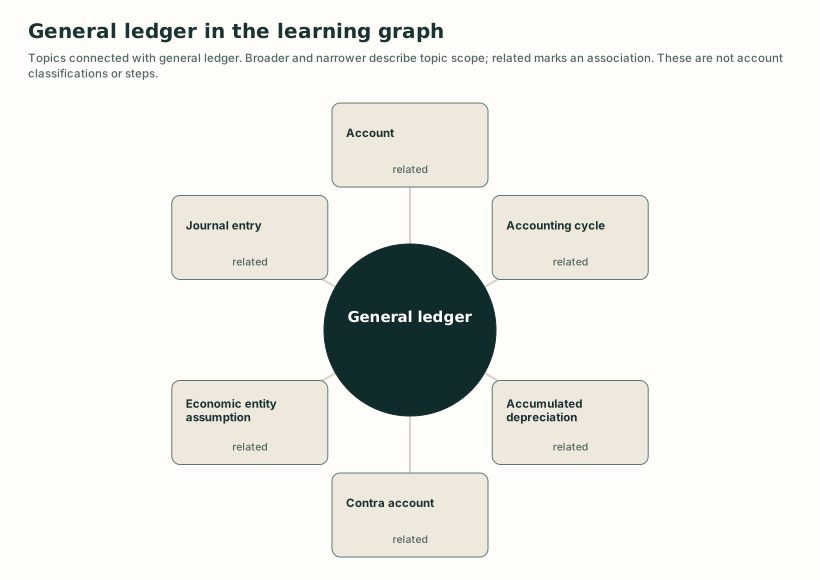
The organized collection of an entity's accounts and their posted activity and balances, maintained as the central account level record for financial reporting.
Financial reporting directed to the common information needs of existing and potential investors, lenders, and other creditors making decisions about providing resources to an entity.
The assumption that an entity will continue operating instead of being liquidated, subject to evaluation under the applicable accounting requirements.
Goods moving between parties at the reporting date whose inventory recognition depends on the substantive transfer terms and evidence, not their physical arrival alone.
An asset recognized in a business combination for the acquisition method residual after supplied consideration and other required amounts are compared with recognized identifiable assets…
A loss recognized under the applicable goodwill model when the supported reporting unit comparison indicates that goodwill's carrying amount is not recoverable, subject to the governing…
The acquisition method excess of transferred consideration, qualifying noncontrolling interest, and any previously held interest over the supplied acquisition date fair value of…
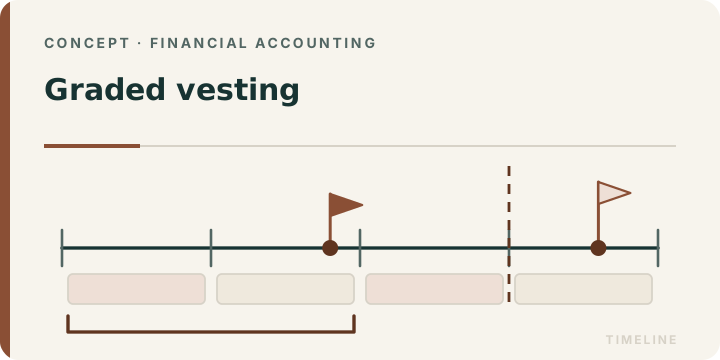
An award structure in which separate portions vest on different dates or after different service periods.
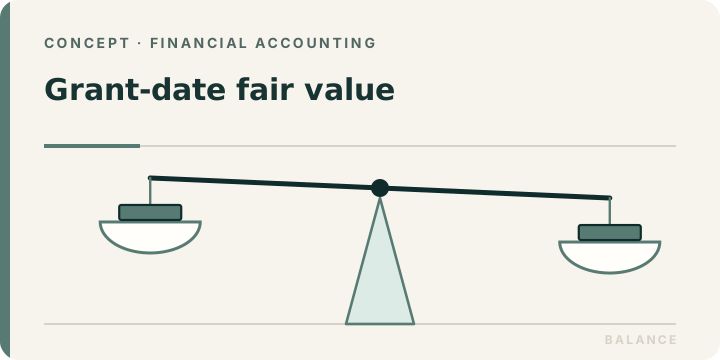
The fair value of a share based payment award on its supported grant date, used in the applicable equity classified compensation model.
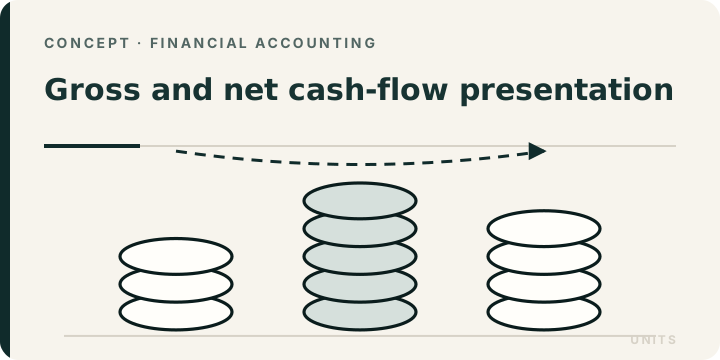
The presentation decision that reports gross receipts and payments unless specific guidance permits a net amount for the stated facts and reporting period.
The market value of final goods and services produced within a specified economy during a stated period, measured under a defined national accounts framework and release vintage.
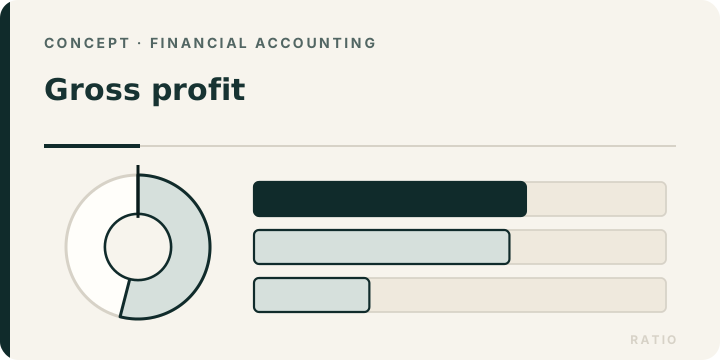
Net sales less the cost of goods sold, the first subtotal on a multiple step income statement and the amount available to cover operating and other costs.
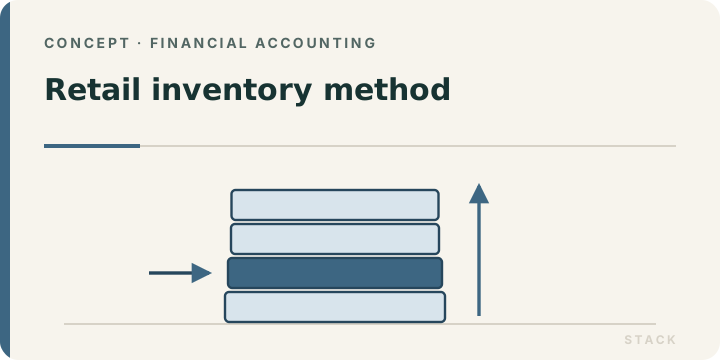
An estimation method that applies a supportable historical gross margin relationship to net sales to estimate cost of goods sold and ending inventory when direct quantity cost evidence…
Depreciation methods that apply a pooled rate to multiple assets, with group accounting generally pooling similar assets and composite accounting pooling dissimilar assets.
A supported assumption about future per capita healthcare cost changes used in measuring applicable other postretirement benefit obligations.
The contemporaneous record of the hedging instrument, hedged item or transaction, risk being hedged, hedge type, risk management objective, assessment method, and treatment of excluded…
The inception and ongoing evidence that the designated hedging instrument is expected to offset changes attributable to the designated risk under the selected assessment method.
The entity , period , and adoption specific record that distinguishes current Topic 815 requirements from issued amendments that are not yet effective for that reporting entity.
A long lived asset or disposal group that satisfies the applicable dated classification criteria for recovery principally through sale rather than continuing use.
A debt security classified, on supplied intent and ability evidence under current guidance, for subsequent amortized cost measurement subject to its applicable credit loss model.
Analysis of corresponding financial statement amounts across periods using absolute changes, percentage changes, or indexes under explicit comparison and base period conventions.
A nonphysical asset distinguished from goodwill because its identity is supported by separability or contractual or other legal rights under the applicable recognition model.
The evaluation of whether a specified or implicitly specified asset exists and whether a supplier's substitution right is substantive throughout the period of use.
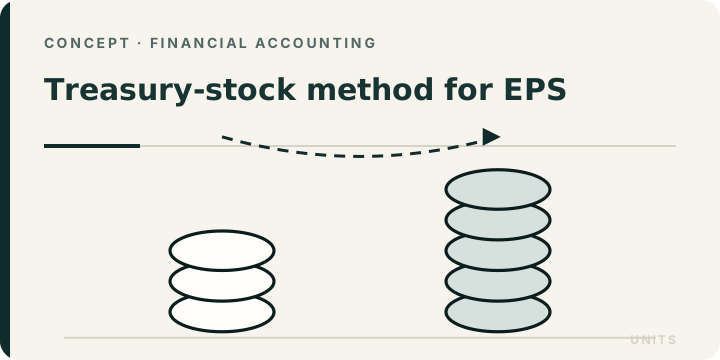
The diluted EPS method that assumes conversion at the beginning of the period or issuance date, adjusts the numerator for avoided amounts, and adds conversion shares.
A supported condition in which retrospective application cannot be achieved after reasonable effort, requires unsubstantiable historical intent, or requires estimates that cannot be…
A feature of a choice environment that changes an actor's expected benefits, costs, constraints, information, or consequences and therefore may change the likelihood of a behavior.
The period income attributable to common shareholders after the preferred, participating, redemption, and other numerator adjustments required by Topic 260.
The proportional responsiveness of quantity demanded to a proportional change in a specified income measure, holding other stated demand determinants fixed over a defined market, range,…
The income statement component for the reporting entity's operations and other recognized items that remain after separating qualifying discontinued operations, determined for the stated…
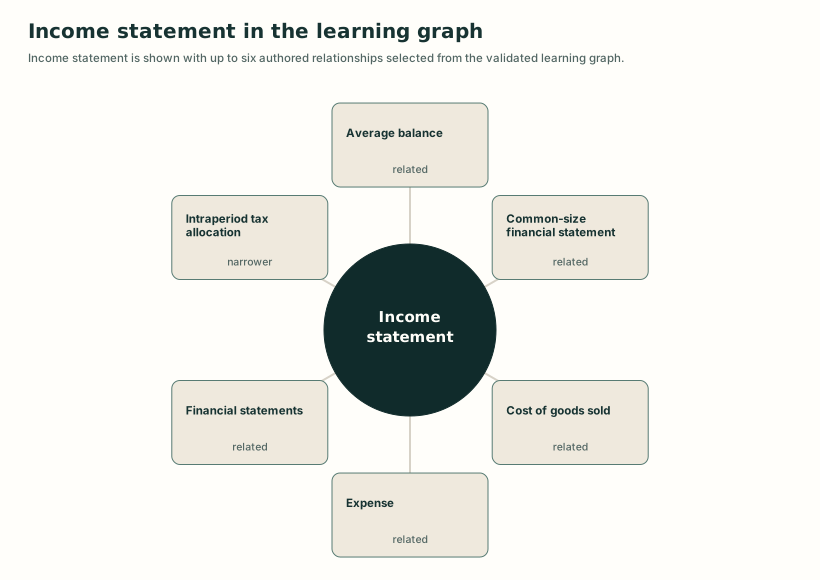
A financial statement reporting the revenues, gains, expenses, and losses included in net income for a specified period, with the applicable subtotals.
The organization of recognized revenues, expenses, gains, and losses into required components, captions, and subtotals that communicate performance for a stated entity and period.
A constraint on what a reported income statement can show, arising from items omitted because they are not recognized, from measurement that depends on estimates, and from the effect of…
A temporary account used only during closing, which collects the period's revenue and expense balances and transfers their net amount to retained earnings.
The period end accounting process that measures current and deferred income tax expense or benefit, related assets and liabilities, statement allocation, and disclosures.
A controlled reconciliation of beginning and ending current tax, deferred tax, valuation allowance, and unrecognized tax benefit balances through the period's recognized changes.
The annual reconciliation of tax at the applicable statutory rate to reported income tax expense or benefit, using required categories, amounts, percentages, and disaggregation.
The annual disclosure of income taxes paid net of refunds by required federal or national, state, foreign, and individually significant jurisdiction categories.
The recognized current balance owed to or recoverable from a taxing authority after current tax consequences, payments, refunds, and settlements.
The incremental numerator effect divided by incremental shares for a potential common share instrument, used to order dilutive instruments when applicable.
A recognized intangible asset for which the current evidence does not establish a foreseeable limit on the period over which it is expected to contribute to cash flows.
The applicable periodic and event driven comparison for an indefinite lived intangible asset, using its own supported unit of account and supplied carrying amount and fair value.
A current or future cash flow or contractual consequence caused by reported amounts changing under a new principle rather than an adjustment required to apply the principle itself.
A presentation of operating cash flow that begins with net income and reconciles it to net cash from operating activities through supported noncash income effects, operating balance…
A sustained increase in a specified broad price index over a stated comparison period, reported as a rate rather than an index level.
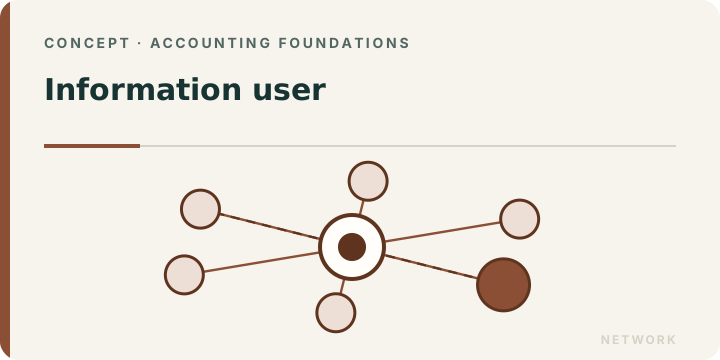
A person, group, or organization that uses accounting information to answer a question, make a judgment, or choose an action.
A dated record of when relevant facts existed, when they were reasonably available, how they were used, and when later evidence emerged for classifying an estimate change or error.
The determination of the amount assigned to an item when the company first recognizes that item under the applicable accounting requirements.
A note whose periodic payments include interest and reduction of principal according to the supplied contractual payment pattern.
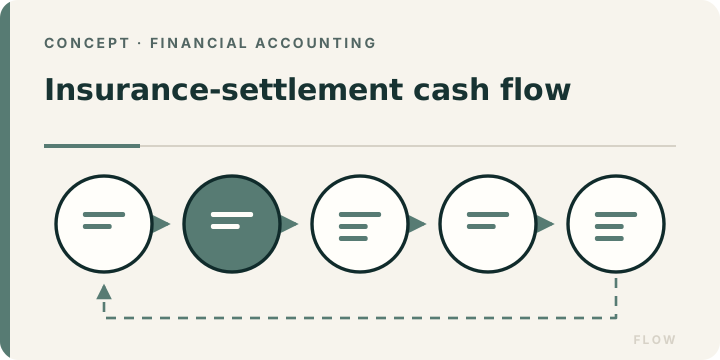
The classification of cash proceeds from an insurance claim according to the nature of the covered loss, with a supported lump sum settlement separated among the losses it compensates.
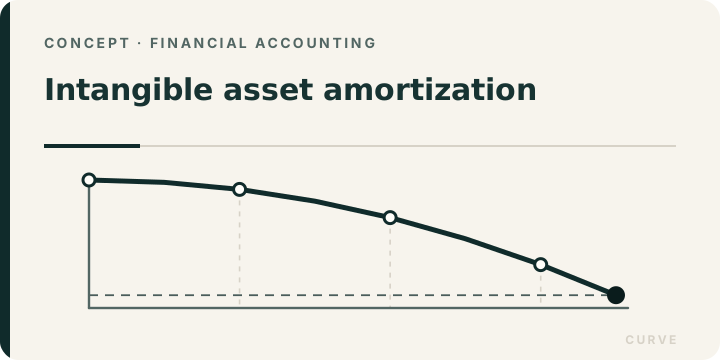
Systematic allocation of a finite lived intangible asset's depreciable amount over its supported useful life using the pattern of expected consumption when reliably determinable.
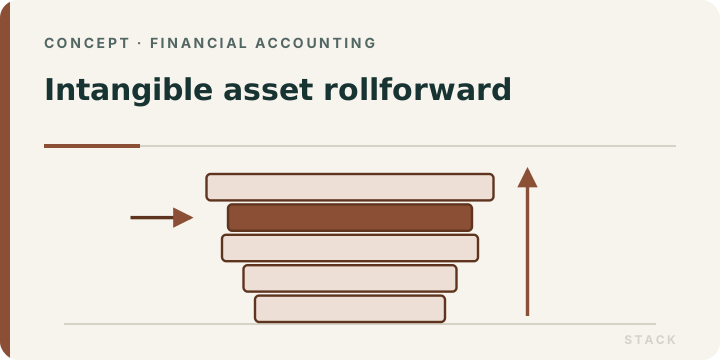
A class by class reconciliation of opening to ending gross and accumulated intangible balances, with additions, amortization, impairment, disposals, reclassifications, foreign exchange…
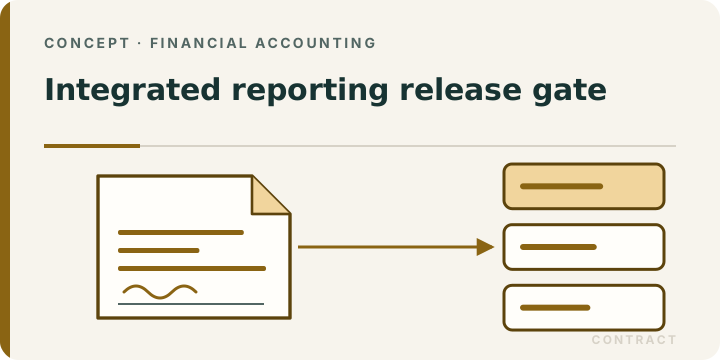
The authorized decision to release, conditionally release, or hold a reporting package after required technical, quantitative, disclosure, digital, control, and communication assertions…
Financial statements and notes for a period shorter than the entity's annual reporting period, prepared under the applicable US GAAP and regulatory form, content, measurement, and…
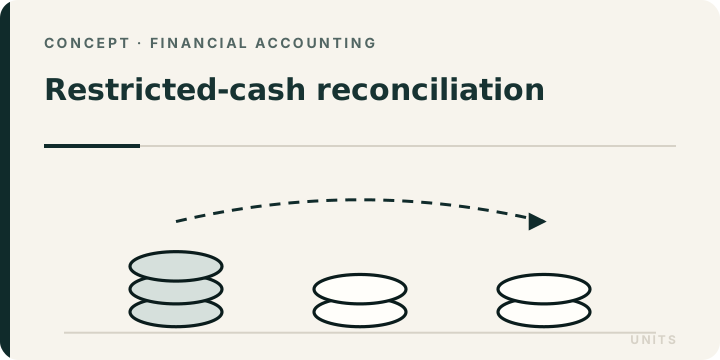
A movement between cash, cash equivalents, and amounts generally described as restricted cash or restricted cash equivalents that remain inside the statement's combined reporting…
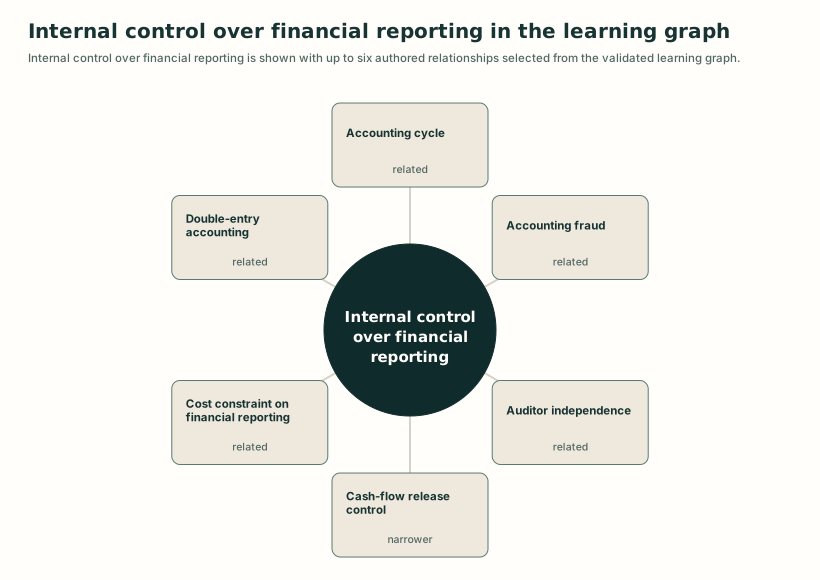
A process designed and operated to provide reasonable assurance about the reliability of financial reporting and the preparation of statements under the applicable reporting framework.
Software acquired, developed, or modified to meet the reporting entity's internal needs when the applicable facts do not establish a plan to market it externally.
The explicit control linking an internal use software conclusion to the entity's annual period, early adoption status, transition method, and either current or ASU 2025 06 pending content.
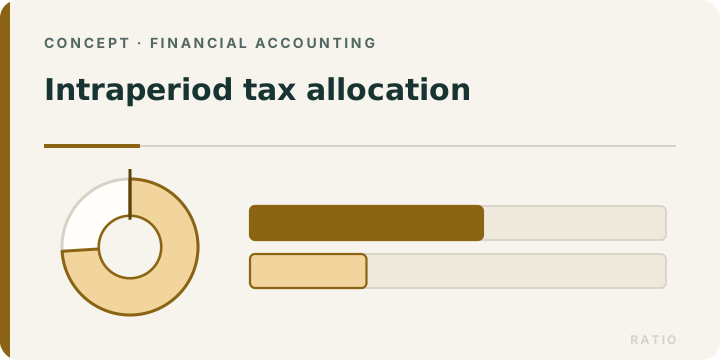
The allocation of total income tax expense or benefit among continuing operations and other statement categories under the applicable incremental allocation guidance.
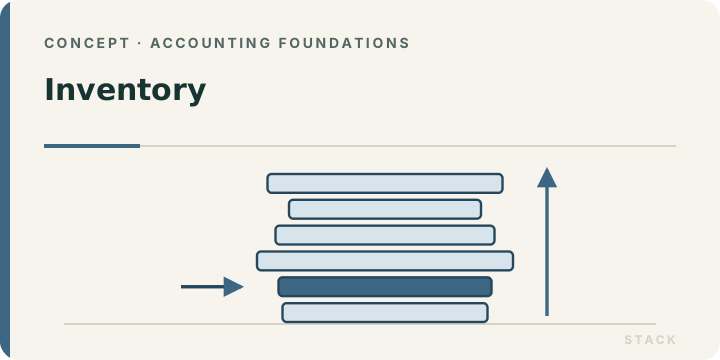
Assets held for sale in the ordinary course of business, in production for such sale, or in the form of materials or supplies to be consumed in producing goods or services, within the…
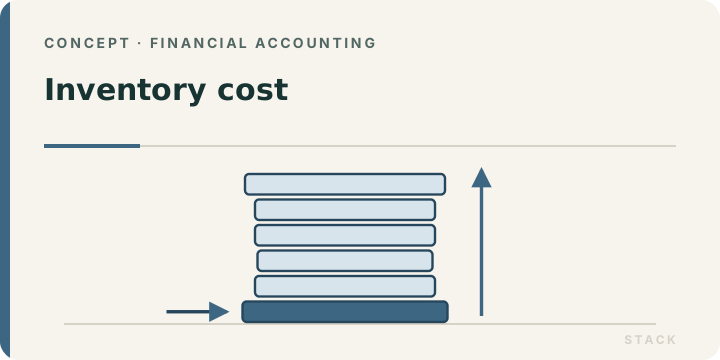
Qualifying purchase, conversion, and other costs assigned to inventory because they bring the goods to their present location and condition, subject to scope and abnormal cost boundaries.
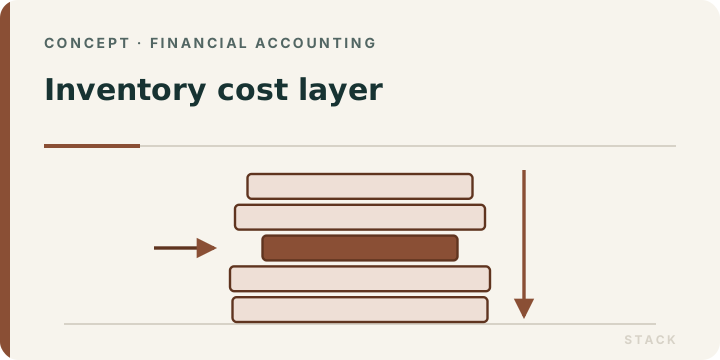
A separately tracked quantity of inventory units and their assigned unit cost, date, pool, and source used in a cost flow schedule.
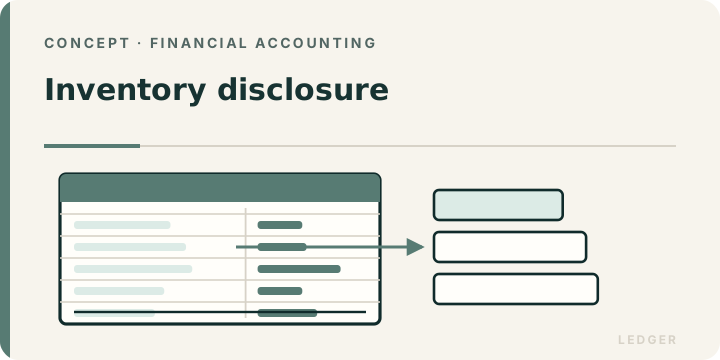
The financial statement information that explains inventory accounting policies, carrying amounts, classifications, cost flow methods, material measurement effects, and other required…
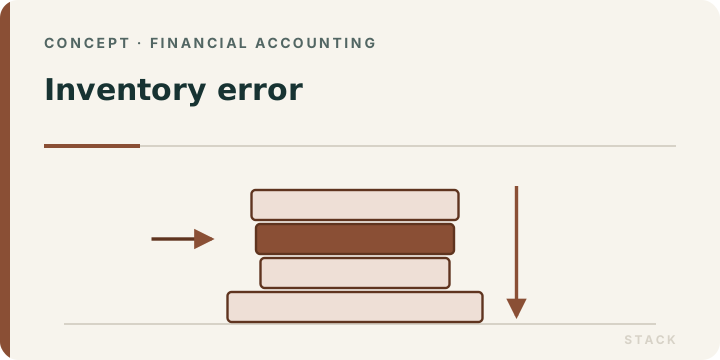
An incorrect inventory quantity, ownership, cost, cutoff, or measurement amount that propagates through cost of goods sold, income, assets, equity, and often the next period.
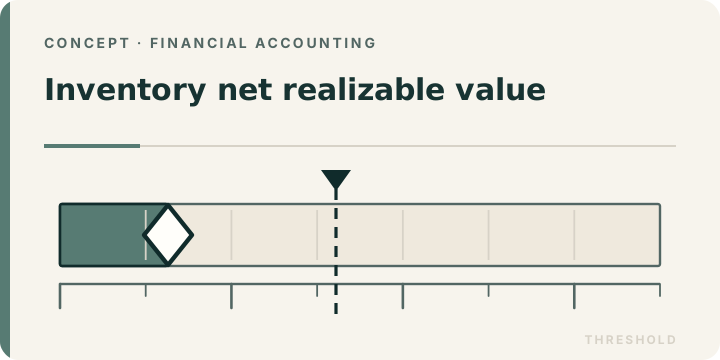
The estimated ordinary course selling price of inventory less reasonably predictable costs of completion, disposal, and transportation within the applicable reporting guidance.
The reporting date determination of which goods the entity owns and which inventory purchases, sales, and cost transfers belong in the period.
A ratio that converts the current year cost of a defined inventory pool to base year cost so that a dollar value LIFO schedule can separate price change from a change in the pool's quantity.
A contractual obligation to purchase inventory in a future transaction whose recognition, loss, and disclosure consequences depend on enforceability, scope, contract terms, market…
A supported inventory loss identified after a perpetual book to count difference is investigated for theft, damage, spoilage, cutoff, ownership, unit of measure, and recording errors.
A period ratio that divides cost of goods sold by a representative average Inventory balance to describe cost flow frequency under the declared scope and accounting basis.
A reduction of inventory's carrying amount when the applicable lower of cost measurement test produces an amount below recorded cost.
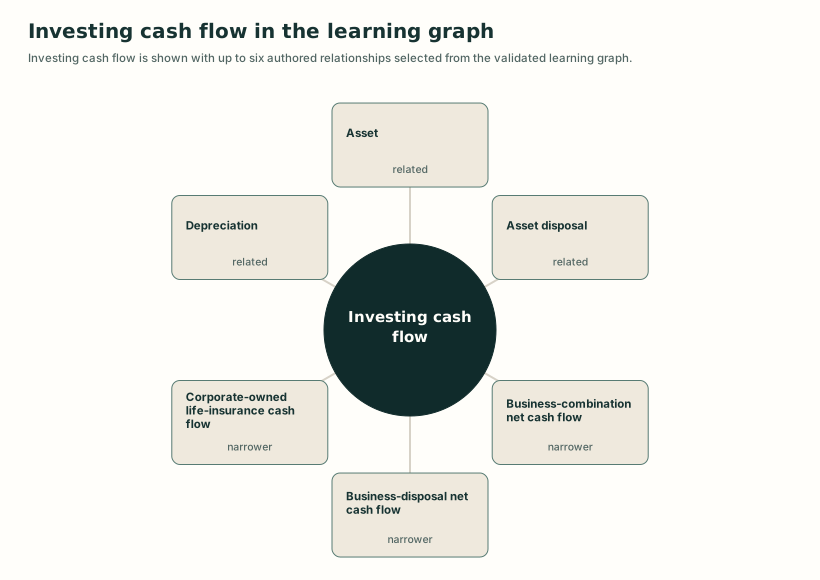
The net cash inflow or outflow from activities classified as investing under the applicable reporting framework, including specified transactions in productive assets, loans, and…
A debt investment's acquisition basis adjusted through the effective interest method for collections and discount or premium amortization before separate allowance or fair value layers.
An increase in an entity's equity resulting from a transfer of something valuable to the entity by another party to obtain or increase an ownership interest.
The controlled determination of an investment's legal and economic instrument type, applicable accounting Topic, and supplied classification or influence conclusion before measurement.
The loss, destruction, theft, or compulsory taking of an asset and any related insurance or condemnation recovery, analyzed as distinct recognition events with separate timing and…
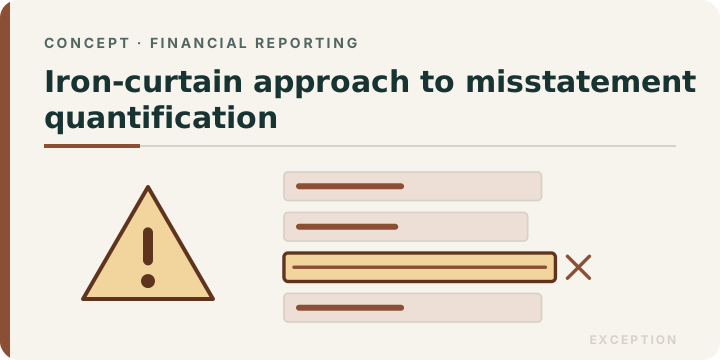
The SAB 108 quantification view that measures the amount by which the ending balance sheet is misstated, including effects accumulated from prior periods.
A trace from a concrete reporting question through controlling facts and evidence to the applicable authoritative guidance, analysis, conclusion, entry, statement line, and disclosure.
Shares that an entity has validly issued, including shares later held in treasury unless formally retired under the supported facts.
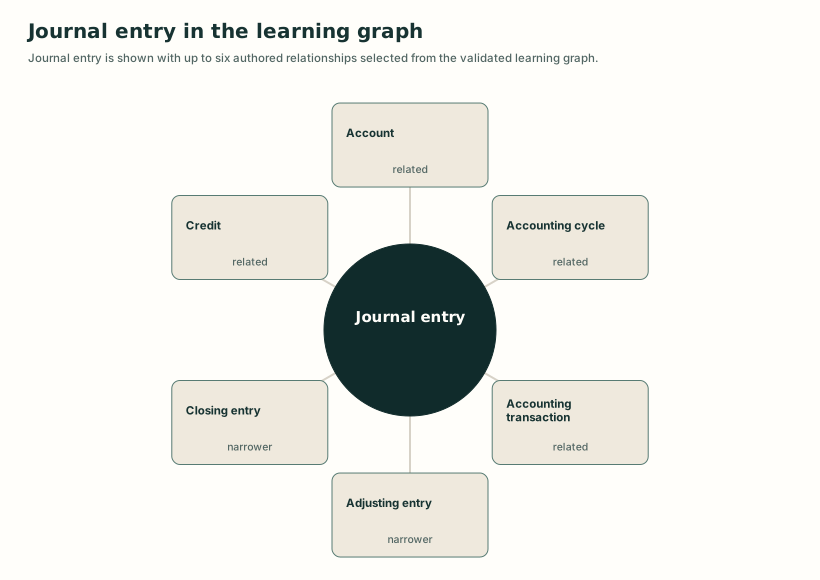
A dated record of a transaction or adjustment that identifies the affected accounts and amounts, assigns each amount to debit or credit, and may include an explanation or source reference.
Real output divided by a stated labor input measure, such as hours worked, for a defined sector, population, and period.
The labor force divided by the specified civilian noninstitutional population, using the statistical program's classification and age boundaries.
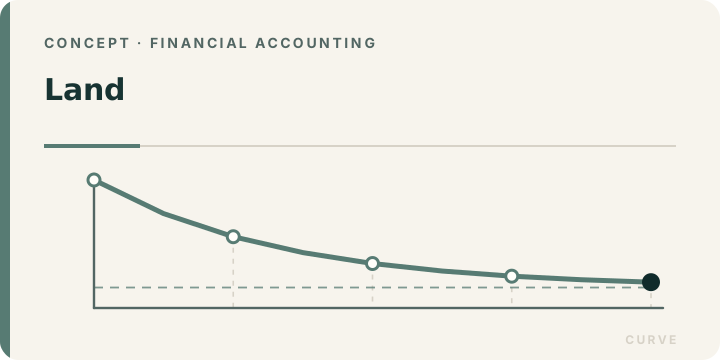
A property, plant, and equipment account holding the cost of ground an entity uses in operations, including the costs of readying it for its intended use, and which is not depreciated…
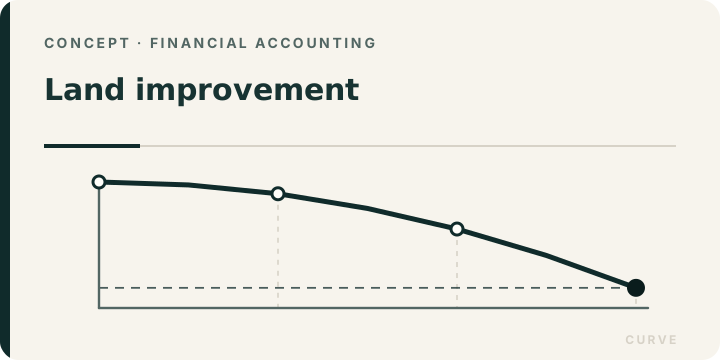
A structural addition to ground, such as paving, fencing, or lighting, that has a limited useful life and is therefore capitalized separately from land and depreciated over that life.
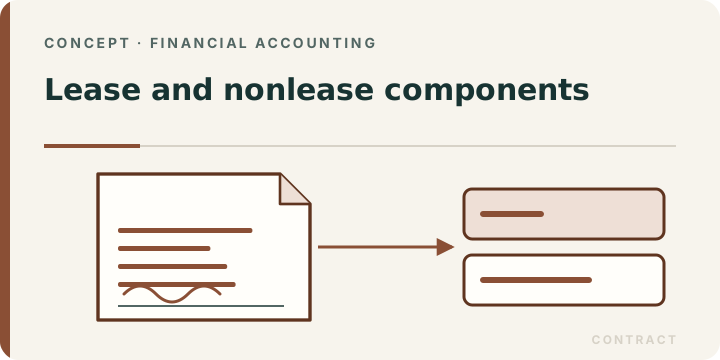
The separation and allocation of a contract's distinct rights to use assets, services, and noncomponents before lease measurement, subject to applicable practical expedients.
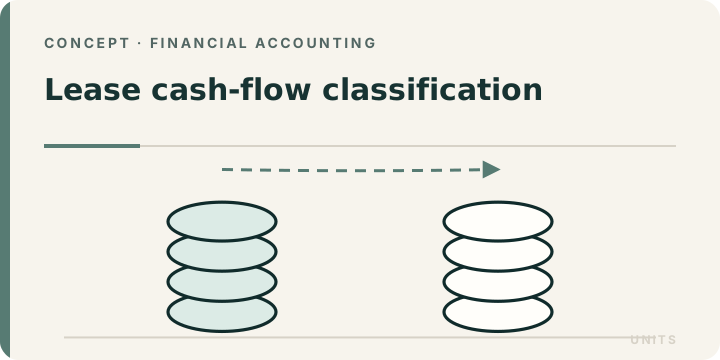
The classification and noncash disclosure of lease payments and commencement activity in the statement of cash flows under the applicable lessee or lessor model.
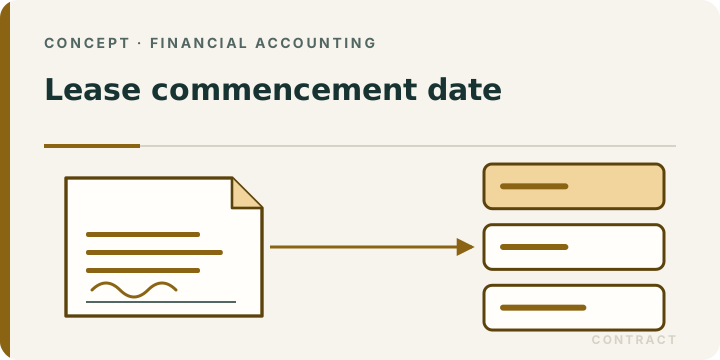
The date on which a lessor makes the underlying asset available for use by a lessee, which anchors initial recognition and measurement.
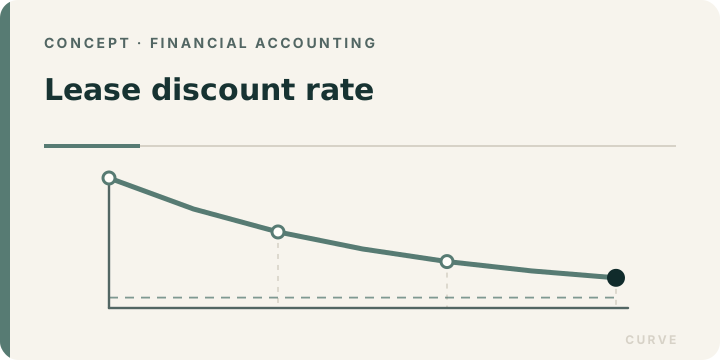
The rate used to discount lease payments under the role, information, entity, and policy conditions in Topic 842.
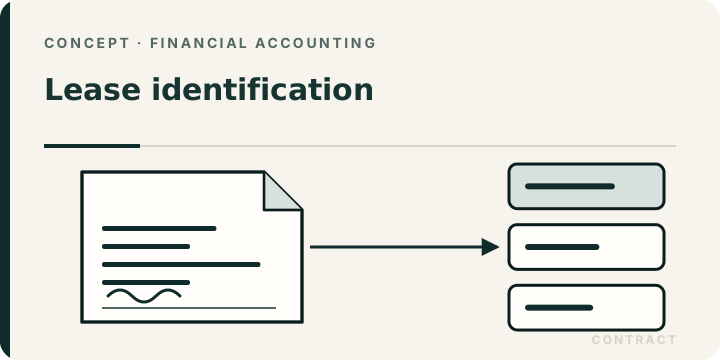
The contract level determination that an arrangement conveys control of the use of identified property, plant, or equipment for a period of time in exchange for consideration.
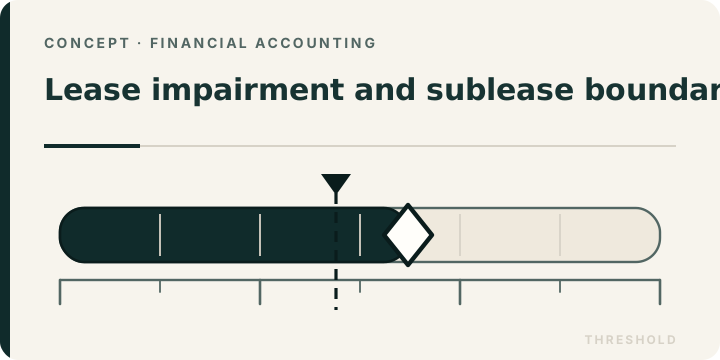
The boundary connecting a lessee's ROU asset to long lived asset impairment and an intermediate lessor's head lease and sublease accounting.
A lessee's recognized obligation for unpaid lease payments, initially measured at present value and subsequently accreted and reduced for payments.
The dated accounting for contractual changes and specified reassessment events, beginning with whether a modification creates a separate contract and continuing through revised…
The payment population included in lease measurement under Topic 842, distinguished from excluded variable amounts and other contract consideration.
The statement and note presentation that lets users assess the amount, timing, and uncertainty of lease cash flows and reconcile recognized balances to costs, cash, maturities, terms,…
A lessor's present value measurement of unpaid lease payments and guaranteed residual amounts, combined with the unguaranteed residual asset and, for direct financing, reduced by…
The value expected from the underlying asset after the lease term, separated by who bears or guarantees the residual risk and by its role in lessee and lessor measurement.
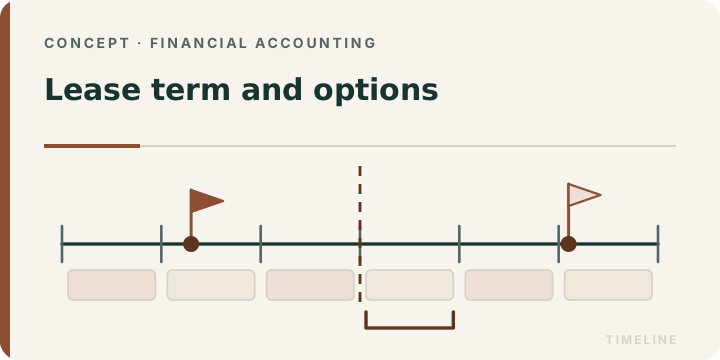
The noncancelable period of a lease plus option periods included under the applicable reasonably certain and lessor control conditions.
The lessee's commencement date classification of a lease as finance when any Topic 842 classification criterion is met and as operating otherwise.
The lessor's commencement date routing of a lease to sales type, direct financing, or operating accounting using transfer criteria, residual support, and collectibility.
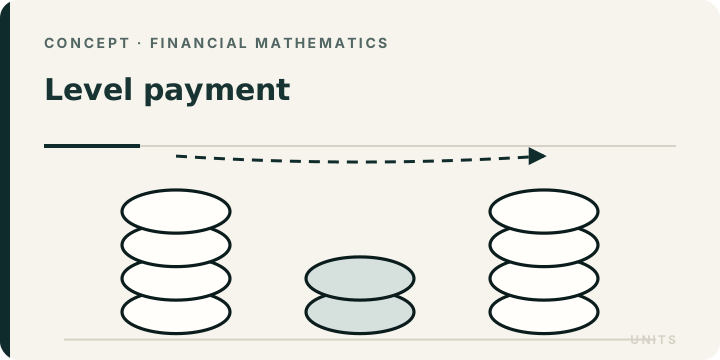
A constant amount paid at each stated interval that, under a declared rate and timing convention, is mathematically sufficient to value or extinguish a bounded balance over the stated…
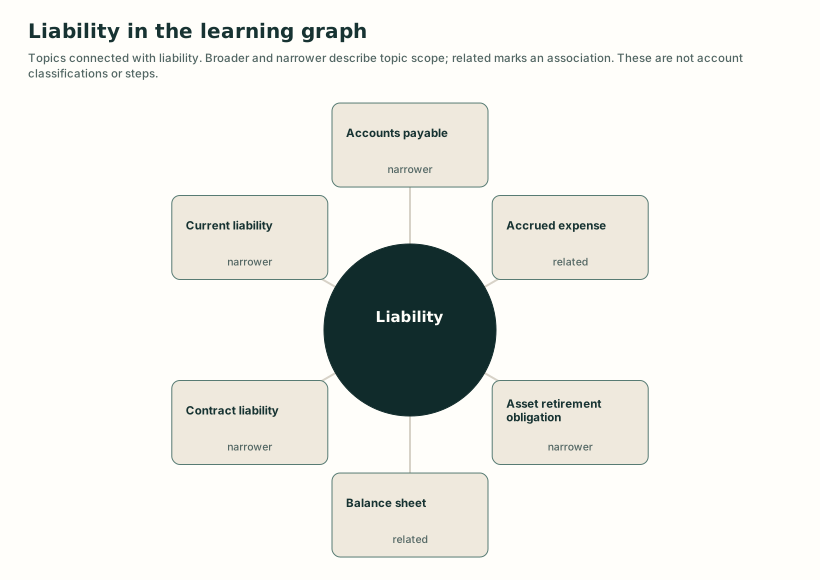
A present obligation of an entity to transfer an economic benefit; whether that obligation is recognized and how it is measured depend on the applicable reporting requirements.
A share based payment award recognized as a liability and remeasured at fair value at each reporting date until settlement.
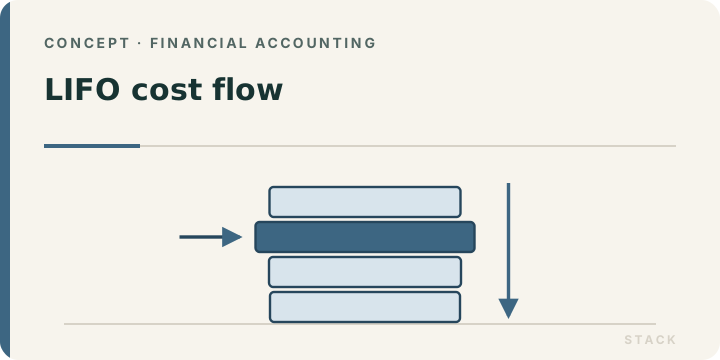
A US GAAP cost flow assumption that assigns the most recent available costs to cost of goods sold and leaves older costs in ending inventory, subject to scope, consistency, tax,…
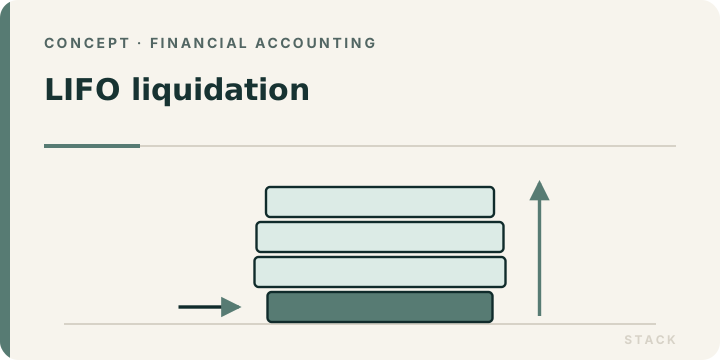
A reduction in a LIFO inventory pool that assigns older cost layers to current cost of goods sold because current additions do not replace units sold.
The disclosed difference between inventory measured on a non LIFO comparison basis, commonly FIFO, and inventory reported using LIFO at the same date and scope.
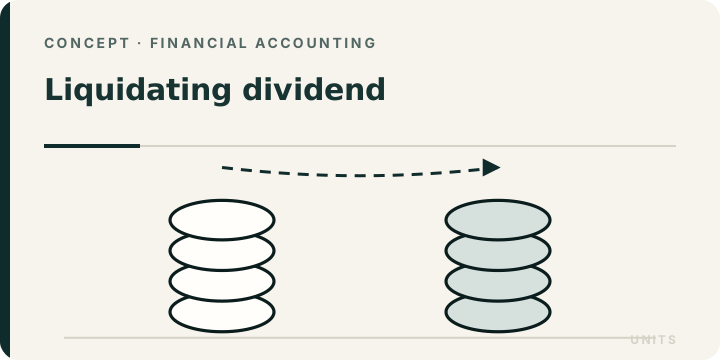
The portion of an owner distribution supported as a return of contributed capital rather than a distribution of accumulated earnings.
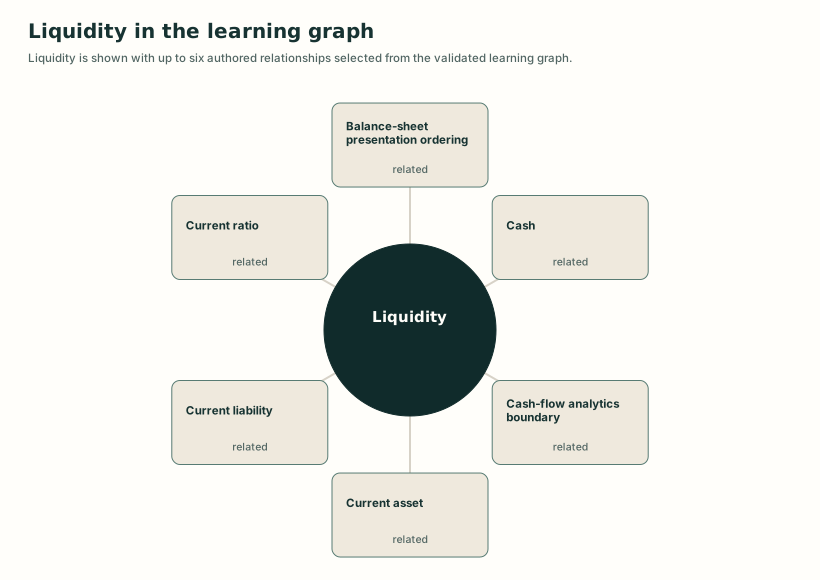
An entity's capacity to obtain and deploy cash or other available resources to meet obligations as they come due without unacceptable loss or disruption.
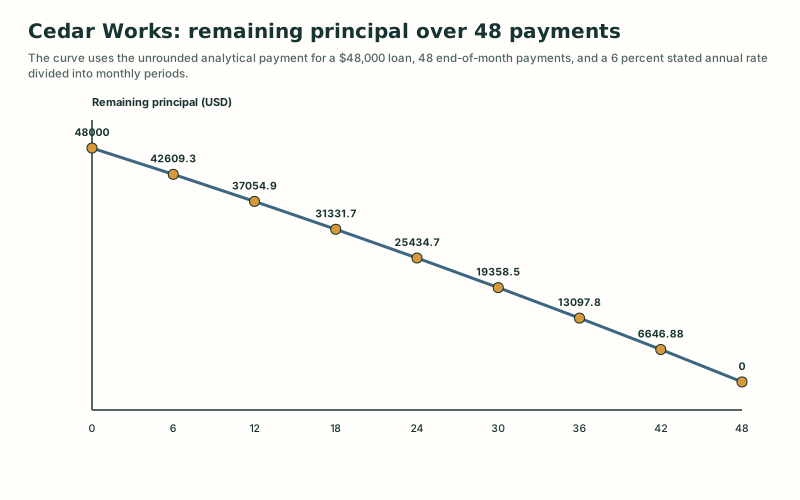
The period by period allocation of each scheduled payment between interest for that period and reduction of principal, with an opening and closing balance that reconcile across the loan…
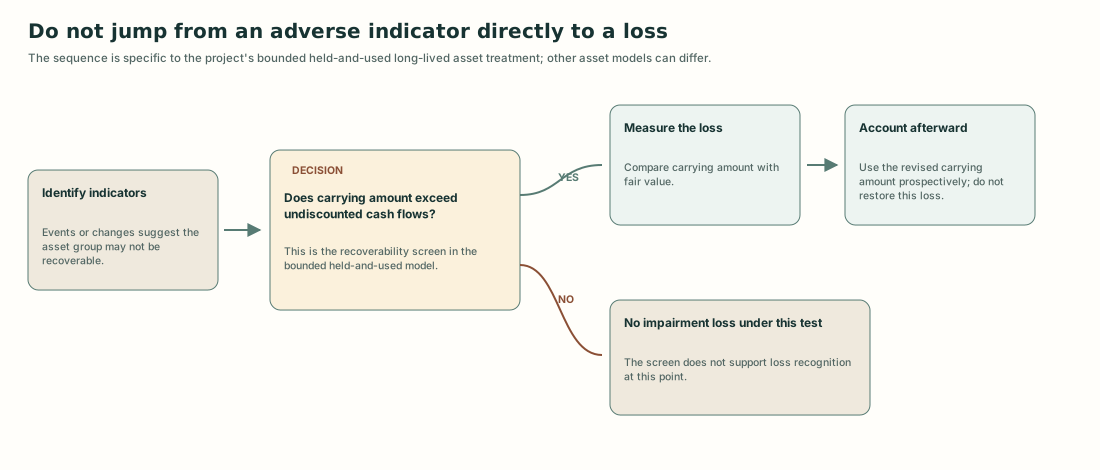
A standards governed reduction of a long lived asset group's carrying amount when the applicable impairment conditions are met and the required measurement produces a loss.
An existing condition involving uncertainty that future events will resolve by confirming an asset impairment or liability incurrence under the applicable reporting guidance.
Decision useful note information about the nature and possible financial effect of a qualifying loss exposure, including additional exposure beyond an accrual when applicable.
The decision to accrue a loss when the applicable US GAAP evidence supports both a probable balance sheet date loss condition and reasonable estimation, subject to specialized guidance.
An expected credit loss method that applies supportable loss rates to defined exposure pools after controlling historical basis and relevant adjustments.
A subsequent measurement rule that reports an in scope inventory population at the lower of its cost and supported net realizable value at the measurement date.
The retained US GAAP subsequent measurement path for inventory measured using LIFO or the retail inventory method, comparing cost with designated market constrained by a ceiling and floor.
An acquisition in which one consideration amount obtains multiple separately tracked assets and must be assigned across them using a supported allocation basis.
The half width added to and subtracted from a point estimate in a stated confidence interval procedure, commonly a critical value times an estimated standard error.
A comparison of the additional expected benefit and additional expected cost of a small feasible change from a stated baseline, holding the decision frame and relevant assumptions explicit.
The additional expected value produced by a specified feasible increment from a stated baseline, measured for the relevant decision maker, objective, period, and uncertainty.
The additional expected sacrifice caused by a specified feasible increment from a stated baseline, including cash, resource use, risk, delay, or the opportunity cost of displaced…
A defined institutional setting in which potential buyers and sellers of a specified good, service, resource, or claim interact under stated geographic, product, time, information,…
A condition related to the entity's share price, intrinsic value, or specified market comparison that is reflected in grant date fair value under the applicable model.
A price and quantity combination at which quantity demanded equals quantity supplied under the stated market model, schedules, period, and institutions.
A condition in which decentralized market exchange does not achieve a stated efficiency benchmark because relevant effects, information, power, goods, or institutions violate the…
The ability of a firm or coordinated group to profitably influence price, output, quality, access, innovation, or other competitive terms away from an applicable benchmark for a…
A classification of a defined market using features such as seller and buyer numbers, product differentiation, entry conditions, information, strategic interaction, and control over…
The supplied yield that discounts an instrument's contractual cash flows to its issue price under the declared accounting scope and period convention.
A systematically determined asset measure used under a supported policy for expected return or gain and loss amortization rather than a substitute for ending fair value in funded status.
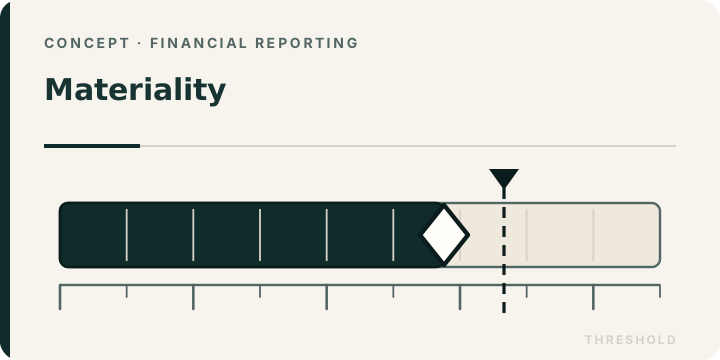
The importance of an item to users' judgments in the circumstances of a particular entity's financial reports, considering its amount and nature.
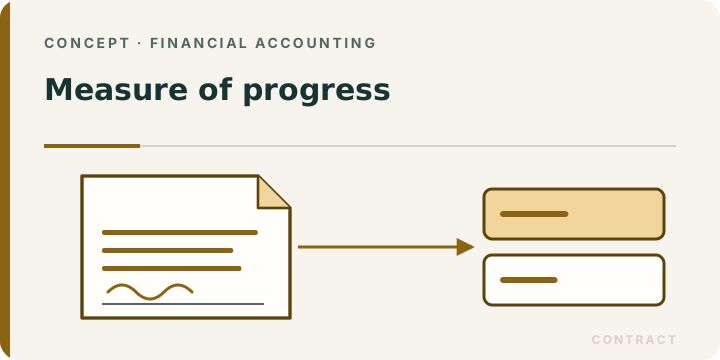
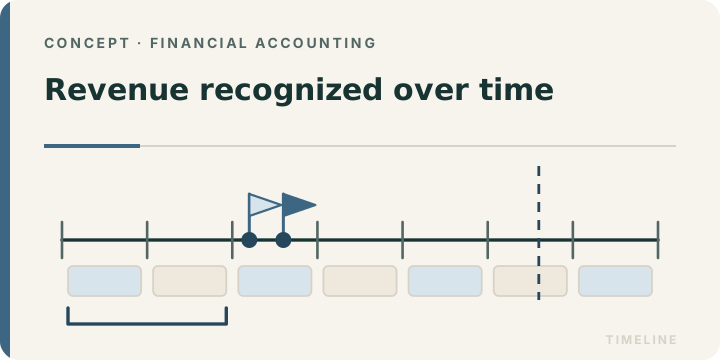
A consistently applied output or input method that faithfully depicts an entity's progress toward complete satisfaction of an over time performance obligation.
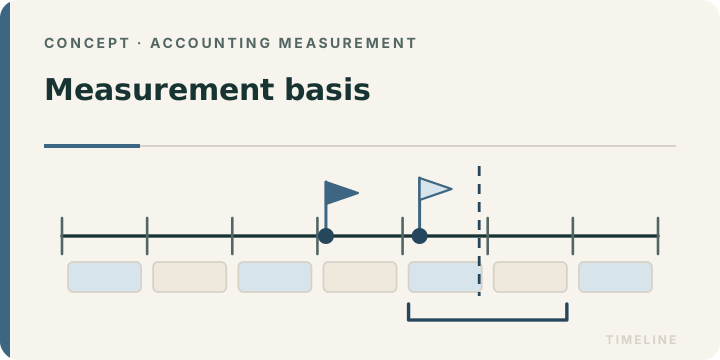
The specified attribute and perspective used to express a recognized item in monetary units, together with the timing, inputs, and update convention that make the amount interpretable.
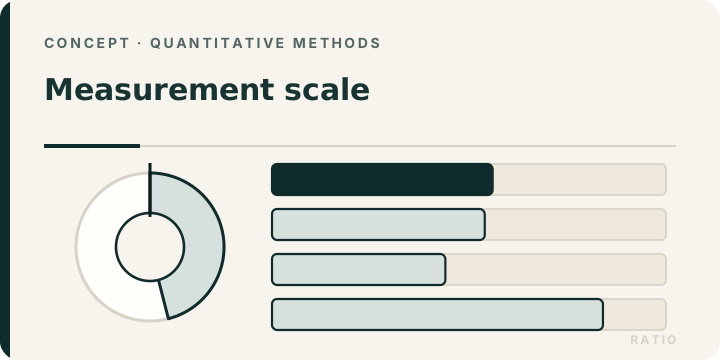
The comparison and arithmetic structure supported by a variable's values, commonly distinguished as nominal, ordinal, interval, or ratio.
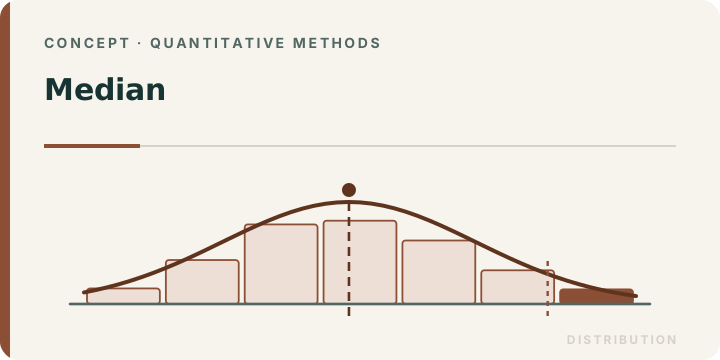
The positional center of ordered observations, with at least half the values at or below it and at least half at or above it under the stated convention.
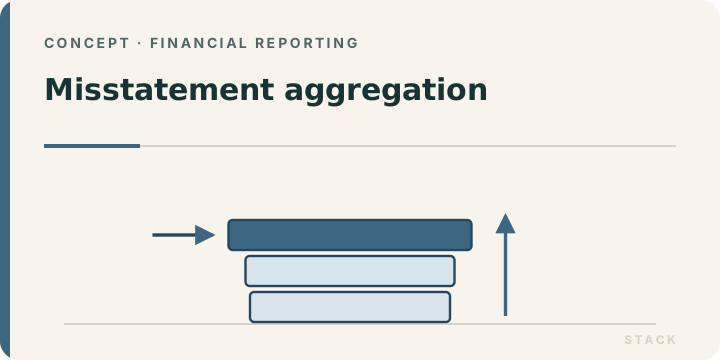
The controlled combination of individually identified corrected and uncorrected misstatements, including offsetting and carryover effects, for a complete reporting period evaluation.
The source, owner, date, unit, currency, period, transformation, assumption status, and version attached to each material spreadsheet or code input.
Actions and communications by a monetary authority under its legal mandate that influence policy rates, reserves, balance sheet conditions, expectations, and broader financial conditions…
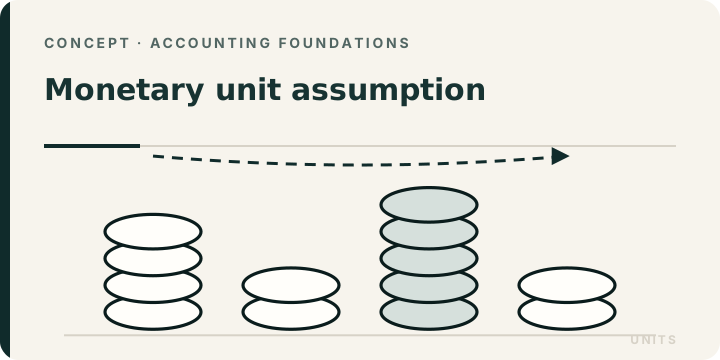
The accounting assumption that amounts recorded in the financial statements are expressed in a common monetary unit, such as US dollars.
A market structure model with many sellers offering differentiated products, some discretion over their own terms, and entry and exit that can erode persistent economic profit under the…
A market structure model in which one seller supplies a defined market and meaningful entry or substitution does not discipline that seller in the modeled period.
The Topic 740 recognition threshold applied to whether a tax position is expected to be sustained on its technical merits under the required examination assumption.
A collectively bargained plan to which more than one unrelated employer contributes and for which an individual participating employer ordinarily applies contribution and disclosure…
One transaction in which proceeds or noncash consideration must be allocated among two or more issued securities using supported measurement evidence.
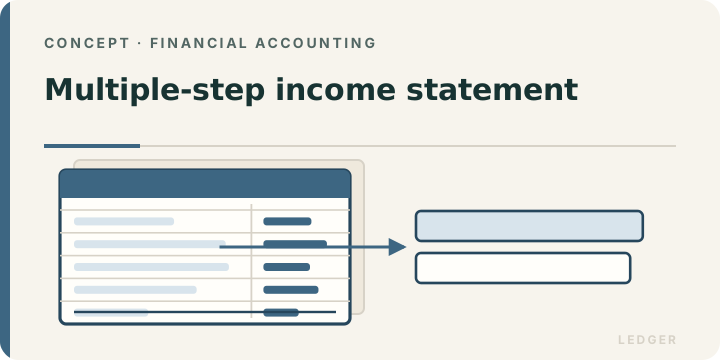
An income statement format that reports intermediate subtotals, separating the cost of goods sold and operating expenses from peripheral items so that gross profit and operating income…
A controlled mineral, timber, or other extractive resource whose supported depletable cost is allocated by estimated recoverable units as extraction occurs.
Sales included in a stated period that create qualifying customer receivables, reduced by the returns, allowances, or other deductions included in the declared analytical convention.
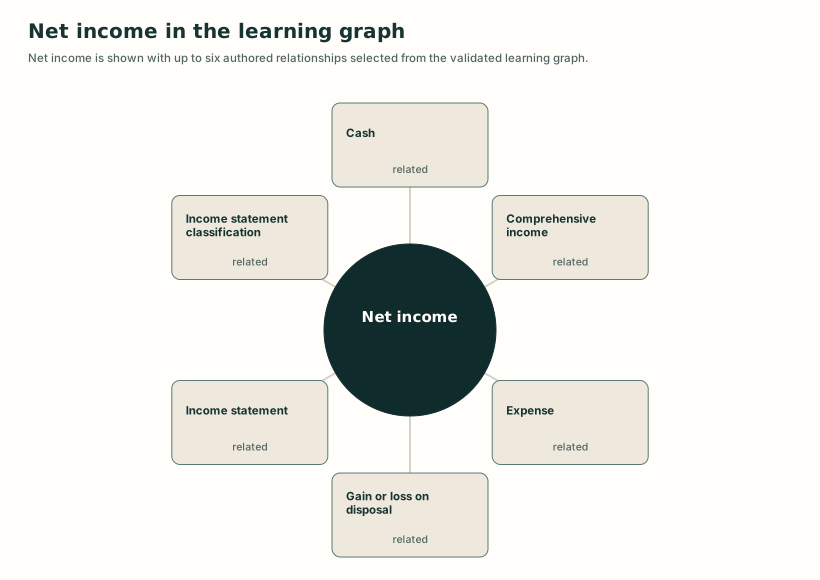
Revenue and gains less expenses and losses included in income for a reporting period, excluding owner transactions and items of other comprehensive income.
A tax attribute representing a supplied tax loss available to reduce taxable income in permitted future periods, subject to enacted limitations and realization evidence.
The period's pension cost assembled from service, interest, expected return, prior service, gain or loss, transition, and applicable special event components.
The period's cost of a defined benefit other postretirement plan, assembled from the applicable service, interest, expected return, prior service, gain or loss, and transition components.
A profitability relationship that divides same period net income by net sales under declared definitions to show the portion of each sales dollar remaining after all recognized income…
Gross domestic product valued at the prices prevailing in the measured period.
A numerical measure of historical or future financial performance, position, or cash flow that adjusts, includes, or excludes amounts relative to the most comparable measure defined by…
A customer check the bank refused to honor for lack of funds, which reverses cash the entity had already recorded and restores the amount as a receivable from the customer.
Transaction price components arising from noncash value promised by a customer and amounts paid or payable by the entity to that customer, measured and classified under Topic 606's…
An investing or financing transaction that changes recognized assets, liabilities, or equity without a cash receipt or payment in the period and is therefore excluded from cash flow…
The portion of a consolidated subsidiary's equity and earnings attributable to owners other than the parent, presented within consolidated equity and separately attributed under the…
An error whose effects do not reverse automatically through ordinary subsequent period accounting and therefore persist until corrected or otherwise resolved.
A transaction in which an entity gives up a noncash asset to obtain another asset, requiring explicit scope, commercial substance, fair value, boot, and derecognition analysis rather…
Error arising from coverage, nonresponse, measurement, classification, processing, linkage, cutoff, or other data generation problems rather than from selecting a sample instead of a census.
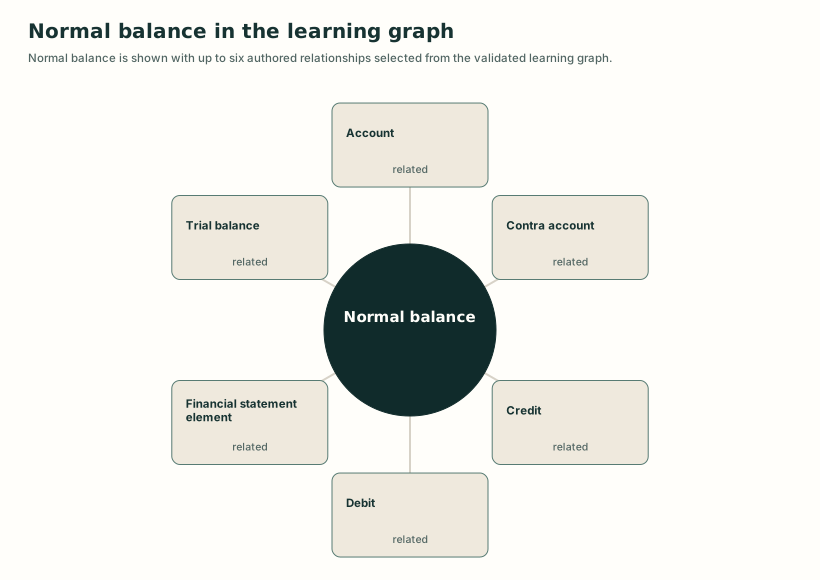
The debit or credit side on which increases in an account class are normally recorded and on which a positive balance for that class is ordinarily shown.
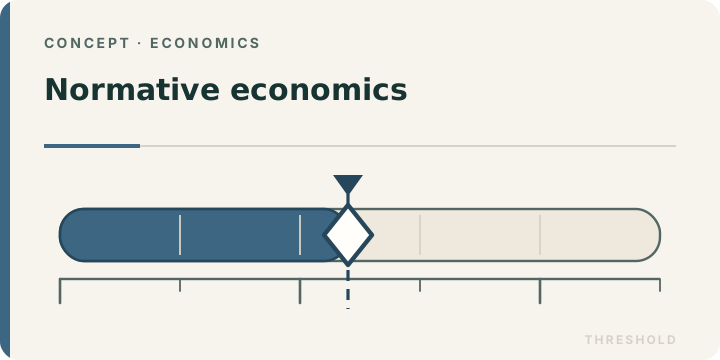
Economic analysis that evaluates outcomes, institutions, or policies against explicit values, objectives, rights, distributional criteria, or judgments about what ought to occur.
Written financial claims whose principal, stated interest, payment dates, maturity, collateral, and other enforceable terms require separate recognition, measurement, collection, and…
The entity, event, document, transaction, account, period, or other case about which one row or recorded set of variables supplies information.
Financing or risk bearing arrangements whose obligations, assets, or leverage effects are not recognized on the face of an entity's balance sheet, whether because of valid accounting…
A market structure setting with few enough significant firms that each may need to anticipate rivals' reactions when choosing price, quantity, quality, capacity, entry response, or other…
The offsetting adjustment to opening retained earnings or another appropriate equity or net asset component for supported effects arising before the earliest period presented or at an…
The net cash inflow or outflow from activities classified as operating under the applicable reporting framework, commonly including cash consequences of transactions that enter the…
An analytical comparison of same period operating cash flow and net income using an absolute gap and, only under a declared meaningful denominator convention, a ratio, followed by…
The recurring span in which an entity commits resources to its principal operating activity and ultimately realizes cash from the related goods or services, used in relevant balance…
Analysis that relates aligned operating flows to average operating balances and converts selected turnover measures to days, while treating the results as evidence prompts rather than…
Gross profit less operating expenses, the subtotal that reports the result of an entity's central and continuing activities before peripheral items and tax.
A lessee lease that is not classified as finance and ordinarily produces a single lease cost while retaining effective interest liability measurement.
A lessor lease that is neither sales type nor direct financing, under which the lessor retains the underlying asset and recognizes lease income and deferred initial direct costs over the…
A component of a public entity that engages in business activities, has discrete financial information available, and whose operating results are regularly reviewed by the CODM for…
The value of the most valuable feasible alternative forgone because a choice uses a scarce resource in another way, measured for the decision maker and decision frame at issue.
An annuity whose equal payments occur at the end of each equal period, so the first payment is one full period after the valuation date.
Revenues, expenses, gains, and losses included in comprehensive income but excluded from net income for the period because specific US GAAP requires that presentation.
An employer arrangement providing retiree healthcare, life insurance, or another postretirement benefit outside a pension plan.
A residual balance sheet presentation category for recognized assets that are not separately presented within a more informative caption under the applicable reporting framework and…
A current period entry that corrects an amount originating in an earlier period under a supplied conclusion that the resulting current and prior period reporting is appropriate.
An observation that appears unusually distant or inconsistent under a declared distributional, graphical, or rule based comparison and therefore warrants investigation.
The difference between the financial reporting carrying amount and tax basis of an investment, together with the evidence controlled boundary for specified exceptions to comprehensive…
A check written and recorded by an entity that the bank has not yet paid at the reconciliation date, subtracted from the bank balance on a bank reconciliation.
Issued shares currently held by shareholders other than the issuing entity, after excluding treasury shares.
A per share amount established by governing documents or law that may determine the legal capital portion of an issued share but is not its market value.
A fixed numerical characteristic of a defined population or probability model, usually unknown when only a sample is observed.
Depreciation assigned to less than a full reporting period using a supported in service date, disposal date, activity measure, and consistently applied convention.
Preferred stock whose holders share in additional dividends or earnings beyond a stated preference under specified terms.
A security or award with rights to dividends or undistributed earnings that require allocation under the two class method when Topic 260's conditions are met.
The employer's period end recognition of compensation and supplied employer obligations earned through the reporting date but unpaid at that date.
The accumulated equity layers for benefit plan gains, losses, prior service amounts, and any remaining transition amounts not yet recognized in periodic cost.
A supported demographic or economic input to benefit measurement, such as mortality, retirement, turnover, compensation growth, or healthcare utilization.
The transfer of a supported prior service or gain and loss amount from AOCI into net periodic benefit cost without creating a second economic event.
The plan asset gain or loss that includes the difference between actual and expected return for the applicable recognition bridge.
A payment by the plan to participants that ordinarily reduces both the benefit obligation and plan assets.
The current rule that only the service cost component of net periodic benefit cost is eligible for capitalization as part of another asset, subject to that asset's guidance.
A supported delayed recognition method that amortizes the excess of opening unrecognized net gain or loss over a threshold based on the greater of opening obligation or applicable plan…
An event that significantly reduces expected future service or eliminates significant future benefit accruals for a defined employee group under the applicable guidance.
The note schedule reconciling benefit obligations, plan assets, funded status, cost, OCI/AOCI, assumptions, and expected cash flows for the applicable plans and periods.
The rate used under current guidance to discount expected benefit cash flows to the measurement date, selected from supported duration and quality evidence.
The fair value of plan assets minus the projected benefit obligation for a pension plan at the measurement date.
The control distinction between sponsor contributions to the trust and net periodic benefit cost recognized under Topic 715.
The increase in the benefit obligation attributable to the passage of time, computed from the supplied opening obligation and discount rate convention.
The controlled date as of which the benefit obligation and plan assets are measured, including any valid and consistently applied practical expedient election.
A change in the benefit obligation arising from assumption changes or experience different from prior actuarial expectations.
Current period changes in funded status not recognized in net periodic benefit cost, including applicable gains, losses, and prior service amounts, before tax.
An authorized change to plan terms that can alter benefits attributed to prior or future employee service and may require remeasurement.
Assets segregated and restricted in the benefit trust for participant benefits, measured under the applicable fair value guidance and not available as ordinary sponsor liquidity.
A plan change that limits or stops specified future benefit accruals without extinguishing benefits already earned or automatically settling the obligation.
The change in the benefit obligation caused by a plan amendment that grants or reduces credit for employee service rendered before the amendment date.
The actuarial present value of benefits attributed to employee service during the current period under the defined benefit pension formula.
The current presentation rule that places service cost with other compensation while presenting other net benefit cost components separately outside operating income when that subtotal…
An irrevocable action that relieves the sponsor or plan of primary responsibility for a benefit obligation and meets the applicable recognition criteria.
The effect of a supported accounting change or error correction on basic and diluted per share amounts for each affected period, using the period's corrected numerator and denominator facts.
A benchmark market structure model with many price taking participants, homogeneous output, sufficiently free entry and exit, and information and mobility assumptions that prevent one…
A vesting or exercisability condition tied to a specified operation or activity of the entity, another entity, or the grantee under Topic 718's current definitions.
A promise in a customer contract to transfer a distinct good or service, a distinct bundle, or a qualifying series of substantially the same distinct goods or services.
The decimal growth or discount rate applied once to each interval represented by one period in a time value calculation.
A recordkeeping system that accumulates purchases during the period and derives ending inventory and cost of goods sold after a reporting date count or other supported quantity…
An increase or decrease in equity arising from a transaction outside an entity's major or central activities, measured net of the related carrying amount rather than reported as gross…
An account whose ending balance carries into the next reporting period instead of being reset to zero by closing entries.
A book tax difference that affects book income or taxable income but does not create a future taxable or deductible reversal.
A recordkeeping system that updates inventory units and assigned cost as purchases, sales, returns, and other movements occur, then reconciles those records to physical and ownership…
Evaluation of financial assets with shared risk characteristics on a collective basis and separate evaluation when an asset no longer shares those characteristics.
The complete, explicitly bounded set of observational units about which a statistical question seeks a description, parameter, or inference.
Economic analysis of what is, was, or would occur under stated conditions, framed so that evidence and a model could in principle support, refine, or contradict the claim.
A trial balance drawn after the closing entries have been posted, containing only permanent accounts and serving as the opening ledger of the next period.
The process of transferring each journal entry line to the corresponding ledger account so that account activity and balances can be accumulated.
The systematic assignment of expected postretirement benefits to employee service periods under the plan's eligibility and benefit terms.
Securities or contracts that may entitle their holders to common shares and therefore require a diluted EPS route when in scope.
A supported conclusion that an allowable accounting principle is more appropriate for the entity's reporting than the previously used allowable principle.
A cumulative preferred dividend amount carried forward because it has not been declared or paid, subject to the instrument's terms.
A class of ownership or other financial instrument with specified preferences whose accounting classification and rights depend on its complete terms.
An asset arising when an entity pays before receiving or consuming the related future economic benefit, with the asset reduced and expense recognized as that benefit is consumed under…
The amount at a specified valuation date that is equivalent, under declared cash flow, rate, timing, and measurement assumptions, to one or more amounts at other dates.
Income from continuing operations before the related income tax expense or benefit under the stated reporting scope.
A rule that sets a maximum permitted price for specified transactions, with a binding ceiling placed below the otherwise applicable market equilibrium in the stated model.
The distinction between a change in consideration the entity expects to be entitled to and a failure to collect an established receivable or contract asset.
The proportional responsiveness of quantity demanded to a proportional change in the good's own price, holding the stated demand determinants fixed over a defined market, range, and period.
The proportional responsiveness of quantity supplied to a proportional change in the good's own price, holding the stated supply determinants fixed over a defined market, range, and period.
A rule that sets a minimum permitted price for specified transactions, with a binding floor placed above the otherwise applicable market equilibrium in the stated model.
The market with the greatest volume and level of activity for the asset or liability that the reporting entity can access at the measurement date.
Gross or net revenue presentation based on whether the entity controls the specified good or service before transfer to the customer or instead arranges for another party to provide it.
An elective accounting alternative available to an eligible private company that changes subsequent goodwill accounting, including amortization and impairment testing.
The modeled difference between the amount sellers receive and the minimum amount represented by the supply relationship for units traded, aggregated under stated cost, allocation, price,…
A model boundary showing the maximum attainable combinations of two specified outputs during a period when resources, technology, quality, and other stated conditions are fixed.
A condition in which no more of one modeled output can be produced without reducing another, or a specified output cannot be produced with fewer inputs, given the technology, quality,…
The line between a bounded intermediate accounting application and a conclusion that requires advanced accounting, valuation, legal, tax, systems, or assurance expertise.
The use of relevant knowledge, accounting requirements, evidence, and ethical responsibilities to reach a conclusion that calculation alone cannot settle.
The actuarial present value of pension benefits attributed to service to date using expected future compensation when the benefit formula depends on compensation.
A distribution to owners of a noncash asset whose measurement and gain or loss consequences are determined before the distribution entry.
A period reconciliation that explains changes in gross property, plant, and equipment, accumulated depreciation or impairment, and resulting net carrying amount by controlled movement…
A ledger of proposed journal adjustments that preserves issue ID, accounts, debits and credits, period, tax and cash effects, evidence, conclusion state, preparer, reviewer, and posting…
Recognition of a change from the change date forward in the current period and future periods as applicable, without revising prior period reported amounts.
A method for locating, identifying, interpreting, and cross checking financial statements, notes, schedules, management discussion, controls information, exhibits, and machine readable…
An acquired financial asset with more than insignificant deterioration in credit quality since origination that follows the applicable purchased credit deteriorated initial allowance and…
A quality used to assess the usefulness of financial information, such as relevance, faithful representation, comparability, verifiability, timeliness, or understandability.
Evaluation of the surrounding facts that may affect the significance of a misstatement in addition to its quantified magnitude, without using any example factor as an automatic rule.
The quantity potential buyers are willing and able to purchase at one specified price during a stated period under a particular demand relationship.
The quantity potential sellers are willing and able to offer at one specified price during a stated period under a particular supply relationship.
The degree to which ratio inputs and definitions are aligned well enough across entities or periods for a stated comparison, with material differences identified rather than silently…
Gross domestic product expressed on an inflation adjusted quantity basis using the statistical agency's stated price and chain type conventions.
A distinction between a value expressed in current monetary units and a value adjusted to a stated price basis for purchasing power or quantity comparison.
A controlled grouping of receivable exposures by elapsed delinquency or another time based status for collection, credit risk, and estimation analysis.
Removal of a receivable's gross amount and its associated allowance when the asset is deemed uncollectible under the entity's controlled policy.
Financial statement information connecting receivable classes, policies, credit quality, estimate methods, allowance activity, modifications, collateral, accrued interest, and transfers…
A significant, broad decline in economic activity associated with the contraction phase of a business cycle and dated under a stated institutional or analytical convention.
A presentation adjustment that identifies an amount included in current net income that had been included in other comprehensive income in the current or a prior period, preventing…
The process of formally incorporating an item that meets an element definition into financial statement totals through words and a measured amount, subject to applicable recognition…
A mistake made while recording or posting a transaction, which either leaves total debits equal to total credits or does not, and which a trial balance can therefore hide or expose.
A transferor's retained obligation to compensate a transferee for specified receivable losses or other events, measured and presented within the applicable transfer path.
In the bounded US GAAP held and used impairment model, the screen that compares an asset group's carrying amount with the applicable sum of undiscounted cash flows to determine whether…
Cash or another supported recovery associated with a receivable previously written off, recorded through the applicable gross and allowance or recovery path.
A transfer of resources, services, obligations, or other economic interests between an entity and a party whose relationship can affect the terms, authorization, disclosure, or…
The ability of financial information to make a difference to users' decisions by helping them form expectations, assess earlier judgments, or both.
Transaction price allocated to unsatisfied or partially unsatisfied performance obligations at the reporting date, accompanied by expected recognition timing and applicable practical…
An operating segment or permitted aggregation of operating segments that is separately reported after applying Topic 280 aggregation, quantitative, coverage, consistency, and other…
The business, group, or other defined set of economic activities represented by a particular set of financial reports.
The reproducible capture of entity, period, reporting basis, units, source versions, preparer handoff, cutoff, and file hashes before substantive close work begins.
The applicable organizational unit to which acquired goodwill is assigned and at which the core goodwill impairment model is applied.
An analysis whose registrant, accession, form, filed date, period, taxonomy, concepts, units, contexts, transformations, code, exclusions, and output can be independently reconstructed.
A change in accounting principle made to adopt authoritative requirements, using the scope, effective date, transition method, and elections supplied by the pronouncement.
The period during which a grantee must provide service in exchange for a share based payment award under its explicit, implicit, or derived terms.
A cost of planned search, investigation, or translation of knowledge into a new or significantly improved product, process, technique, formula, or design within the applicable R&D scope.
Revision of previously issued financial statements to reflect correction of an error, with the affected comparative amounts and disclosures identified under the supported reporting…
Cash whose use is limited by contract, regulation, or management designation, reported separately from unrestricted cash and included with cash in the totals the statement of cash flows…
The statement or note bridge from balance sheet line items containing cash, cash equivalents, and amounts generally described as restricted cash or restricted cash equivalents to the…
An inventory estimation system that applies a controlled cost to retail relationship to ending inventory at retail, with method specific treatment of markups, markdowns, sales, and other…
A permanent equity account that accumulates net income and losses, reduced by dividends and other changes charged to the account.
A disclosed legal, contractual, or discretionary limitation on the use or distribution of retained earnings.
The required recasting of current and comparative share and per share data for qualifying stock dividends, splits, reverse splits, and related events.
Application of a different accounting principle to prior periods as if it had always been used, or presentation of a reporting entity change as if the new entity had existed in those…
The distinction between recasting prior periods for a supported accounting change and revising previously issued statements because they contained an error.
A profitability relationship that divides same period net income by average total assets under declared definitions to measure period income per average recognized asset dollar.
A profitability relationship that divides same period net income by average total equity under declared definitions to measure period income per average accounting equity dollar.
An inflow or other enhancement of assets, a settlement of liabilities, or a combination of both that results from delivering or producing goods, rendering services, or carrying out other…
Information about the nature, amount, timing, and uncertainty of revenue and cash flows from customer contracts, including disaggregation, contract balances, performance obligations, and…
Recognition when control transfers at a particular point because the performance obligation does not satisfy an over time criterion.
Recognition as performance occurs when one of Topic 606's over time criteria is met, using a faithful measure of progress toward complete satisfaction.
The chronological record of changed facts, assumptions, conclusions, formulas, entries, disclosures, reviewers, and reasons across versions of a reporting workpaper.
A customer right to return a transferred product that requires revenue for expected retained sales, a refund liability, and an asset for the right to recover products, subject to…
The customer's combined right to obtain substantially all economic benefits from an identified asset's use and to direct that use throughout the period.
A lessee's recognized right to use an underlying asset during the lease term, initially based on the lease liability and specified commencement adjustments.
Financial statement note information required to explain specified operations, estimates, vulnerabilities, concentrations, or uncertainties for the reporting entity and period under…
The SAB 108 quantification view that measures how much the current period income statement is misstated by originating and reversing effects in that period.
A transfer and leaseback arrangement whose accounting begins by determining under the applicable sale guidance whether control of the underlying asset transferred.
A reduction in the amount payable when a customer settles within a stated period. In a customer revenue contract, the discount affects the estimate of the consideration the seller…
An obligation for qualifying taxes collected from customers on behalf of a taxing authority rather than consideration earned by the seller.
A lessor lease meeting a Topic 842 transfer style classification criterion and ordinarily recognizing net investment and selling profit or loss at commencement under the applicable…
The amount an entity expects to obtain from an asset at the end of its useful life, net of the expected cost of disposal, which is excluded from the amount allocated to expense.
A subset of units or measurements observed from a defined frame and used to describe those observations or learn about a target population under a stated design.
The operational list or mechanism that identifies the units from which a sample can actually be selected for a defined target population.
The variation in a statistic that arises because different samples selected under the same design generally contain different units and values.
The condition in which available time, money, labor, materials, attention, or other resources cannot satisfy every feasible use at once, so selecting one use constrains alternatives.
Financing in which receivables remain recognized and support a borrowing because the transfer does not qualify for derecognition or is structured as collateralization.
The statutes, rules, institutions, and enforcement processes governing securities offerings, continuing issuer disclosure, market participants, trading, and investor protection within a…
The noncash disclosure of a transferor's beneficial interest obtained in a securitization and the investing classification of later cash receipts on beneficial interests in securitized…
The dated derecognition of a sold security and reconciliation of proceeds with its applicable carrying layers, including any required release or reclassification of accumulated amounts.
Topic 280 note information that explains how a public entity identifies and measures its reportable segments, the CODM function, significant expenses and other segment items, segment…
A long lived asset an entity builds for its own use, whose cost is assembled from supported direct and allocated construction inputs through the readiness date.
The explicit separation between a mechanical what if change and evidence supporting an estimate, probability, valuation, forecast, or causal claim.
A source or use within a mixed cash receipt or payment that can be distinguished from other components and classified according to its own underlying nature after specific guidance is…
A vesting condition based on the grantee providing service for a specified period or under specified circumstances.
The maximum number and classes of shares an entity is legally permitted to issue under its governing documents, before considering later amendments.
A direct and incremental cost attributable to an equity issuance and accounted for against the related proceeds under the applicable guidance.
The formal cancellation of reacquired issued shares, reducing issued shares and removing their supported original capital amounts.
Failure of an award to vest because a service or other applicable vesting condition is not satisfied, accounted for under the entity's supported policy and current guidance.
A change to an award's terms or conditions that enters modification accounting when the current scope threshold is met.
An arrangement in which an entity obtains employee or nonemployee goods or services in exchange for shares, options, other equity instruments, or amounts based at least partly on its…
The classification and reconciliation of cash taxes, employee share withholding remittances, option exercise proceeds, and other cash effects associated with share based awards under the…
A component by component reconciliation from opening to ending contributed capital, retained earnings, AOCI, treasury shares, noncontrolling interests when applicable, and total equity.
Contract terms about shipment or delivery that help identify the event at which control of goods transfers and which party bears freight or loss while the goods are in transit.
A class of underlying asset policy election under which a lessee does not recognize ROU assets and liabilities for qualifying short term leases.
A short term obligation evaluated for noncurrent classification under current US GAAP using both intent and qualifying evidence of ability to refinance on a long term basis.
A market imbalance at a specified price and period in which quantity demanded exceeds quantity supplied under the stated demand and supply relationships.
A material financing benefit embedded in payment timing that requires the promised consideration to be adjusted for the time value of money, subject to the purpose, timing, and practical…
The investor's ability, supported by ownership and qualitative evidence under current guidance, to exercise significant influence over an investee's operating and financial policies…
A defined benefit plan maintained by one employer or a controlled group for which the sponsor applies the obligation, plan asset, funded status, cost, and OCI model.
Software developed for sale, lease, licensing, or other external marketing and therefore routed through the applicable external product software model rather than the internal use model.
A document or data record used as evidence for facts about an economic event before or while the event is represented in an accounting system.
The controlled determination that all documents, data populations, versions, periods, approvals, and external evidence required for the reporting issues are present or explicitly logged…
A customer arrangement whose delivery, possession, repurchase, consignment, acceptance, or intellectual property terms require additional control and scope analysis before applying an…
A cost assignment method that traces the actual cost of an identified, noninterchangeable or separately tracked unit to sale or ending inventory.
The price at which an entity would sell a promised good or service separately to a customer at contract inception, observed directly when available or estimated using suitable evidence.
The nonnegative square root of variance, expressing a distribution's deviation based spread in the original variable's units.
The standard deviation of a statistic's sampling distribution, commonly estimated for a simple sample mean as the sample standard deviation divided by the square root of sample size.
An annualized rate quote that, under the declared convention used here, is divided by the number of compounding intervals per year to obtain the rate applied each period.
The contractual annual rate applied to the specified principal base to determine stated cash interest, converted to the matching payment period.
A financial statement that classifies period cash receipts and payments as operating, investing, or financing activities and reconciles the beginning and ending cash related totals…
A financial statement that reconciles each presented equity component from its beginning balance through performance, owner transactions, and other recognized changes to its ending…
A numerical quantity calculated from observed sample data, such as a sample mean, median, proportion, variance, or standard deviation.
Reasoning from observed data to a defined population quantity or claim under an explicit design, model, assumptions, uncertainty statement, and conclusion boundary.
A pro rata distribution of additional shares to existing owners that changes share units and reallocates amounts within equity under the applicable route.
A proportional change in the number of shares and per share par or stated value that leaves total equity unchanged.
An allocation pattern that charges an equal amount of an asset's depreciable amount to each period of its useful life.
A disposal or planned disposal of a component that has, or will have, a major effect on an entity's operations and financial results, which is the condition for reporting the component…
A debt provision allowing a creditor to accelerate maturity under a condition that is not objectively determinable, requiring current guidance analysis of classification and disclosure.
An event or transaction occurring after the balance sheet date but before the applicable issuance or availability date whose recognition, disclosure, or nonadjustment depends on the…
Spending after an intangible asset is recognized, classified by the purpose of the spending and the US GAAP model that applies to that activity rather than added automatically to the…
A post acquisition cost evaluated for whether it maintains existing service, creates or enhances future service potential, replaces a component, or falls within another recognition and…
The required allocation, adjustment, remeasurement, or test of a recognized item's amount after initial recognition and through a later reporting date.
Cash collection information obtained after the reporting date and evaluated under a documented policy for what it evidences about conditions and expected credit losses at that date.
A good related to another such that, under a stated market relationship, a rise in one good's price is associated with greater quantity demanded of the other, all else held as specified.
An accelerated allocation pattern that applies a declining fraction to a fixed depreciable amount, with the denominator equal to the sum of the digits of the useful life.
A resource sacrifice already incurred that cannot be changed by the current alternatives, even though it may remain relevant to reporting, accountability, learning, litigation, or future…
A relationship showing the quantities potential sellers are willing and able to offer at alternative prices during a stated period, holding specified nonprice determinants constant.
A graphical or algebraic representation of a supply relationship, usually placing price and quantity on axes while specified nonprice determinants are held constant.
A market imbalance at a specified price and period in which quantity supplied exceeds quantity demanded under the stated demand and supply relationships.
A simplified two sided visual representation of one account that displays debit entries on the left, credit entries on the right, and the resulting balance under the account's normal…
The amount assigned to an asset, liability, or other item under the supplied enacted tax law for determining future taxable or deductible consequences.
A tax attribute representing a supplied credit available to reduce future tax, subject to enacted limitations, expiration, and realization evidence.
The supported current and deferred income tax consequences of an accounting change or error, allocated to the same periods and statement components as the underlying item when applicable.
The income base determined under the supplied enacted tax law for computing current income tax payable or refundable.
A temporary difference that will produce taxable amounts in future periods when the related asset is recovered or liability is settled.
The evidence supported threshold in the externally marketed software model after which qualifying production costs enter a capitalization window until the product is available for sale.
An account that collects one period's activity and is reset to zero through closing entries. Revenue, expense, and dividend accounts are common examples.
A difference between a book carrying amount and tax basis, or an equivalent future consequence, that will produce taxable or deductible amounts when the item is recovered or settled.
The principle that cash amounts at different dates are not directly comparable until they are translated to a common valuation date using a stated rate, timing convention, and set of…
The accounting assumption that a business's continuing activities can be divided into reporting periods, such as months, quarters, or years.
The quality of making information available to decision makers in time for it to be capable of influencing their decisions.
An efficiency relationship that divides same period net sales by a declared measure of average total assets to show sales generated per average asset dollar during the period.
The sum of modeled consumer and producer surplus over traded units under a stated market, valuation, cost, allocation, and scope, often used as a narrow efficiency benchmark.
Claims to cash or other assets classified by their origin in ordinary customer activity or another transaction and by the right, counterparty, term, and presentation that govern them.
A relationship in which obtaining more of one feasible outcome, objective, or use requires giving up some amount of another under the relevant constraints.
A debt security in the trading classification, measured at fair value with changes recognized in earnings under the applicable guidance.
The amount of consideration to which an entity expects to be entitled in exchange for transferring promised goods or services to a customer, excluding amounts collected for third parties.
The assignment of transaction price to performance obligations generally in proportion to their standalone selling prices, with specified exceptions for allocating discounts or variable…
The customer obtaining the ability to direct the use of and obtain substantially all remaining benefits from a promised asset, which determines when or as a performance obligation is…
A transaction in which receivable interests are conveyed, pledged, participated, factored, or otherwise provided to another party and require control, derecognition, continuing…
The authorized manner in which new accounting requirements enter reported periods, including the transition date, comparative treatment, cumulative adjustment, elections, and disclosures.
The contra equity cost or other permitted measure of an entity's own issued shares that it has reacquired and not formally retired.
The diluted EPS method that assumes option or warrant exercise and uses specified assumed proceeds to repurchase shares at the period's average market price.
A listing of ledger accounts and their debit or credit balances at a specified date, used to verify that total debit balances equal total credit balances and to support later reporting…
An EPS allocation method that assigns distributed and undistributed earnings between common shareholders and participating security holders according to their rights.
A position taken or expected to be taken in a tax return whose financial statement benefit depends on separate recognition and measurement under Topic 740.
The quality of presenting financial information clearly and concisely for readers with reasonable business knowledge who examine it carefully.
A liability arising in a basic cash first arrangement when an entity receives consideration before satisfying the related performance or refund obligation, with the liability reduced and…
The number of people classified as unemployed divided by the labor force under a specified statistical definition, population, period, and adjustment convention.
The individual item or group of rights, obligations, goods, services, or other components to which an accounting requirement is applied.
The compensation cost for share based payment awards expected to be recognized in future periods as the related service or other recognition conditions are satisfied.
The portion of a tax return benefit that is not recognized in the financial statements under the uncertain tax position model.
The explicit set of amounts, classifications, disclosures, or release decisions held open because required evidence or authority has not been obtained.
A material transaction or event that is unusual in nature, infrequent in occurrence, or both, whose nature and financial effects are separately presented within continuing operations or…
The period over which an entity expects an asset to provide service to that entity, determined from physical, economic, and legal limits rather than from the asset's total possible…
A defined characteristic that can take different recorded values across observational units or occasions under a stated coding and measurement rule.
Consideration whose amount can vary because of discounts, rebates, refunds, credits, price concessions, incentives, performance bonuses, penalties, or other uncertainty in the customer…
The limit that includes estimated variable consideration in transaction price only to the extent it is probable that a significant cumulative revenue reversal will not occur when the…
A measure of spread based on squared deviations from the mean, divided by a declared population or sample denominator.
The quality that allows knowledgeable, independent observers to reach reasonable agreement that information faithfully represents what it describes.
The actuarial present value of benefits that are not contingent on future employee service under supplied plan terms and participant data.
Disclosure of specified amortized cost financial assets and credit quality or writeoff information by year of origination or another required vintage structure.
An entity initiated move between acceptable accounting principles that is supported as preferable and reported under the applicable retrospective model unless impracticable.
A promise associated with a sale that is accounted for as a separate performance obligation when it provides service beyond assurance that the product complies with agreed…
A reconciliation of opening warranty liability, provisions for current sales, estimate revisions, claims settled, and ending liability for the stated coverage population and period.
The time weighted number of common shares outstanding during a reporting period after required retrospective share adjustments.
A cost flow method that assigns an average cost per unit from the cost and quantity in the relevant pool, either for the full period or after each purchase.
Portfolio disclosures that summarize remaining lease term and discount rate using the entity's documented weighting and population conventions.
Under the broad current balance definition, the amount by which total current assets exceed total current liabilities at a specified date, computed as current assets minus current…
The use of axes and members to qualify facts and filer defined taxonomy concepts when the standard taxonomy does not adequately represent a disclosed accounting concept.
The complete identity of a reported fact through its concept, entity, period, unit, dimensions, and filing provenance, together with value, scale, decimals, and presentation context.
Debt with no periodic stated coupon cash whose issue discount accretes through effective interest toward the contractual maturity amount.