A price floor binds only when it is above the market price that would otherwise prevail under the applicable model. When the floor is lower, it does not constrain the current price. If the floor binds, sellers would offer more than buyers would purchase at the controlled price. This difference is excess supply.
The price ceiling is the maximum-price counterpart. Its binding test and quantity imbalance run in the other direction. OpenStax Section 3.4 explains both controls together.
A higher permitted price does not sell every unit
The short side determines completed exchange in the simplest model. Some sellers may receive the higher price; others sell nothing. Buyers may substitute, quality may change, governments or intermediaries may purchase output, and entry or production can respond as conditions change.
Seller benefit depends on units actually sold, costs, allocation rules, market power, compliance, and adjustment—not the displayed price alone. Excess supply is also not automatically ending inventory or an accounting loss.
An analyst should preserve the legal scope, effective date, covered transaction, enforcement, and exemptions. Quantity records, inventory ownership, purchase commitments, revenue, costs, and cash are also needed before an incidence or reporting conclusion.
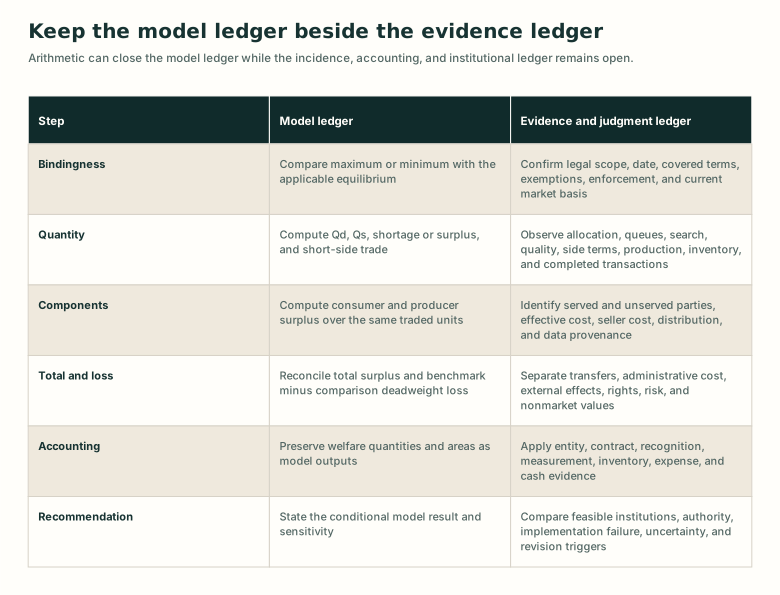
A price-control conclusion needs two ledgers
Detailed visual description
The table first compares a ceiling or floor with equilibrium, then computes demand, supply, imbalance, and short-side trade. Consumer and producer surplus use the same traded quantity, and deadweight loss reconciles total surplus rather than component transfers. A separate evidence ledger records legal scope, allocation, effective costs, production, inventory, transactions, distribution, external effects, rights, accounting recognition, alternatives, authority, and uncertainty.
Put the concept to work
Analyze this concept
- Test whether a minimum-price rule binds, compute the resulting model surplus and traded short side, and identify unsold output, eligibility, enforcement, quality, distribution, and accounting evidence needed for a seller-benefit claim.
Learning resources
Choose a lesson, try an application, or inspect the sources behind this concept.
Build on these ideas
- Market equilibrium — Analyze
To analyze this concept: Required. Bindingness depends on the floor's position relative to the applicable equilibrium.
- Surplus — Analyze
To analyze this concept: Required. A binding floor can create price-specific excess supply under the stated curves.