For one unit, producer surplus is the amount received minus the minimum amount represented by the supply relationship. The linear area aggregates that difference over traded units.
Producer surplus is not accounting profit. The supply area may reflect variable opportunity costs but omit fixed costs, period expenses, depreciation, financing, taxes, and recognition rules. Cash collection can also occur in a different period.
Unsold offers are not traded surplus
Under a binding price floor, quantity supplied can exceed quantity demanded. Computing the area over every offered unit would pretend unsold units were transacted. The bounded short-side calculation uses actual modeled traded quantity and separately reports excess supply.
A defensible conclusion retains the cost interpretation, units, allocation, traded quantity, market and period, unsold-output treatment, and affected sellers before describing producer benefit.
Do not call the area profit
If a seller receives $70 for a unit with a $45 marginal willingness to supply, the modeled producer surplus on that unit is $25. The measure does not automatically subtract fixed cost, sunk cost, taxes, financing, or accounting expenses. A market triangle also assumes the stated supply relationship and allocation. Show the price, traded quantity, and area, then state which costs the model omits. Profitability and cash-flow conclusions require the entity's records and the applicable accounting period.
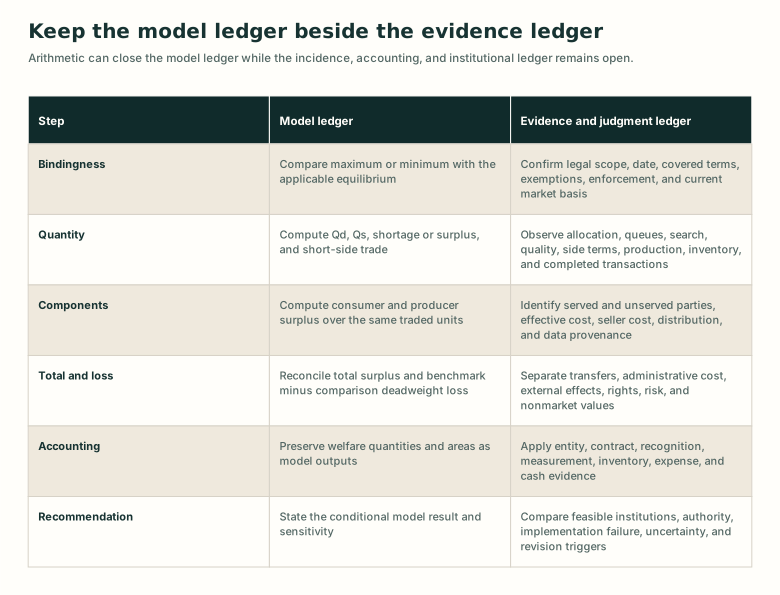
A price-control conclusion needs two ledgers
Detailed visual description
The table first compares a ceiling or floor with equilibrium, then computes demand, supply, imbalance, and short-side trade. Consumer and producer surplus use the same traded quantity, and deadweight loss reconciles total surplus rather than component transfers. A separate evidence ledger records legal scope, allocation, effective costs, production, inventory, transactions, distribution, external effects, rights, accounting recognition, alternatives, authority, and uncertainty.
Put the concept to work
Apply this concept
- Compute producer surplus for a linear supply segment and traded quantity, then distinguish the area from accounting profit, fixed cost, unsold output, cash flow, distribution, and empirical cost evidence.
Learning resources
Choose a lesson, try an application, or inspect the sources behind this concept.
Build on these ideas
- Marginal cost — Apply
To apply this concept: Helpful. In the foundational competitive model, the supply relationship is often interpreted through marginal opportunity cost.
- Supply curve — Analyze
To apply this concept: Required. The area uses seller reservation amounts represented by the inverse supply relationship.
Lessons
Worked examples and cases
Practice
Common mistaken ideas
Sources
Related concepts
Show 3 more related concepts
Use this idea next
- Total surplus — Analyze
Required level here: apply. Required. Producer surplus is the other component in the foundational model.