YouTube
Videos and playlists
65 recordings on the course channel, in the 4 playlists the channel keeps. Each opens on its own page here where one exists, and on YouTube in every case.
These materials change during the semester. Report an error or an unclear passage.
No matching recordings
Use fewer search words, or choose every playlist and every type.
Understanding Public Company Reporting
Where a public company's numbers come from, and how to check them yourself: the history of the SEC and EDGAR, the common filing forms, and an annual report read front to back.
- Explainer
Why Are Company Reports Public? The Story of the SEC and EDGAR
draft narrationWhy can anyone open a public company's annual report and read it? This is the story of how that became normal.
Watch on YouTube - Explainer
What Is a Form 10-K? A Guide to the Annual Report
draft narrationA domestic public company files its annual report with the Securities and Exchange Commission on Form 10-K. This video explains where the form came from, what its four parts contain, and how its list of Items has changed since 1977. It also explains the form labels in the Electronic Data Gathering, Analysis, and Retrieval system: 10-K, 10-K/A, 10-KSB, 20-F, and 40-F. The example is Apple's report for the fiscal year ended September 27, 2025.
Watch on YouTube - Explainer
How to Read a 10-K: Apple's Annual Report, Item by Item
draft narrationAn annual report on Form 10-K is a long document with a fixed outline, and the outline is what makes it readable. This video walks Apple's 2025 Form 10-K from the cover to the signature page, Item by Item, showing the filing itself rather than describing it. Where the audited statements are, what the auditor's opinion actually covers, why Part III is almost empty, who signs, and how to tell the period a number covers from the date the report was filed.
Watch on YouTube - Explainer
Why Ford's Warranty Cost Isn't What It Paid: Accruing a Warranty Liability
draft narrationIn 2025, Ford Motor Company paid $5,733 million on warranty claims and field service actions such as recalls, but it accrued $8,973 million for those costs (our sum of two lines in its Note 24, net of estimated supplier recoveries). This video explains the gap.
Watch on YouTube
Shorts
- Short
Carnival Holds $7.2 Billion in Customer Deposits. Is That a Problem?
draft narration Watch on YouTube - Short
Penguin Solutions Earnings: Billed $742 Million That Isn't Revenue
draft narration Watch on YouTube - Short
PepsiCo Earnings: Supplier Finance, Payables, and Two EPS Numbers
draft narration Watch on YouTube - Short
Delta Earnings: Why Your Ticket and Your SkyMiles Are Delta's Liabilities
draft narration Watch on YouTube











Understanding GAAP and the ASC
How the FASB Accounting Standards Codification (ASC) applies to a transaction: the paragraphs, the journal entries, and the balances they produce.
- Explainer
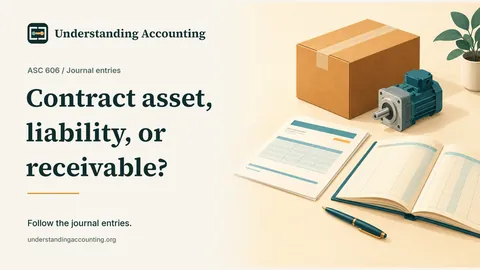
Contract Asset, Liability, or Receivable? ASC 606 Journal Entries
draft narrationWhen do you record a contract asset, a contract liability, or a receivable? Start with the concepts, then follow the journal entries. For a qualifying contract, payment before performance leaves a contract liability. Performance may create a contract asset when the right to payment remains conditional. An unconditional right is a receivable, which the company reports separately.
Watch on YouTube - Explainer
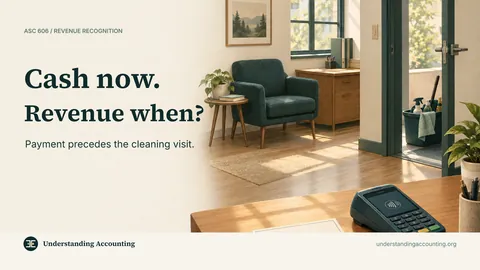
ASC 606 Explained: When Does a Company Record Revenue?
draft narrationA customer pays before a cleaning visit. Has the company earned revenue yet?
Watch on YouTube
Shorts


ACC 300 - Fall 2026
The ACC 300 lecture decks read aloud, one video per class meeting.
- Lecture
Lecture 17: Remote class: Inventory systems, ownership, and cutoff
draft narration Watch on YouTube - Lecture
Lecture 20: Estimate inventory and analyze the operating cycle
draft narration Watch on YouTube - Lecture
Lecture 22: Record depreciation, estimate changes, and disposal
draft narration Watch on YouTube
ACC 300 - Readings
The ACC 300 course reading, chapter by chapter, as a podcast.