A price ceiling is not binding merely because a law names a maximum. If the cap is at least as high as the otherwise applicable market price, the basic model predicts no constraint on the current transaction price. A cap below equilibrium is binding under the model and can create excess demand.
A price floor sets a minimum instead. Test each control against the equilibrium for the same market and period. OpenStax Section 3.4 compares the two controls.
Posted price is not full incidence
At a binding ceiling, buyers may face queues, search, waiting, reduced quality, side payments, tied services, eligibility rules, or nonprice discrimination. Some obtain the good at the controlled price; others obtain nothing. Sellers may reduce quantity, maintenance, entry, or investment. Enforcement and exemptions shape the result.
The effective burden can therefore differ from the posted price. A model shortage does not identify who receives the traded units or whether a particular buyer is better off.
For accounting and finance work, separate the legal price term from rebates, fees, consideration, contract modifications, unfilled orders, impairment, provisions, and cash effects. The economic diagram does not determine their recognition or measurement.
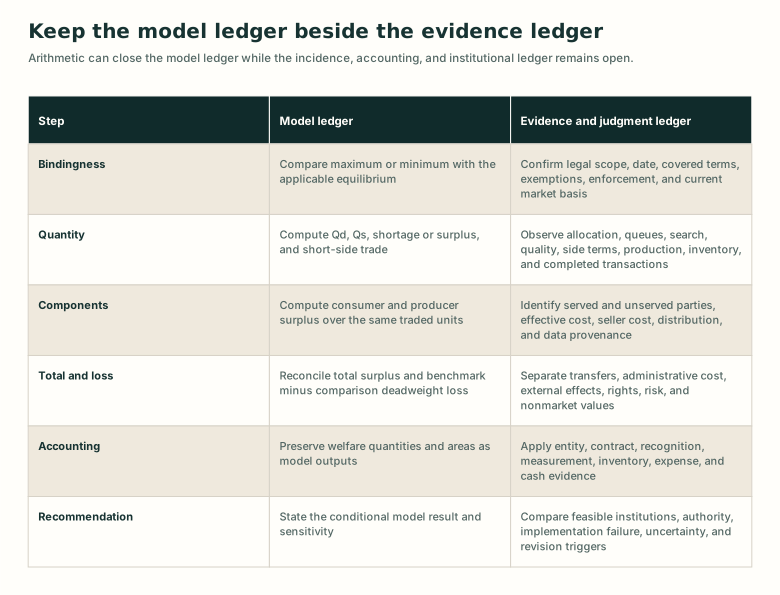
A price-control conclusion needs two ledgers
Detailed visual description
The table first compares a ceiling or floor with equilibrium, then computes demand, supply, imbalance, and short-side trade. Consumer and producer surplus use the same traded quantity, and deadweight loss reconciles total surplus rather than component transfers. A separate evidence ledger records legal scope, allocation, effective costs, production, inventory, transactions, distribution, external effects, rights, accounting recognition, alternatives, authority, and uncertainty.
Put the concept to work
Analyze this concept
- Test whether a maximum-price rule binds, compute the resulting model shortage and traded short side, and identify rationing, quality, enforcement, effective-price, distribution, and accounting evidence needed for an incidence claim.
Learning resources
Choose a lesson, try an application, or inspect the sources behind this concept.
Build on these ideas
- Market equilibrium — Analyze
To analyze this concept: Required. Bindingness depends on the ceiling's position relative to the applicable equilibrium.
- Shortage — Analyze
To analyze this concept: Required. A binding ceiling can create price-specific excess demand under the stated curves.