An element is a broad category used in financial statements. Cash, Supplies, and Equipment are different accounts, but each represents an asset. Accounts Payable represents a liability. A statement line can combine several accounts without creating a new element.
The Financial Accounting Standards Board (FASB) defines ten elements for business enterprises: assets, liabilities, equity, investments by owners, distributions to owners, comprehensive income, revenues, expenses, gains, and losses. Comprehensive income describes changes in equity from nonowner sources.
The five account classes used in introductory recording work are a practical grouping, not FASB's complete element list.
Distinguish a category from its display
An account records activity and a balance for a particular item. A line item presents an amount in a statement. The element identifies the broader category that the item represents.
For example, several equipment accounts may be combined in one Equipment line. They remain assets regardless of how many accounts the company uses. Applicable accounting guidance still determines whether an item is recognized, its amount, and its presentation. Identifying the element is necessary but does not answer every accounting question.
Different account names, equal transaction effects
Detailed visual description
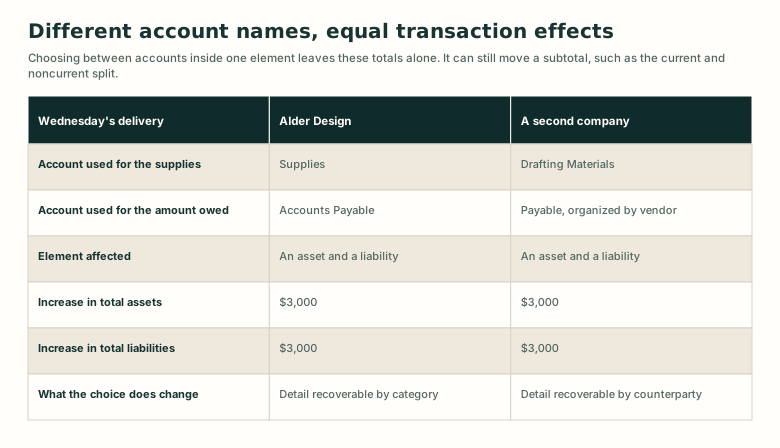
A comparison of Alder Design and another company recording the same teaching example. One uses Supplies and Accounts Payable; the other uses Drafting Materials and a payable organized by vendor. Both record an asset increase and a liability increase of $3,000 each. These are transaction effects, not complete company totals. Account organization preserves different detail; incorrect classification can also affect subtotals and later accounting.
Event, element, account
Detailed visual description
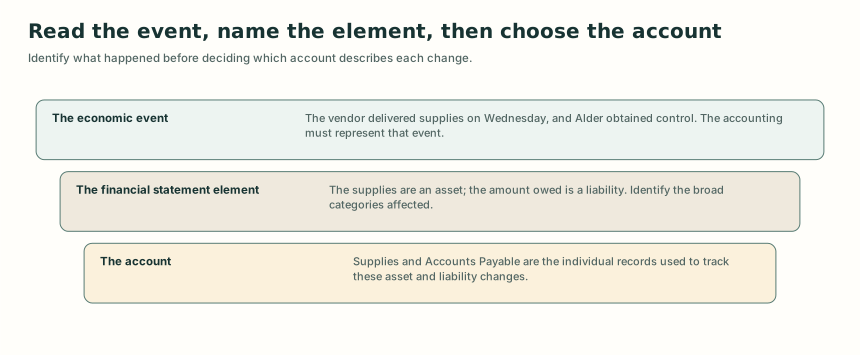
Three nested rectangles organize the analysis of Alder's delivery. The outer rectangle identifies Wednesday's receipt and control of supplies. The next identifies assets and liabilities as the affected elements. The inner rectangle identifies Supplies and Accounts Payable as the accounts used to record the changes. The display shows an order of analysis, not a claim that the event occurs inside an account.
Financial statement element in the learning graph
Detailed visual description
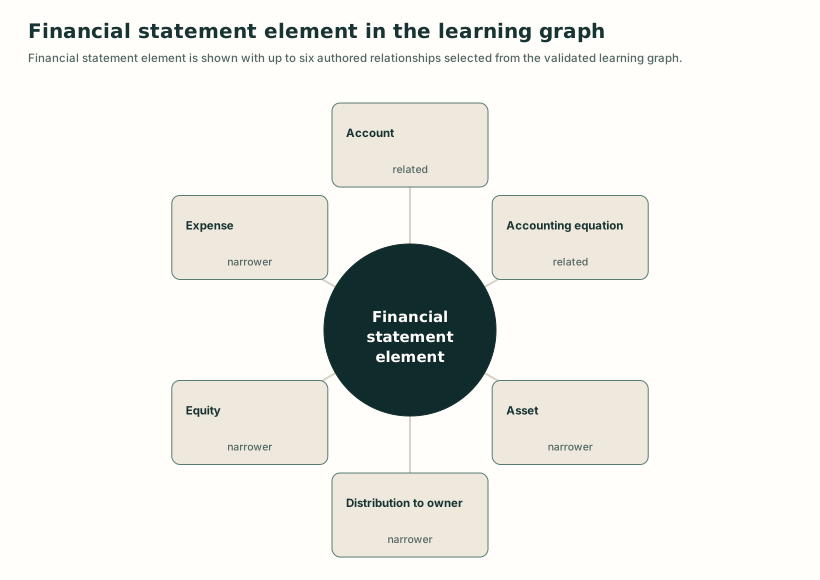
A structural map places Financial statement element at the center and connects it to related concepts, prerequisite concepts, or lessons from the knowledge graph. Edge labels distinguish broader, narrower, related, prerequisite, and teaching relationships where present.
From an event to the affected accounts
Detailed visual description
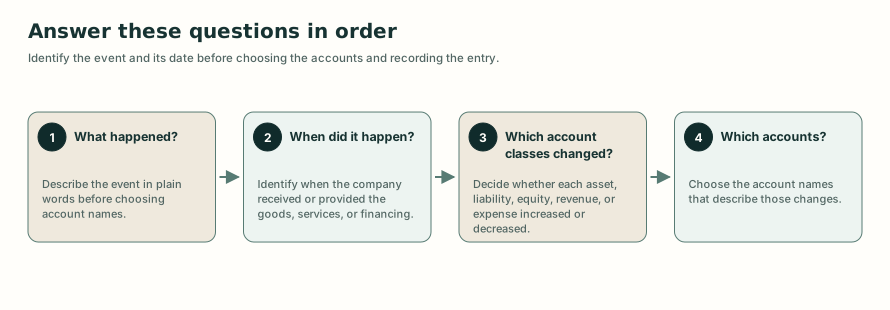
A left-to-right flow of four questions. First, describe the event in plain words. Second, identify when the company received or provided the goods, services, or financing. Third, decide which asset, liability, equity, revenue, or expense classes increased or decreased. Fourth, choose the account names that describe those changes.
Put the concept to work
Understand this concept
- Distinguish a financial statement element from an account or a line item used to report it.
Learning resources
Choose a lesson, try an application, or inspect the sources behind this concept.
Lessons
Worked examples and cases
Practice
Common mistaken ideas
Sources
More specific topics
Show 4 more more specific topics
Related concepts
Show 1 more related concepts
Use this idea next
- Asset — Understand
Required level here: understand. Helpful. The learner needs the difference between an element and the account or line item used to represent it.
- Financial statements — Understand
Required level here: understand. Required. Statements organize recognized elements and changes without turning each element into one universal printed line.
- Liability — Understand
Required level here: understand. Helpful. The learner needs to distinguish an element from the account used to accumulate a particular obligation.
Show 2 more next steps
- Normal balance — Understand
Required level here: understand. Required. The normal-side map begins with the economic classification represented by the account.
- Recognition — Understand
Required level here: understand. Required. Recognition first asks whether the phenomenon meets an element definition.
Used in these readings
These chapters explain or apply this concept. The label states how the chapter uses it.