On this page
A liability is an obligation the entity has now to transfer an economic benefit. The transfer may involve cash, goods, services, or another form of economic benefit. A present obligation necessarily results from a past transaction, event, or circumstance. The timing of payment matters for liquidity, but the existence of a liability does not wait for the cash to leave.
The event has already created a duty
Buying supplies on credit is the straightforward case. The entity receives an asset and becomes obligated to pay the supplier. Assets and liabilities rise together. Paying the supplier later reduces cash and the liability; the later payment does not create a second expense merely because cash moves.
The boundary becomes more important when managers expect a future cost. A plan to hire employees, replace a roof, or purchase inventory may require future cash, yet a forecasted expenditure is not automatically a present obligation. The analysis asks what past event, law, contract, or other circumstance leaves the entity with a present duty.
Why the distinction matters
Liabilities are claims on the entity’s resources, but their economics differ. A supplier payable may be due soon without stated interest. A bank loan may run for years, charge interest, claim collateral, and impose contractual limits on the borrower’s actions. Those terms can change risk even when two obligations carry the same reported amount. The element identifies the kind of claim; more detailed classification and measurement are necessary for credit or valuation analysis.
In the accounting equation, a new liability can finance an asset without changing equity at inception. That is why borrowing cash does not create revenue. Cash increases, but a creditor’s claim increases by the same amount.
Boundaries and common confusions
Not every expected payment is a liability, and not every liability is a traditional bank loan. Obligations can arise from purchases, services already received, contracts, law, or other past events. Conversely, an intention to spend is not enough by itself. Recognition, measurement, current/noncurrent classification, contingencies, and disclosures require the applicable authoritative guidance.
Sources and currency
The definition is a concise paraphrase of the FASB conceptual element. The Conceptual Framework does not replace the authoritative literature for a specific obligation.
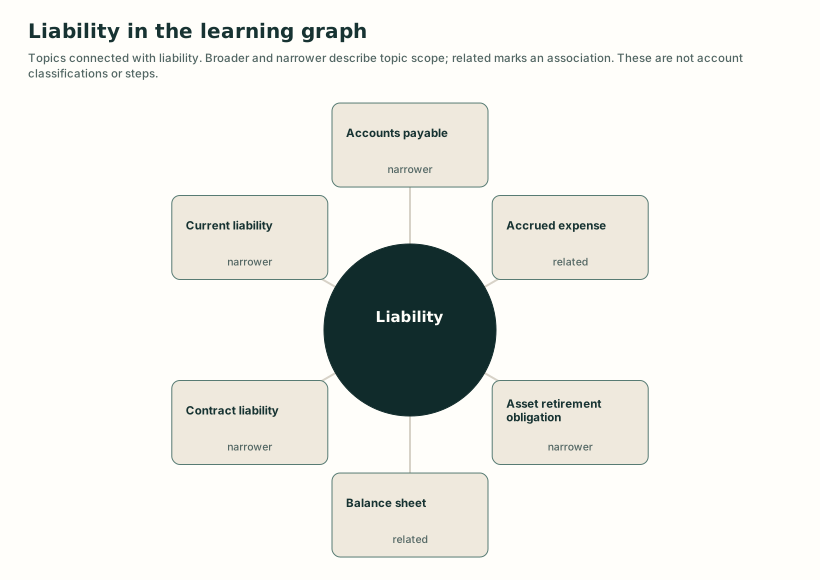
Liability in the learning graph
Detailed visual description
A structural map places Liability at the center and connects it to related concepts, prerequisite concepts, or lessons from the knowledge graph. Edge labels distinguish broader, narrower, related, prerequisite, and teaching relationships where present.
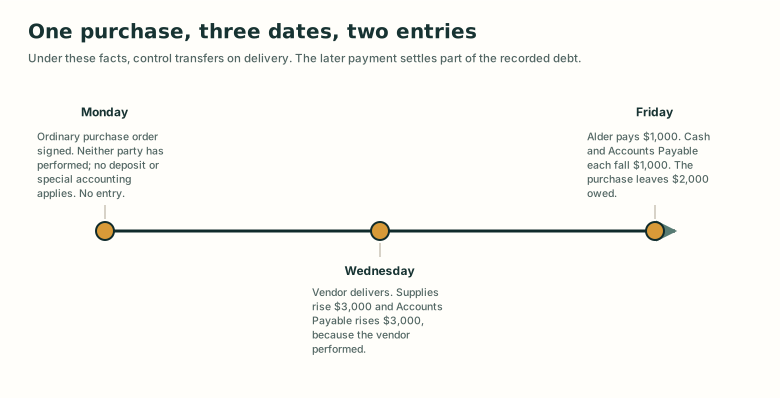
Three dates, two entries
Detailed visual description
Alder Design's teaching example assumes an ordinary purchase agreement, no deposit, no special contract accounting, and control transferring on Wednesday's delivery. Monday's signed order has no entry. Wednesday's delivery increases Supplies and Accounts Payable by $3,000 each. Friday's $1,000 payment reduces Cash and Accounts Payable by $1,000 each, leaving $2,000 owed for this purchase. The payment does not create an expense.
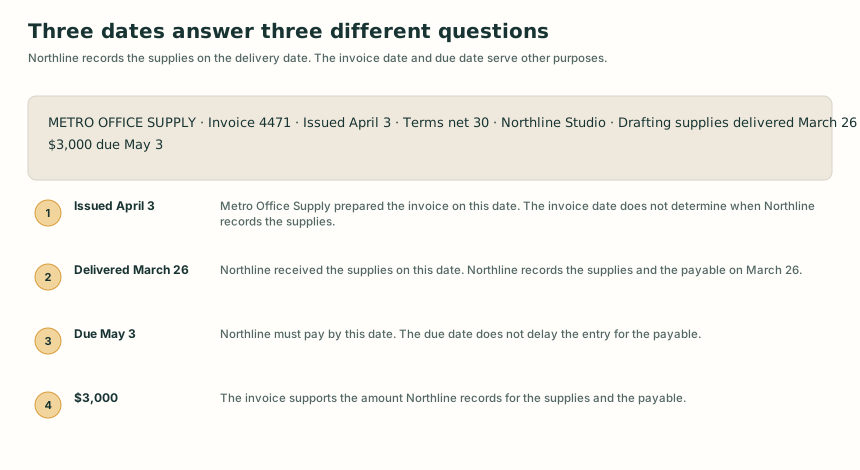
Which invoice date belongs in the journal?
Detailed visual description
A vendor invoice from Metro Office Supply has four annotations. The vendor issued the invoice on April 3. Northline Studio received the supplies and records the payable on March 26. Payment is due on May 3. The invoice supports the recorded amount of $3,000.
Put the concept to work
Understand this concept
- Explain why a liability requires a present obligation arising from a past event rather than a possible future expenditure alone.
Apply this concept
- Classify basic transaction effects as creating, settling, or leaving unchanged a liability.
Learning resources
Choose a lesson, try an application, or inspect the sources behind this concept.
Build on these ideas
- Financial statement element — Understand
To understand this concept: Helpful. The learner needs to distinguish an element from the account used to accumulate a particular obligation.
- Liability — Understand
To apply this concept: Required. Transaction classification depends on recognizing when a present obligation exists.
Lessons
Worked examples and cases
- Adelphia: whose debt is it, and who bears the risk?
- Classify five cash transactions
- Lehman Brothers: a quarter-end balance-sheet disappearing act
Show 2 more examples and cases
Practice
Common mistaken ideas
Sources
Broader topics
More specific topics
Related concepts
Show 4 more related concepts
Use this idea next
- Accounting equation — Understand
Required level here: understand. Required. Creditor claims must be distinguished from the residual interest on the right side.
- Accounts payable — Understand
Required level here: understand. Required. The payable is a present supplier claim rather than revenue, equity, or Cash.
- Accrued expense — Understand
Required level here: understand. Required. The counterpart represents the unsettled obligation created by the received service or other current-period fact.
Show 17 more next steps
- Accrued operating liability — Understand
Required level here: understand. Required. The learner must identify a present obligation before measuring an accrual.
- Asset retirement obligation — Understand
Required level here: apply. Required. The learner must identify a present obligation before measuring it.
- Commitment disclosure — Analyze
Required level here: understand. Required. A signed future exchange is not automatically a present recognized liability.
- Current liability — Analyze
Required level here: apply. Required. The learner must first establish a present obligation rather than infer one from a future plan.
- Current liability — Understand
Required level here: understand. Required. Only a present obligation can be classified within the current liability section.
- Debt contract cash-flow map — Analyze
Required level here: understand. Required. Debt is first a present obligation with contractual terms.
- Deferral — Understand
Required level here: understand. Required. An advance receipt can leave a present performance or refund obligation after cash is received.
- Equity — Understand
Required level here: understand. Required. Equity is measured after liabilities, so the learner must recognize creditor obligations separately.
- Expense — Understand
Required level here: understand. Helpful. An expense can arise through an incurred obligation before the related cash payment.
- Financing cash flow — Understand
Required level here: apply. Required. Borrowing creates a creditor claim rather than operating performance.
- Investment by owner — Understand
Required level here: understand. Helpful. The learner benefits from contrasting an ownership interest with a creditor obligation to repayment.
- Liability — Apply
Required level here: understand. Required. Transaction classification depends on recognizing when a present obligation exists.
- Loss contingency — Understand
Required level here: understand. Required. Contingency analysis asks whether a liability was incurred or an asset impaired.
- Off-balance-sheet financing — Understand
Required level here: understand. Required. The analysis turns on whether the entity has a present obligation and how the governing framework treats it.
- Permanent account — Understand
Required level here: understand. Required. Unsettled obligations remain claims at the next period's opening.
- Revenue — Understand
Required level here: understand. Helpful. Some revenue effects settle liabilities, while borrowing creates rather than settles an obligation.
- Unearned revenue — Understand
Required level here: apply. Required. The unperformed or refundable portion must represent a present obligation under the stated facts.
Used in these readings
These chapters explain or apply this concept. The label states how the chapter uses it.