On this page
Lesson details
- Estimated study time
- 20 min
- Reading context
- Chapter 1
Timing walkthroughUse this lesson when the document date, cash date, and date of the economic event do not agree.
Learning objectives (6)
Northline Studio places a cancellable order for $3,000 of drafting supplies on March 24. The supplier delivers the supplies on March 26. Northline accepts them and becomes obligated to pay. The supplier sends an invoice on April 3, and Northline pays on May 3.
Northline records the purchase on March 26. That is the date it receives the supplies and takes on the obligation to pay for them. The other dates still matter, but they answer different questions.
Start with what happened
This lesson focuses on the first transaction-analysis decision: identify the event to record and its date. Use this order:
- State what the company received, provided, or became obligated to do.
- Identify when that event occurred.
For the supplies, Northline received a resource and became obligated to pay for it on March 26. After identifying the event and date, Northline can identify the accounts that changed. Supplies, an asset, and Accounts Payable, a liability, both increased.
The purchase order states the agreed price, and the receiving record confirms the quantity and delivery date. The later invoice provides another check on the amount and terms, but it does not create a second purchase.
The dates answer different questions
| Date | What happened | Accounting effect |
|---|---|---|
| March 24 | Northline sent the order | No entry under the stated facts |
| March 26 | Northline received the supplies and owed the supplier | Record Supplies and Accounts Payable |
| April 3 | The supplier sent the invoice | No new entry; match it to the March 26 entry |
| May 3 | Northline pays the amount due | Reduce Cash and Accounts Payable |
Under the stated facts, the order does not create an entry. Northline has not yet obtained control of the supplies, and neither party has performed. The ordinary order is cancellable without penalty. Delivery creates the recorded Supplies and Accounts Payable balances. The later payment settles the liability recorded on March 26.
Quick checkWhat would happen if Northline waited until April 3 to record the supplies?
Answer: March assets and liabilities would each be $3,000 too low. The April 3 invoice provides evidence, but the March 26 delivery determines the recording date.
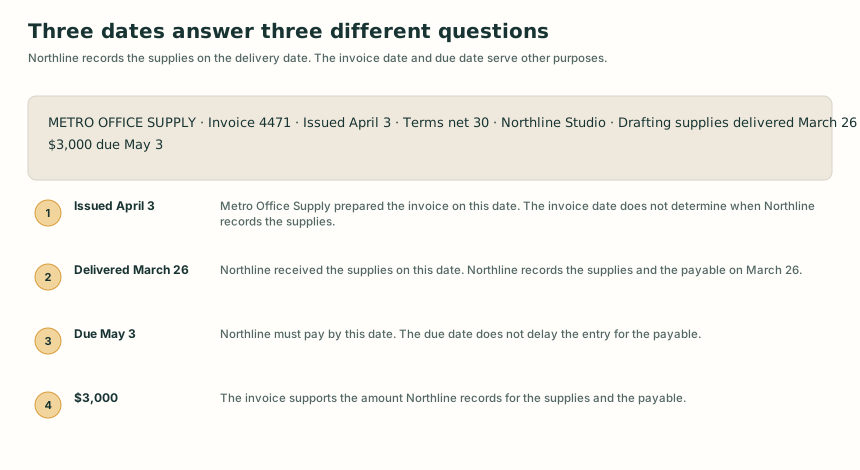
Detailed visual description
A vendor invoice from Metro Office Supply has four annotations. The vendor issued the invoice on April 3. Northline Studio received the supplies and records the payable on March 26. Payment is due on May 3. The invoice supports the recorded amount of $3,000.
Apply the sequence when cash comes first
On November 1, a client pays Alder $6,000 for 6 months of support that begins that day. The cash receipt is an event, but it does not mean that Alder earned all $6,000 immediately.
Alder received cash and became obligated to provide future support on November
- Cash, an asset, increased. Unearned Revenue, a liability, also increased.
The later support service is another event. As Alder provides the service, it reduces the liability and records revenue. Chapter 2 explains those later entries.
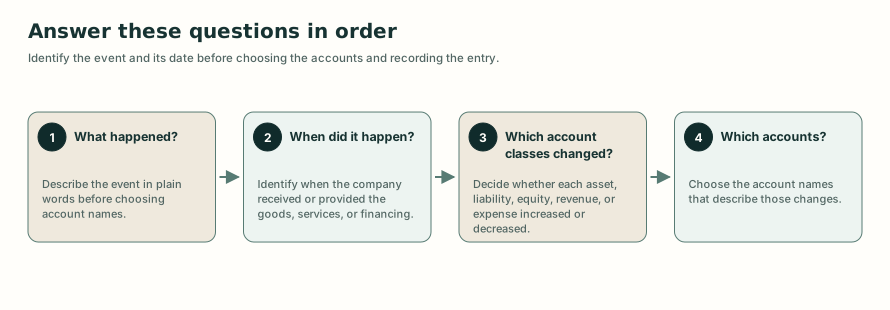
Detailed visual description
A left-to-right flow of four questions. First, describe the event in plain words. Second, identify when the company received or provided the goods, services, or financing. Third, decide which asset, liability, equity, revenue, or expense classes increased or decreased. Fourth, choose the account names that describe those changes.
Check the entry against the evidence
Before choosing debit or credit, verify these points:
- The event occurred by the recording date.
- The amount is supported.
- The account classification describes the event.
- The account names preserve the detail the company needs.
A balanced entry can still fail any of those checks. Recording the $6,000 advance as revenue would produce equal debits and credits, but it would omit the service obligation.
Quick checkNorthline pays the $3,000 supplier balance on May 3. Does it record Supplies Expense on that date?
Answer: No. Northline recorded the supplies and the payable on March 26. The May 3 payment reduces the payable and Cash.
The worked example When to record routine transactions uses a separate month of events to practice the same classification sequence.