Lesson
Before the entry: event, element, and account
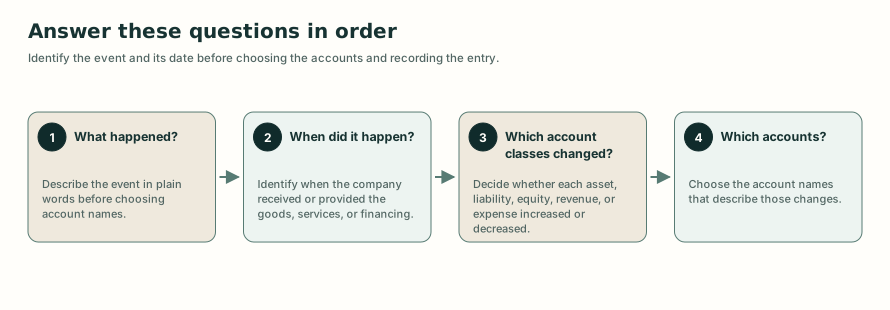
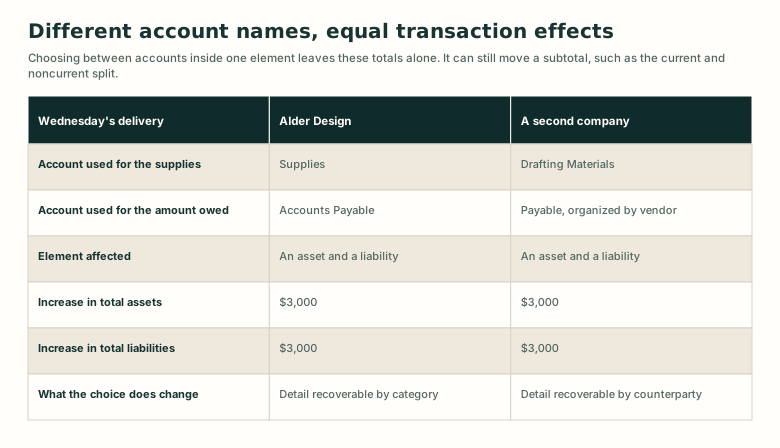
Separate what happened economically from the reporting elements affected and the accounts used to preserve the detail.
Read the lessons in the recommended order or choose the topic you need.
Try a broader title, topic, or phrase.
Separate what happened economically from the reporting elements affected and the accounts used to preserve the detail.
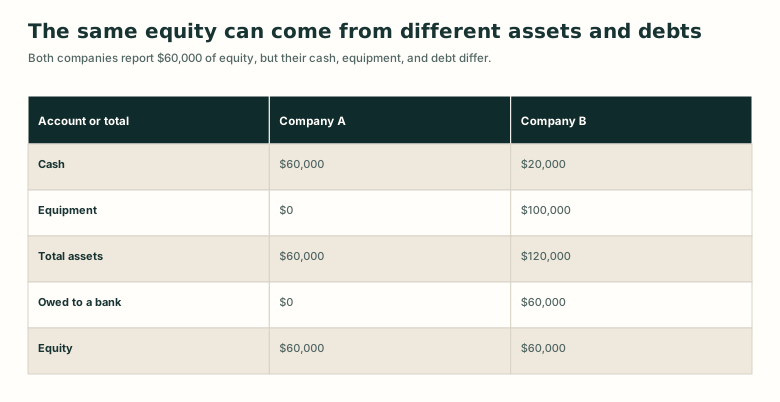
Explain why equity is not a cash balance and why a balanced equation does not prove that the accounting is correct.
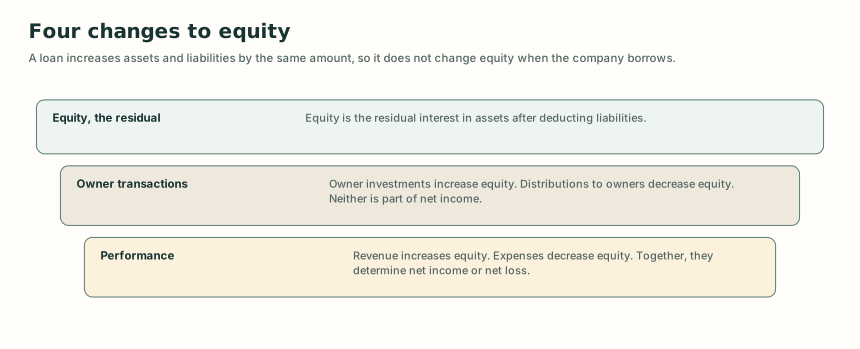
Distinguish changes caused by business performance, owner transactions, borrowing, and customer advances.
Use the economic event rather than the order, invoice, or payment date to choose the recording date.
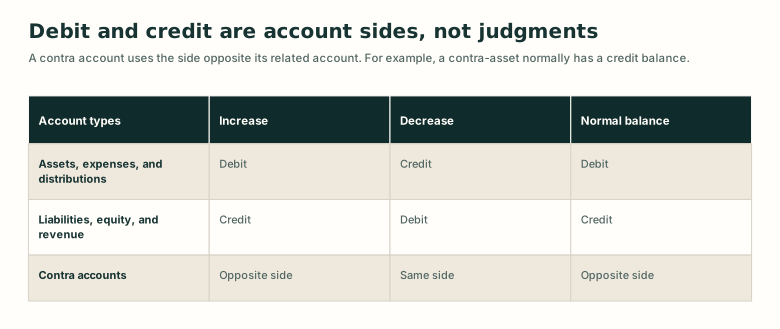
Review which account types increase with a debit, which increase with a credit, and how each type decreases.
Turn an analyzed transaction into a dated entry and check the entry before posting it.
Post journal entry lines to the ledger, compute account balances, and place those balances in a trial balance.
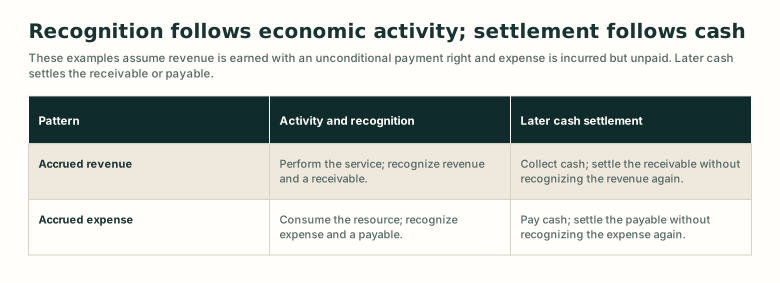
Use period end facts to move from an equal unadjusted trial balance to supported accrued revenue and accrued expense balances.
Follow a prepaid asset and an unearned revenue liability from the cash transaction through the year end adjustment.
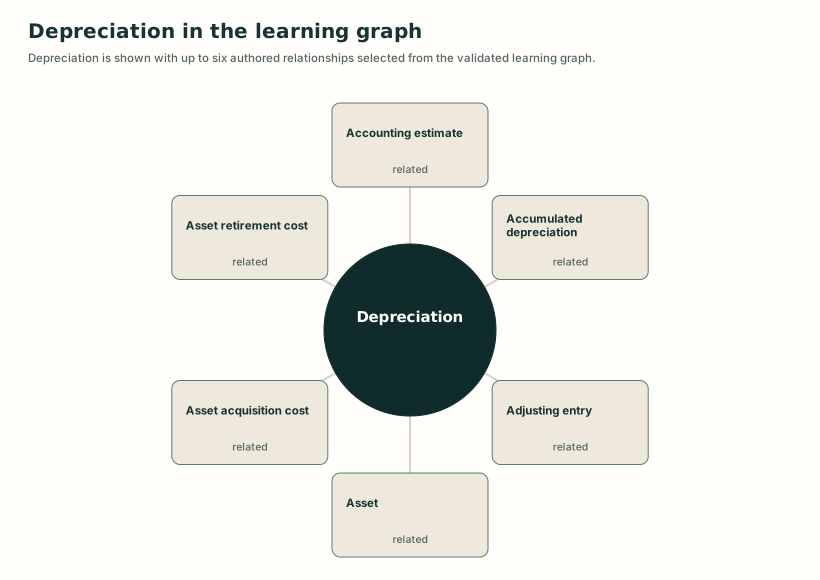
Review a basic straight line calculation, record the period end adjustment, and distinguish depreciation expense from accumulated depreciation.
Classify temporary and permanent accounts, close period activity into retained earnings, and reconcile the post closing trial balance.
Use the income statement to calculate net income, then separate that result from dividends and share transactions.
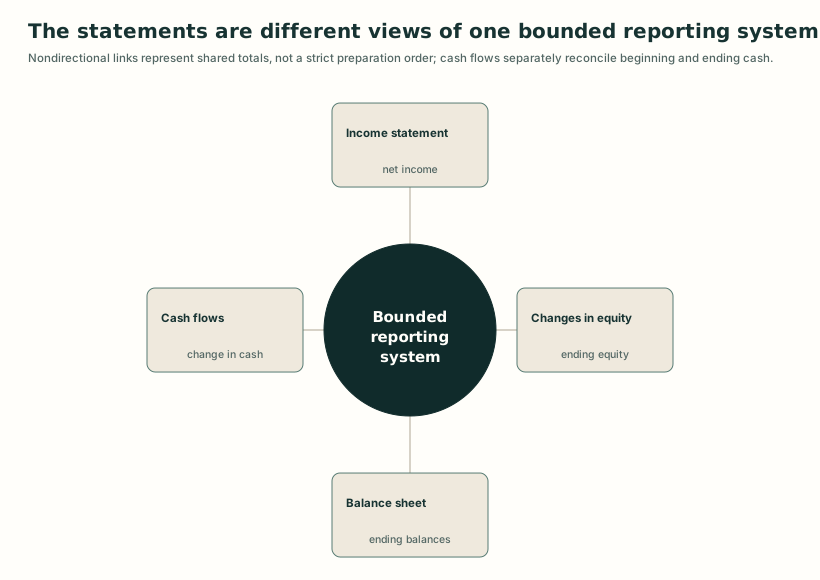
Check shared amounts against the ledger and distinguish a missing adjustment from a mismatched report.
Separate a Cash balance from period flows, classify unambiguous receipts and payments as operating, investing, or financing, and prepare a basic direct method statement.
Link cash flow sections to ending Cash, keep noncash capital transactions outside the section sums, and diagnose errors that survive a correct grand total.
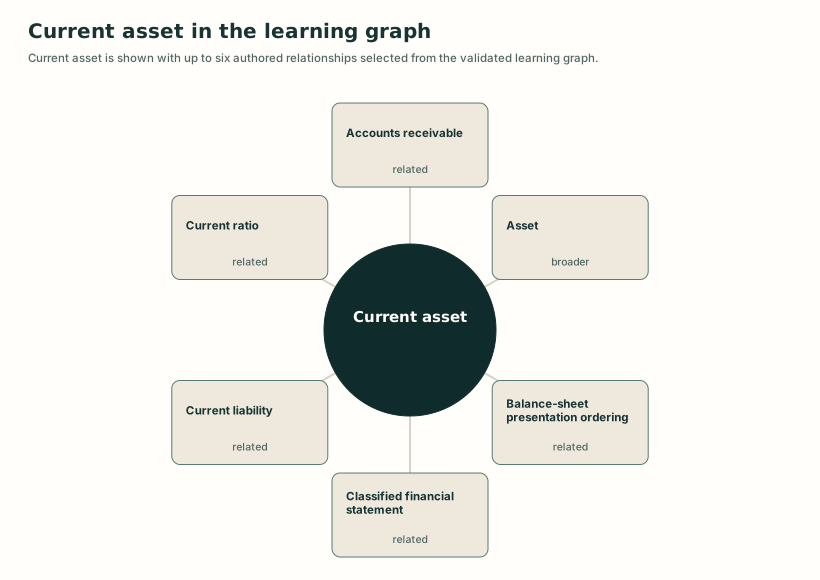
Review current and noncurrent assets and liabilities, the operating cycle, and the limits of current totals.
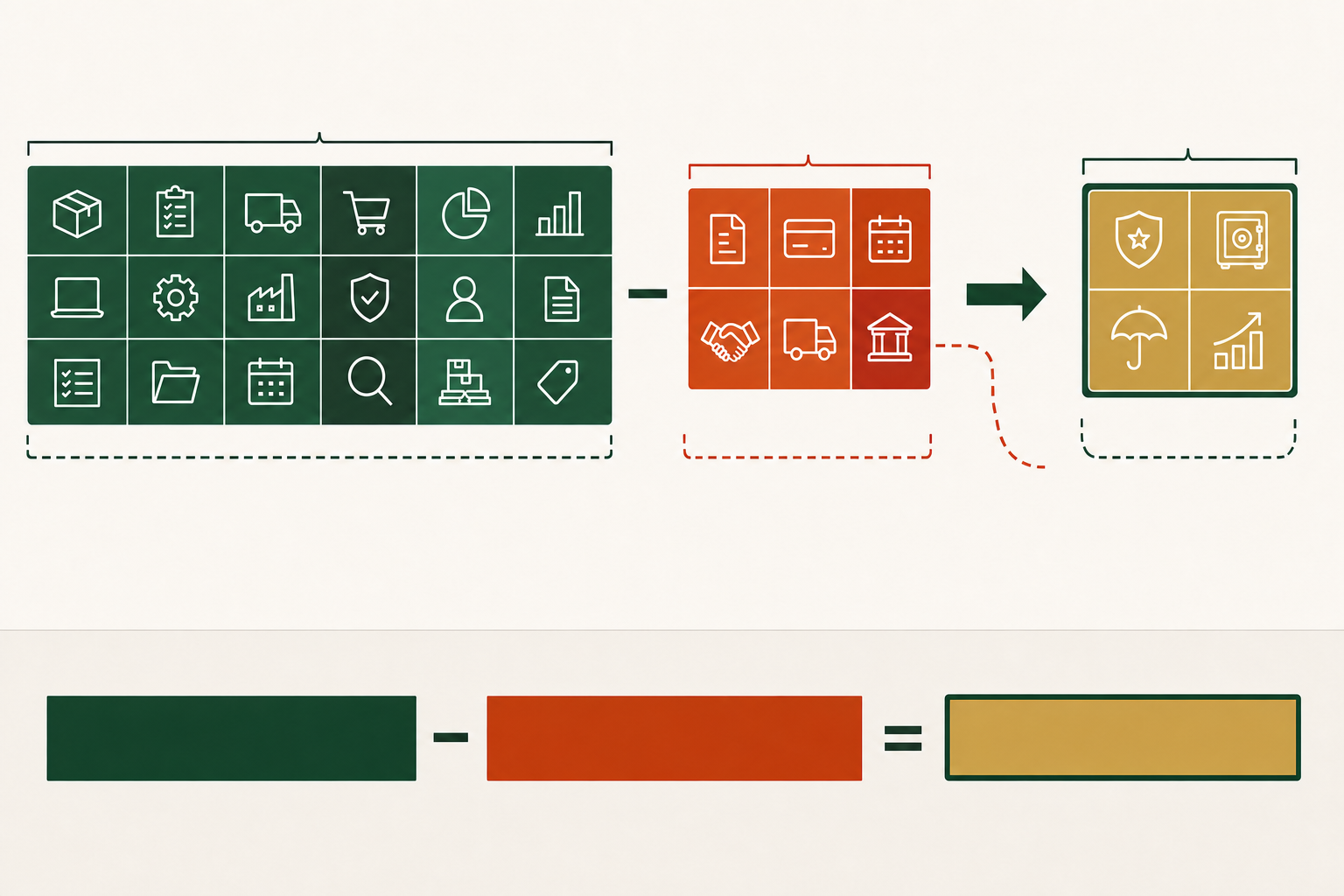
Compute working capital and the current ratio from supported classifications, trace transaction effects, compare scale, and bound the resulting liquidity claims.
Connect Accounts Receivable, Inventory, and Accounts Payable movements to cash timing, derive indirect reconciliation signs, and identify when net balance changes are insufficient.
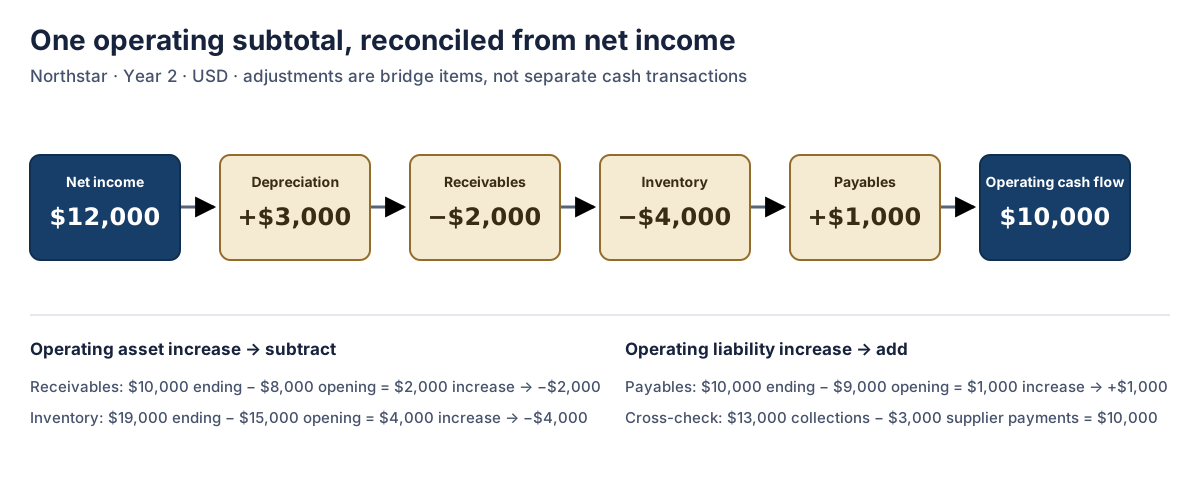
Prepare a bounded indirect method operating reconciliation, interpret a depreciation addback correctly, and cross check the subtotal against direct cash evidence.
Trace a questioned balance through the accounting cycle, identify the failed stage, and correct only the recorded effect that is wrong.
Use receivable, payable, and prepaid changes to convert cash activity to accrual amounts and check the adjusted trial balance.
Reconcile an Income Summary close to net income and test which permanent balances carry into the next period.
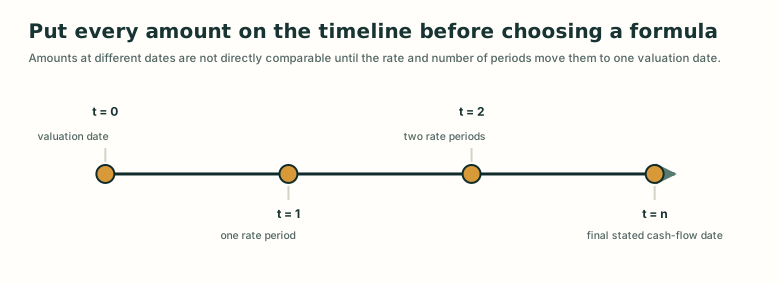
Turn narrative dates and rate quotes into an auditable valuation date, cash flow timeline, periodic rate, and matching period count.
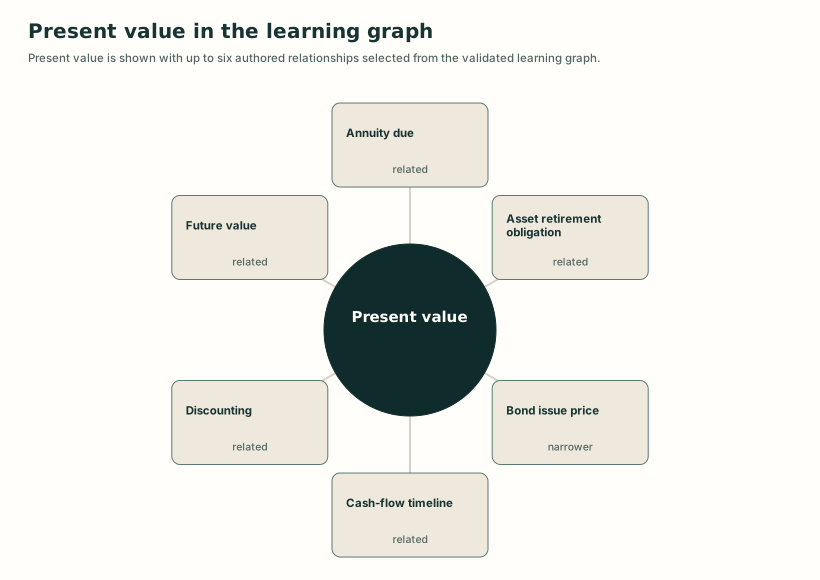
Treat future value and present value as inverse common date translations, with direction, boundary, and precision checks.
Keep three rate meanings separate and convert an eligible annual quote to an aligned one year effective basis.
Distinguish ordinary annuities from annuities due on a timeline and value both without changing payment count.
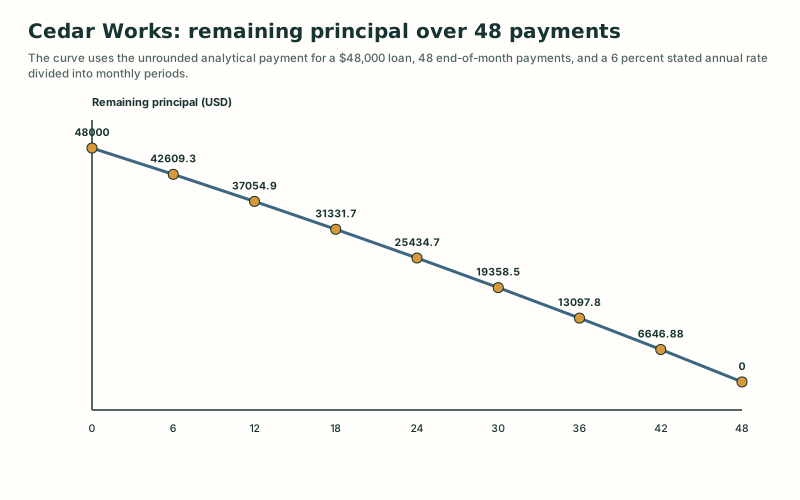
Solve an ordinary annuity payment, allocate each payment between interest and principal, and diagnose a complete analytical schedule.
Use the information timeline to distinguish an estimate change from an error, then allocate the remaining depreciable amount prospectively.
Remove gross and contra balances, derive gain or loss from net proceeds and carrying amount, and trace the sale across statements.
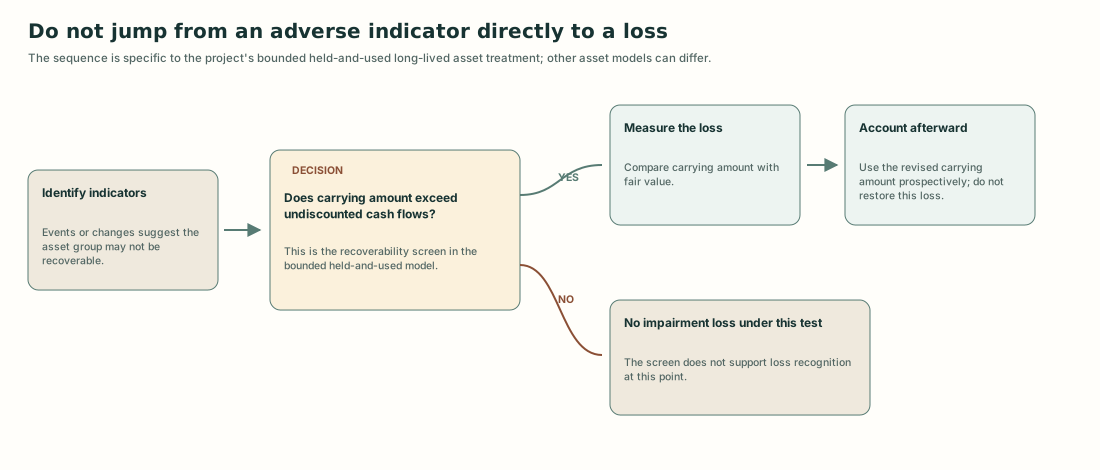
Preserve the US GAAP scope, unit of account, recoverability screen, and fair value measurement sequence for a bounded long lived asset case.
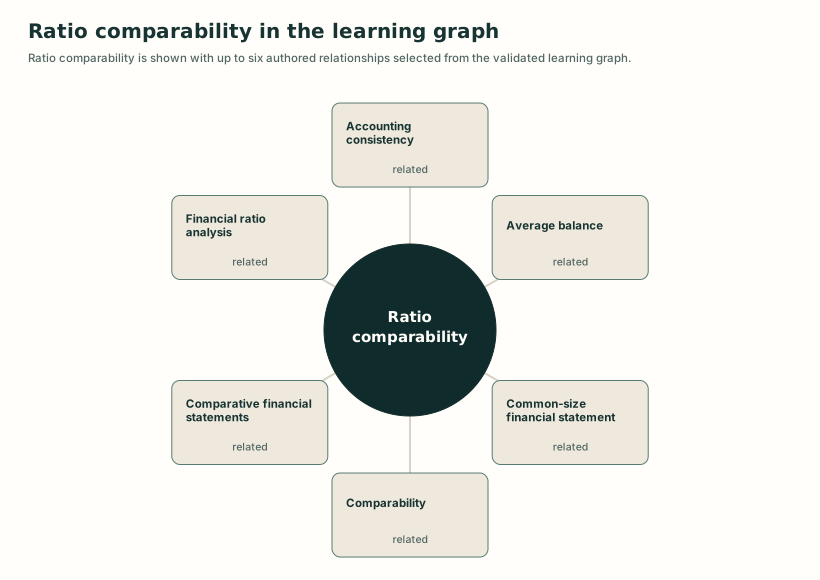
Turn a stack of statement amounts into an auditable comparison packet by aligning scope, time, definitions, units, basis, and stock versus flow denominators.
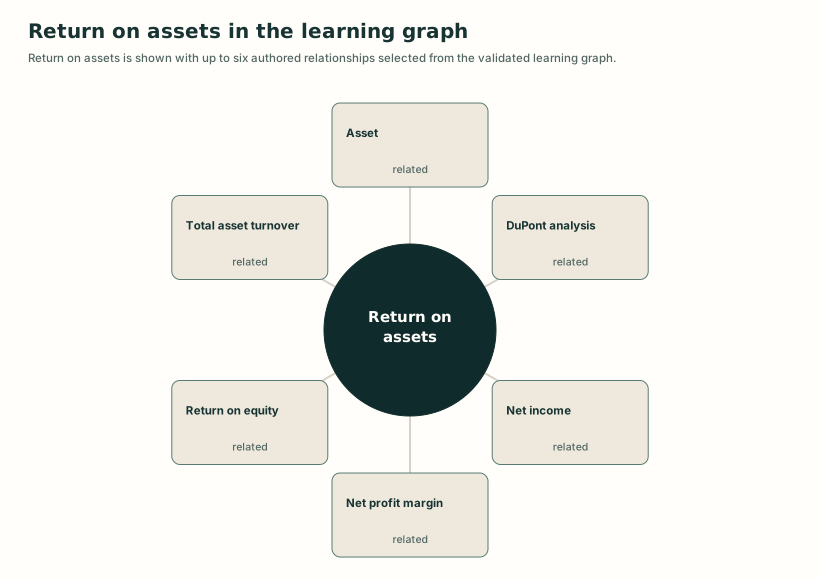
Use aligned net sales, net income, and average assets to distinguish profitability per sales dollar from sales intensity per asset dollar.
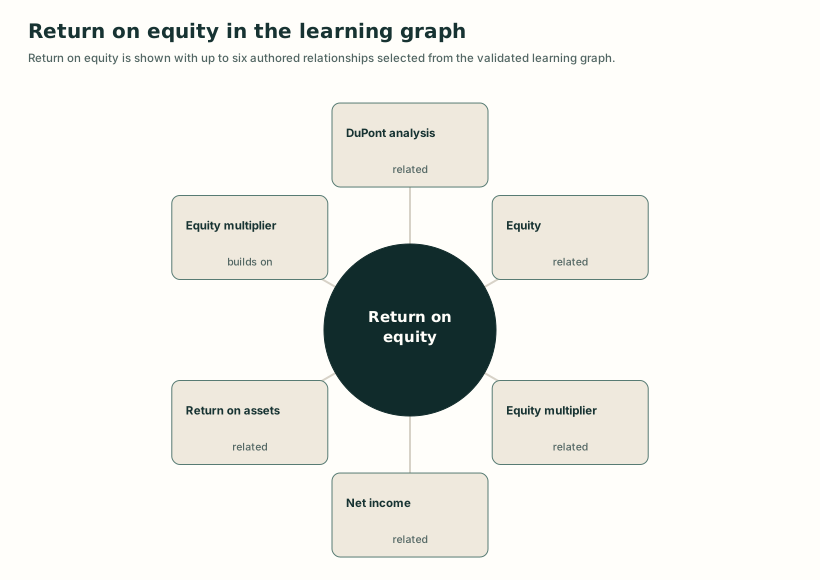
Extend ROA through the equity multiplier, reconcile the accounting equation and equity rollforward, and use three step DuPont analysis without confusing amplification with operating…
Compare same period net income and operating cash with a safe denominator policy, reconcile the indirect bridge, and resist one year earnings quality labels.
Build a source controlled three period packet and make adjacency, equation, continuity, and stop conditions visible.
Preserve dollar scale, relative change, fixed base direction, and statement composition under explicit bases and zero base rules.
Separate credit sales, collections, cost of goods sold, merchandise purchases, credit purchases, and supplier payments before turnover analysis.
Pair each reconciled operating flow with its average balance, convert turnover to days, and attach evidence requests to every interpretation.
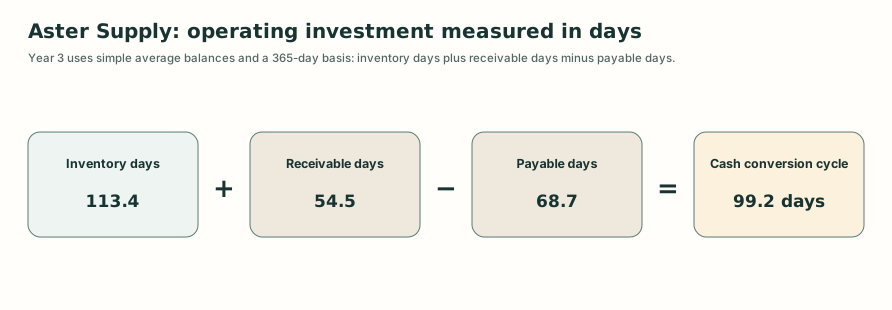
Combine Inventory, receivable, and payable days, attribute multi period movement, and separate a linked historical measure from a cash forecast or recommendation.
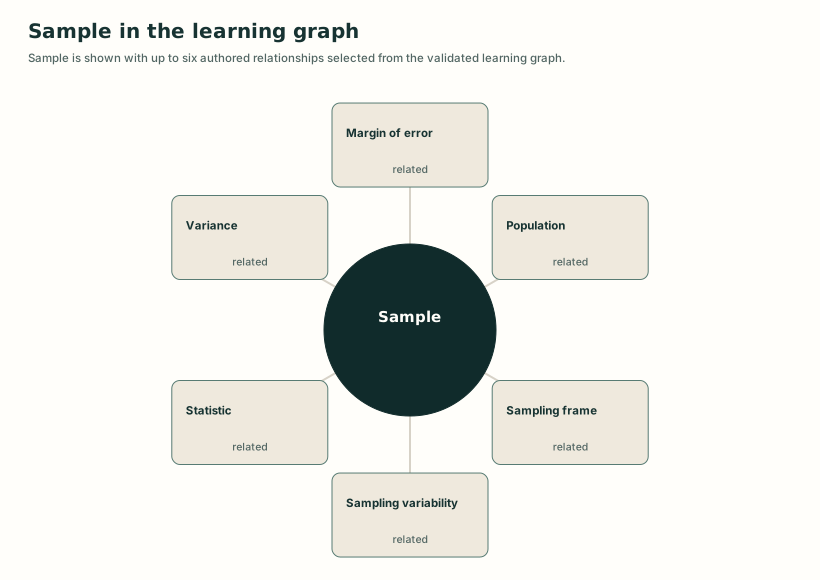
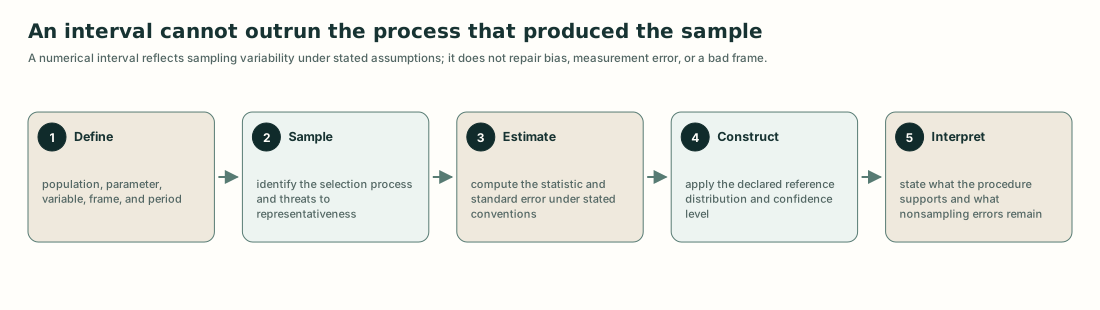
Turn a loose business question into a controlled unit variable population frame sample contract and test nonsampling error risks.
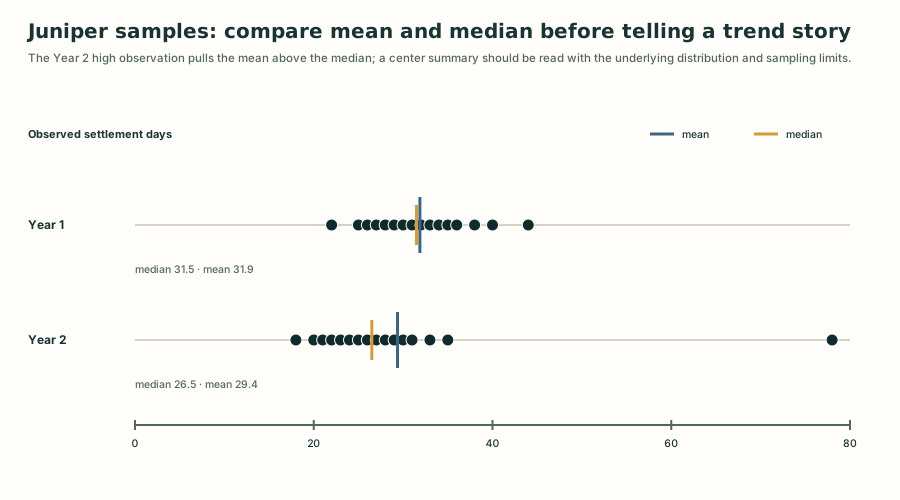
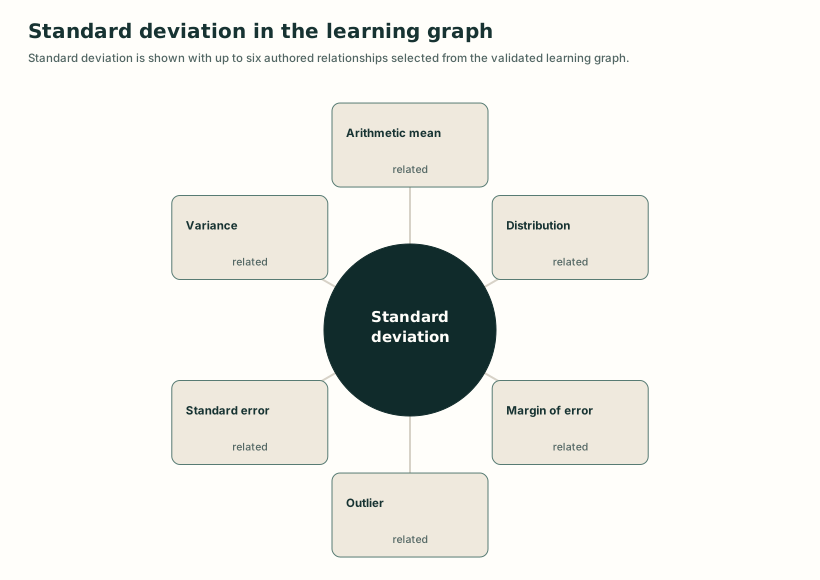
Order the observations, compute center and spread under declared conventions, and investigate an unusual value without result driven deletion.
Separate observed summaries from population targets and distinguish invoice level spread from sample mean precision.
Construct a supplied t one sample mean interval, reconcile its endpoints, interpret repeated sampling coverage, and expose assumptions the arithmetic cannot prove.
Integrate source controls, descriptive evidence, estimation limits, competing explanations, stop conditions, and audience specific next steps.
Distinguish the institutions that create, apply, oversee, audit, enforce, and use financial reporting requirements across time.
Trace disputed entries and estimates across evidence and periods while preserving the legal and epistemic status of each claim.
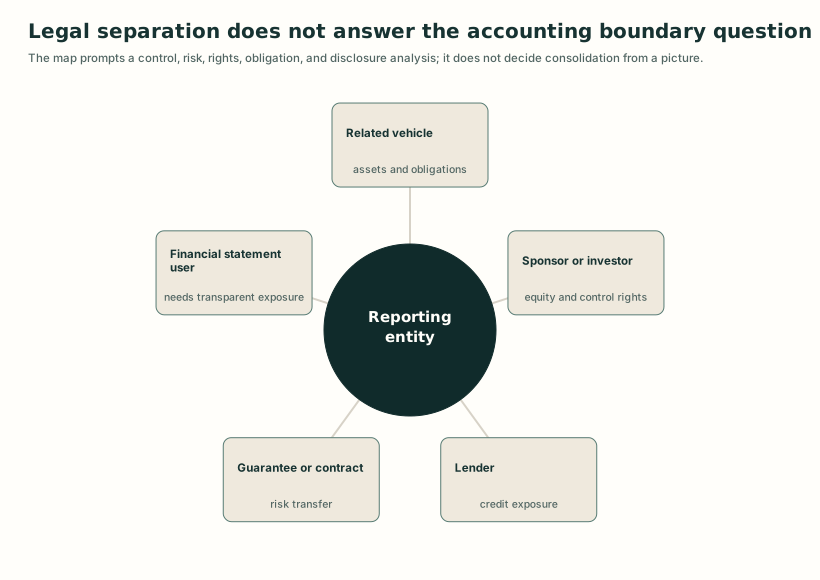
Keep legal entity, accounting scope, contract, disclosure, control, and economic risk separate while tracing structured transactions.
Translate a reporting risk into controls and evidence while preserving management, board, auditor, overseer, and regulator responsibilities.
Reconstruct management defined measures, test adjustments and comparability, and connect reporting choices to governance and investor decisions.
Pair the derivative with the designated hedged item adjustment.
Roll derivative effects through OCI, AOCI, earnings, and basis.
Distinguish current fair value through earnings accounting from a qualifying measurement alternative election.
Build EPBO/APBO, attribution, plan asset, cost, OCI, trend, funded status, and disclosure rails for nonpension postretirement benefits.
Document current conditions, reasonable and supportable forecasts, reversion, sensitivity, subsequent collections, and the bounded ASU 2025 05 election paths.
Compare straight line, activity, accelerated, partial period, group, and composite depreciation while protecting residual, carrying amount, and change versus error controls.
Build the supplied acquisition date net asset schedule, keep acquired IPR&D visible, compute goodwill or a bargain purchase gain, and control any entity specific alternative before…
Assign total tax expense or benefit among continuing operations and other categories without losing the underlying statement location.
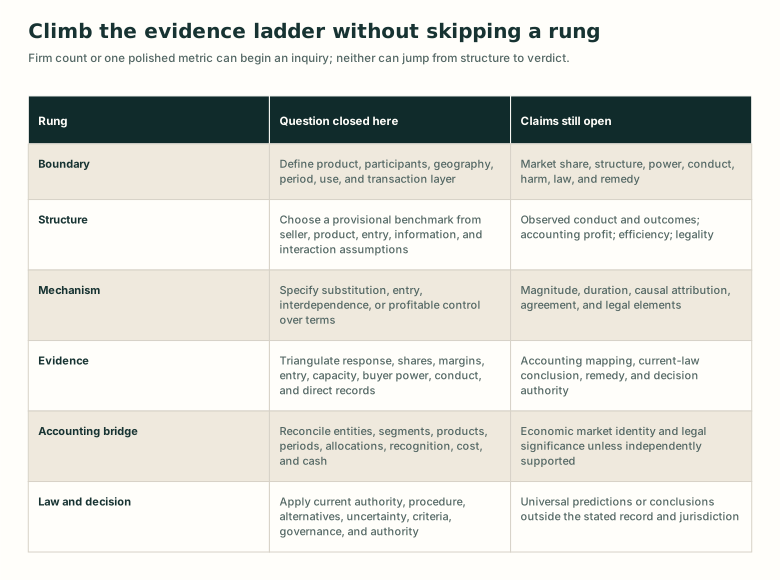
Choose a structure benchmark from explicit assumptions, investigate entry and strategic interaction, and build a multi evidence market power analysis without turning economic screens…
Use new information evidence and the change date carrying amount to build current and future schedules without hindsight.
Build tranche level service schedules that preserve service, performance, market, forfeiture, and graded vesting rules without blending their meanings.
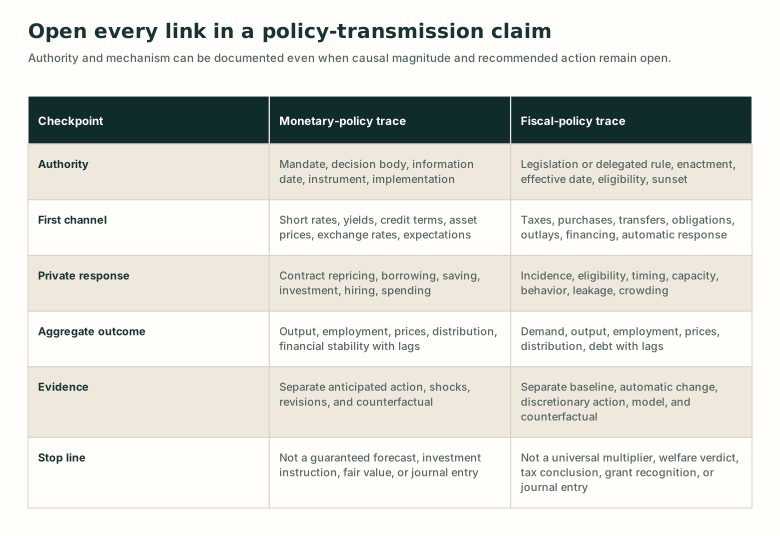
Trace monetary and fiscal mechanisms through authority, timing, exposure, evidence, and lags while distinguishing statutes, agencies, releases, cases, history, causal estimates, and…
Treat digital facts as accounting facts with full identities.
Keep a supplied fair value option election and contractual maturity table separate from the amortized cost ledger and from unsupported valuation conclusions.
Separate scope, acquirer, acquisition date values, and the residual.
Place sales, costs, operating expenses, other gains and losses, and tax in order. Then use each subtotal to answer a different question.
Preserve legal ledgers while removing internal reporting effects.
Assemble a self construction ledger, define the active capitalization period, time weight expenditures, apply borrowing layers, and enforce the actual interest ceiling.
Assemble every periodic cost component and apply the current service cost presentation and capitalization boundaries.
Convert current cost to base year cost, preserve dated layer indexes, recompute additions or liquidations, and review the pool and index evidence.
Expose inputs, formulas, checks, and limitations in Excel and Python.
Reconcile income available to common, participating rights, retrospective share changes, and dated weighted common shares before calculating basic EPS.
Apply each potential share method, order incremental effects, enforce the continuing operations control number and antidilution, and reconcile equity, awards, and EPS.
Compute periodic and perpetual LIFO, bridge LIFO to FIFO with a dated reserve, and identify margin effects when older layers liquidate.
Separate inventoriable cost from period charges, then use periodic or perpetual records without confusing the system with the cost flow method.
Extract, normalize, compare, and visualize without erasing context.
Control the aging date, due date rules, invoice population, shared risk characteristics, movements between pools, and individual evaluation before assigning loss rates.
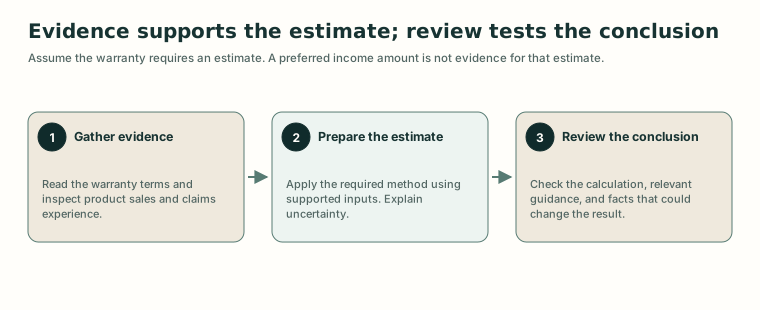
Resolve warranty scope, estimate a covered population, and keep provision, claims, revisions, and ending liability in separate columns.
Establish tax bases and classify permanent, taxable temporary, deductible temporary, attribute, and uncertainty routes before measurement.
Separate components and place commencement, term, options, payments, incentives, direct costs, residuals, and rate conclusions on one dated workpaper.
Use opening net carrying amount and a matched effective rate to separate cash interest, expense, amortization, and ending carrying amount through maturity.
Move from cost through adjusted investee results, basis differences, dividends, OCI, losses, and impairment boundaries.
Reconstruct receipts, payments, noncash changes, and open judgments from source evidence.
Connect anomalies to facts, authority, and consequences.
Tie classes, policies, allowance activity, credit quality, vintage, modifications, collateral, accrued interest, and transfers to ledgers, models, statements, and the current authority…
Partition pre period and presented period direct effects, then reconcile opening equity, statements, tax, and per share amounts without plugs or duplication.
Connect disaggregated revenue, contract balances, obligations, judgments, contract costs, remaining performance, XBRL context, and current authority evidence without turning backlog into…
A corrected statement line can change a subtotal without changing the amount recorded. Check what each line includes before drawing a conclusion.
Start with the contractual payment calendar, then test current US GAAP intent and ability evidence before excluding a short term obligation from current liabilities.
Apply specific guidance and component first analysis before reaching a bounded predominance conclusion.
Choose a modification accounting path from remaining distinctness and price evidence, then identify the specified good or service and control before presenting revenue gross or net.
Route the issue from evidence before choosing retrospective, prospective, or restatement mechanics.
Evaluate the five lessee finance indicators and the short term election after term, payment, and asset evidence are controlled.
Tie net income, comprehensive income, owner transactions, retained earnings, and AOCI to equity, then distinguish accounting policy from estimates and boilerplate.
Use service dates and plan terms to close known obligations without treating pay dates, invoices, or HR balances as recognition rules.
Hold cost and estimates constant while comparing time, activity, and accelerated allocation patterns.
Use a unit weighted full period rate and a purchase date moving rate, preserving precision and explaining why the two assignments can differ.
Start with asset identity, control, intended use readiness, and source role evidence; then allocate one negotiated price across supported asset units.
Classify and date plan amendments, freezes, settlements, curtailments, termination benefits, and remeasurements before recognizing effects.
Reconcile modifications, cancellations, exercises, settlements, expirations, tax effects, unrecognized cost, share changes, cash flows, and note data.
Distinguish separate contract modifications, existing lease remeasurement, option reassessment, impairment, and sublease accounting without rewriting commencement.
Preserve balance sheet date lender rights, waiver reach, future compliance, subjective clauses, and subsequent evidence without applying tentative standard setting decisions.
Remeasure at the enactment date, preserve the reversal calendar, and separate rate, basis, allowance, expiration, and outside basis effects.
Evaluate the supplied valuation input hierarchy and complete a security level earnings, OCI, carrying amount, disclosure, and evidence release.
Keep accrued interest separate from debt basis, then carry the same effective interest logic into zero coupon and installment note cash flow patterns.
Freeze the evidence received and define the reporting decision.
Translate a new pronouncement's scope, dates, elections, expedients, mechanics, and disclosures into an entity specific adoption matrix.
Use dated carrying layers to derecognize sold securities and apply supported transfers without rewriting prior period history.
Classify cash equivalents and restricted amounts from acquisition, maturity, conversion, risk, and availability evidence.
Distinguish quarter and year to date reporting, comparatives, estimates, seasonality, current events, and current versus pending public entity disclosure requirements.
Establish internal use purpose, then select current or ASU 2025 06 pending content from period and adoption evidence before classifying dated project costs.
Reconcile own share repurchases, cost method holding, reissuance, APIC sources, and formal retirement without earnings gains or losses.
Apply the integrated gate and answer a skeptical review.
Read work order and component evidence to separate maintenance, repair, improvement, replacement, inspection, relocation, capitalization, and derecognition.
Separate the narrow Topic 250 route from acquisitions, disposals, consolidations, and internal reorganizations governed elsewhere.
Separate VBO, ABO, PBO, EPBO, and APBO by benefit, service, compensation, population, and measurement date boundary.
Turn an economic hedge into a testable accounting file.
Evaluate component, held for sale or disposal, strategic shift, major effect, continuing involvement, period, tax, cash flow, comparative, and disclosure evidence.
Turn reconciled accounting facts into route consistent notes and XBRL review controls.
Read the contract before routing its fair value change.
Treat ownership percentage as one input to a dated significant influence memorandum rather than an automatic answer.
Separate customer contract scope, enforceability, termination, collectibility, and contract combination before identifying promises or calculating revenue.
Build standalone selling price evidence, allocate transaction price, control discounts and variable amounts, and reconcile the contract total without using invoice lines as the answer.
Define the reporting entity, legal authority, instrument scope, class rights, four share counts, dates, and evidence owners before posting equity.
Separate contract assets from unconditional rights, classify trade and nontrade claims, and distinguish entitlement changes from credit deterioration before building an allowance population.
Map recipient, exchange purpose, instrument, grant and service dates, classification, conditions, and supplied fair value before recognizing award cost.
Build transaction price from fixed and variable amounts while keeping estimation method, price concession, credit risk, and significant reversal analysis separate.
Move from controlled exposure and relevant historical loss information to adjusted pool rates, expected losses, total allowance, and a bounded model conclusion.
Use two bounded estimation methods, disclose their assumptions, and stop them from replacing stronger quantity and cost evidence.
Test whether price limits bind, compute buyer and seller surplus over traded units, reconcile deadweight loss, and diagnose market failure without turning a benchmark into a complete…
Weigh supplied positive and negative evidence by jurisdiction, character, timing, and expiration before applying a valuation allowance.
Assemble a supported depletable base, apply recoverable unit estimates, and separate extraction allocation from inventory and sale expense.
Compute a stipulated qualifying sale with holdback and recourse and contrast a secured borrowing whose receivables, allowance, collections, and credit risk remain recognized.
Screen recurring and embedded arrangements for an identified asset, economic benefits, and the right to direct use before opening a lease schedule.
Learn why some gains and losses enter OCI, how current OCI affects comprehensive income, and how AOCI carries earlier amounts in equity.
Move from a scarce resource and feasible choice set to opportunity cost, marginal comparison, incentive analysis, model audit, and a recommendation whose evidence and values remain visible.
Build the dated evidence and standards clock that makes later classification recoverable.
Define what must roll forward before classifying a single receipt or payment.
Write an accounting question, separate facts from assertions, and explain what evidence is needed for a conclusion.
Follow a warranty expense and payment through the statements, then check the evidence supporting the note.
See how the FASB uses a shared set of concepts to develop standards, and why those concepts do not replace the Codification.
Trace the CODM function and management reports to operating components, then apply permitted aggregation, reportability, coverage, consistency, and reconciliation controls.
Separate the acquired or controlled right from the activity, people, product, and residual business value before opening a cost or fair value schedule.
Determine a point in time transfer from the full evidence set, then route returns, warranties, bill and hold, consignment, repurchase, acceptance, and license terms to distinct analyses.
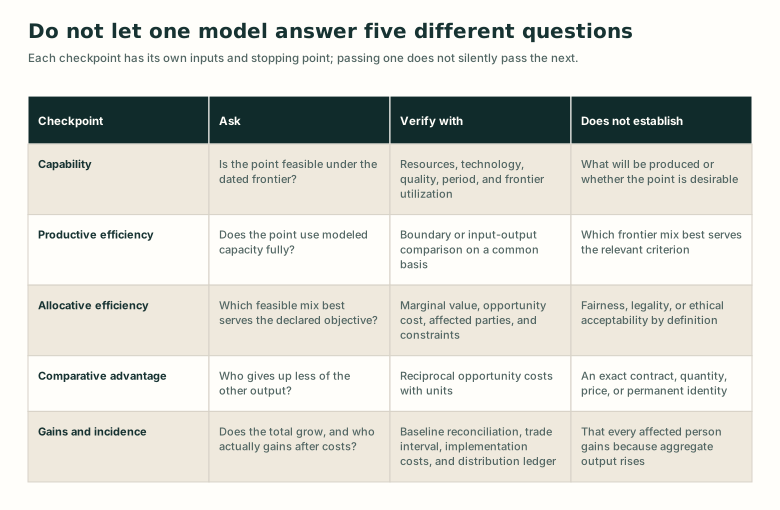
Use a controlled two output model to classify production points, distinguish productive and allocative efficiency, compare absolute and comparative advantage, and audit potential gains…
Inventory explicit and implied promises, apply both distinct tests, evaluate a service series and customer option, and keep setup effort from becoming a fictional obligation.
Turn an indenture abstract into dated principal, coupon, option, covenant, fee, and maturity fields without letting a schedule invent missing terms.
Sort a mixed year end close packet by the event or condition that creates each obligation, not by account label or expected cash date.
Classify defined contribution, single employer defined benefit, multiemployer, and other postretirement arrangements before opening the close.
Start with a stipulated legal obligation premise, measure complete settlement scenarios, connect initial asset cost and liability, then keep allocation and accretion distinct.
Reproduce taxable income and return current tax, then reconcile recognized current expense, payments, and the current balance.
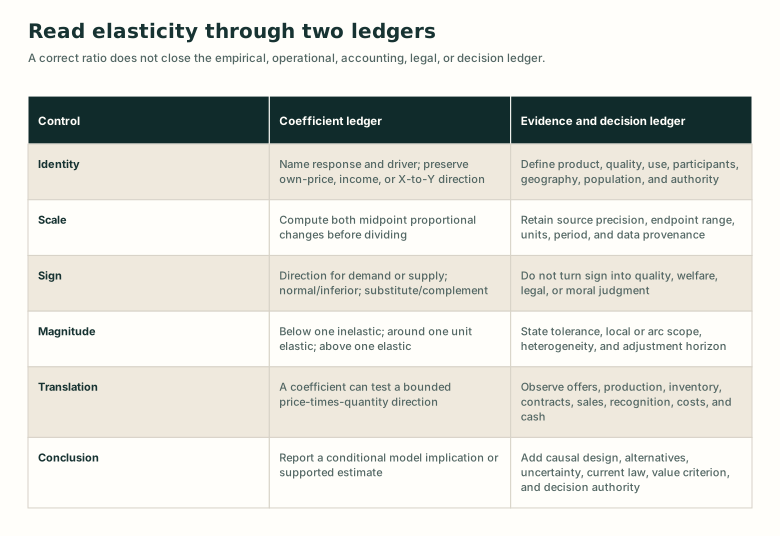
Scale endpoint changes with the midpoint method, separate sign from magnitude, and keep own price, income, cross price, operational, accounting, and decision claims in their proper layers.
Schedule future taxable and deductible amounts by reversal period, measure gross DTLs and DTAs, and preserve presentation boundaries.
Build the note cash flow timeline, measure an off market or zero coupon note, accrete discount with effective interest, and control accrued interest separately from credit loss.
Select a supported amount within a recognized loss range, preserve additional exposure, keep gains and recoveries separate, and build disclosure support without drafting legal…
Read early payment terms, estimate transaction price, align revenue and the receivable, and update the estimate before treating collectibility as a separate question.
Discount unpaid included payments, then bridge from liability to ROU asset through commencement payments, incentives, and qualifying initial direct costs.
Construct major operating receipt and payment classes from cash evidence rather than relabeled accrual lines.
Discount coupon and principal streams at a supplied matched market yield, then explain price, face, discount, and premium without cash flow folklore.
Distinguish share distributions from splits and carry the correct factor through class equity, share registers, awards, convertibles, and comparative EPS.
Make every adjustment traceable through its changes.
Turn physical locations and year end movement records into an owned inventory population, with separate goods in transit and consignment controls.
Compute rollover and iron curtain amounts, aggregate errors, and preserve the separate SAB 99 materiality judgment.
Review actuarial assumptions and rebuild a conditional, decision useful defined benefit note from controlled rollforwards.
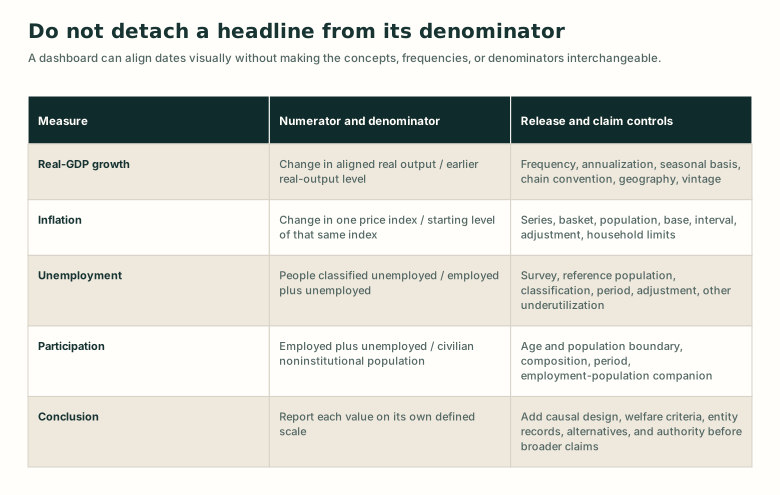
Recompute headline indicators, preserve their denominators and release vintages, and stop aggregate evidence from becoming unsupported welfare, accounting, causal, recession, or policy…
Translate preferred dividend, participation, arrearage, conversion, redemption, and liquidation terms into class and EPS controls.
Identify recognition, measurement, classification, and policy limits before using a balance sheet or income statement total as a value or performance claim.
Move from one signed effect ledger to articulated as reported, adjustment, and corrected statement columns.
Apply a supplied technical merits recognition conclusion, then select the recognized benefit from cumulative settlement probabilities.
Compute the PBO based funded status asset or liability while keeping expense, contributions, statutory funding, liquidity, and solvency separate.
Apply the three over time criteria, select a faithful output or input measure, and compute current revenue from cumulative progress without letting cost incurred decide control.
Bridge closing statements, acquired or divested cash, noncash consideration, fees, gains, and claim proceeds.
Join class shares and component dollars into an equity statement, retained earnings and AOCI controls, disclosures, and an evidence owned release.
Join acquisition, noncash additions, retirement costs, depreciation, depletion, impairment, disposals, and cash flows in a gross/contra/net rollforward and bounded release memo.
Tie the current and deferred schedules, entry, statements, rate reconciliation, taxes paid, carryforwards, uncertainty, and note under current disclosure rules.
Sort timing and unrecorded items, reach one supported balance, and prepare the required book entries.
Separate conditional and unconditional rights, advance performance obligations, and contract cost assets while tying performance, billings, cash, revenue, and ending balances across periods.
Bridge net income to the same operating subtotal and investigate differences against the direct reconstruction.
Bridge balance sheet locations to the combined population and eliminate internal transfers.
Derive the employer entry from independently reconciled obligation, asset, cost, OCI/AOCI, cash, and funded status schedules.
Tie policy language and disclosed amounts to the controlled close, isolate US GAAP and IAS 2 conclusions, and issue a reviewer ready release log.
Build the current annual/interim segment disclosure map, then locate and cross check official filing statements, notes, management discussion, exhibits, and inline XBRL facts.
Tie balances, costs, cash, noncash additions, maturities, terms, rates, residual risk, judgments, policies, and changes before release.
Make the ledger, rollforwards, and statements articulate.
Separate issue price, cash proceeds, face amount, discount or premium, and supplied qualifying issuance costs in the opening entry and carrying amount bridge.
Separate class shares, legal capital, APIC, consideration, bundled proceeds, and direct issue costs for cash and noncash issuances.
Trace a supported inventory write down through the statements, then analyze a future purchase contract without pretending it is inventory already owned.
Combine technical, quantitative, digital, and boundary controls.
Reperform and release the seven ledger employer benefit close under explicit authority, assumption, evidence, and review gates.
Evaluate independent assertions and issue a bounded release, conditional release, or hold recommendation.
Issue a release recommendation only after route, calculations, statements, disclosures, digital facts, and specialist handoffs agree.
Tie the term map, pricing, carrying schedule, entries, accrued interest, changed term route, current portion, maturities, and disclosure support to one controlled release packet.
Reconcile entries, classifications, rollforwards, disclosure support, commitments, later evidence, and unresolved judgments into one controlled release package.
Keep currency units, quotations, dates, and gain directions explicit.
Separate verified conclusions, estimates, alternatives, and unresolved facts.
Apply contract evidence to goods in transit, then investigate a perpetual book to count difference before selecting its cause or entry.
Reconcile plan assets and distinguish actual return, expected return, fair value, market related value, contributions, and benefits.
Reconcile service, interest, amendments, gains and losses, benefits, and other supported PBO movements without performing an actuarial valuation.
Connect gross receivable activity, ending expected loss, provision or benefit, writeoffs, recoveries, entries, and net presentation without double counting loss.
Distinguish held and used, held for sale, abandonment, ordinary sale, and involuntary conversion across classification, measurement, derecognition, recovery, cash flow, and presentation.
Use transaction form, counterparty relationship, commercial substance, and measurement evidence before assigning cost or recognizing a gain in a noncash acquisition.
Reconcile current economic changes, periodic cost amortization, current OCI, and ending AOCI without double counting.
Apply nature, policy, cumulative earnings, and two stage evidence to four specialized areas.
Separate later spending from the existing intangible balance, identify the applicable US GAAP model, and trace supported capitalization or expense without using the desired income result.
Analyze changed creditor terms, collateral dependent repayment, purchased credit deterioration, and current versus future guidance without forcing one loss model across different asset…
Distinguish cash, property, liquidating, and other owner distributions through authority, class priority, measurement, and three date controls.
Separate gain or loss measurement from continuing operations presentation, unusual item disclosure, and discontinued operation classification.
Build supported NRV, separate the non LIFO/non retail path from the retained LIFO/retail market path, and preserve an explicit IAS 2 boundary.
Separate sales type transfer profit, direct financing deferred profit, and operating retained asset accounting through residual and collectibility evidence.
Replace one investments column with an instrument, rights, influence, scope, and evidence map before choosing a schedule.
Hold the liability mechanics constant while making finance amortization and operating single cost ROU reduction visibly different.
Hold a bond's cash flows constant and isolate what supplied HTM, AFS, and trading classifications change.
Roll the retirement liability and allocate its related asset cost on two controlled schedules.
Use a supported cash equivalent price or present value so financing does not enter the asset's depreciable cost.
Distinguish payment timing that finances from timing that protects performance, then classify noncash consideration and payments to customers.
Update amortized cost first, then keep credit and noncredit measurement effects in their controlled reporting locations.
Route ordinary research costs, assets with a documented alternative future use, legal right costs, acquired IPR&D, and post acquisition work without merging their dates or scope.
Use a supplied changed terms conclusion to continue the old liability or derecognize it, then measure the bounded consequence without letting arithmetic decide scope.
Prevent fabricated cash pairs, hidden gross flows, and duplicate noncash disclosures.
Resolve or preserve the license versus service conclusion, then classify configuration, customization, conversion, training, support, and subscription costs by activity.
Define the entity, jurisdiction, period, enacted law date, statement scope, and evidence owners before accepting any tax amount.
Use legal, renewal, economic, obsolescence, demand, and expected use evidence to distinguish finite from indefinite life and build a controlled amortization schedule.
Route site costs by what they ready and whether the resulting asset has a limited useful life.
Separate acceptability from preferability and assemble the evidence and authorization for a voluntary change before computing its effects.
Build the two estimates that bound depreciable amount and service periods before selecting an allocation pattern.
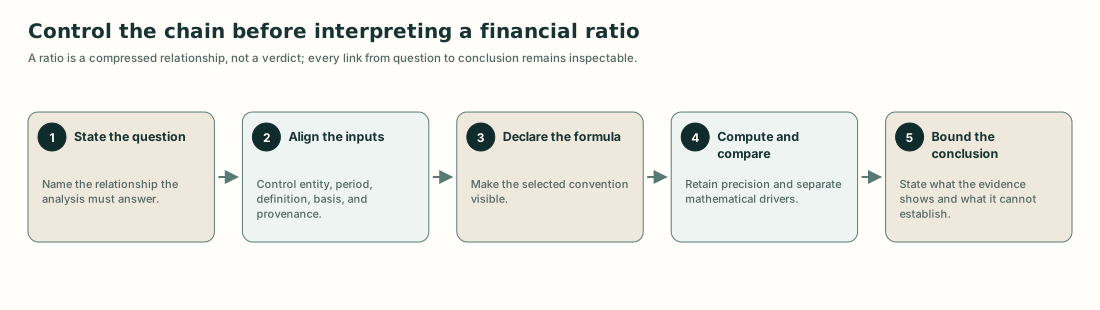
Use ratios and what if changes without overstating what they mean.
Audit a supplied impracticability conclusion and prevent indirect consequences from entering the retrospective bridge.
Apply the sale control gate and off market term adjustments before recording proceeds, gain, financing, or leaseback accounting.
Map the transferred interest, parties, legal isolation, transferee rights, effective control, servicing, retained interests, and continuing involvement before selecting sale or secured…
Route finite lived assets, indefinite lived assets, and goodwill to the correct units and impairment models, then reconcile classes and release only supported balances.
Reconcile three reporting views to one controlled close.
Project one reconciled ledger into notes and XBRL, then interpret cash flow measures without overclaiming.
Reconcile financing instruments and compensation awards across cash, noncash, tax, and rollforward rails.
Build signed counterbalancing and persistent error rollforwards before deriving the current correction entry.
Map a quantity, cost, cutoff, or measurement error through cost of goods sold, income, assets, equity, and the next period without calling counterbalancing harmless.
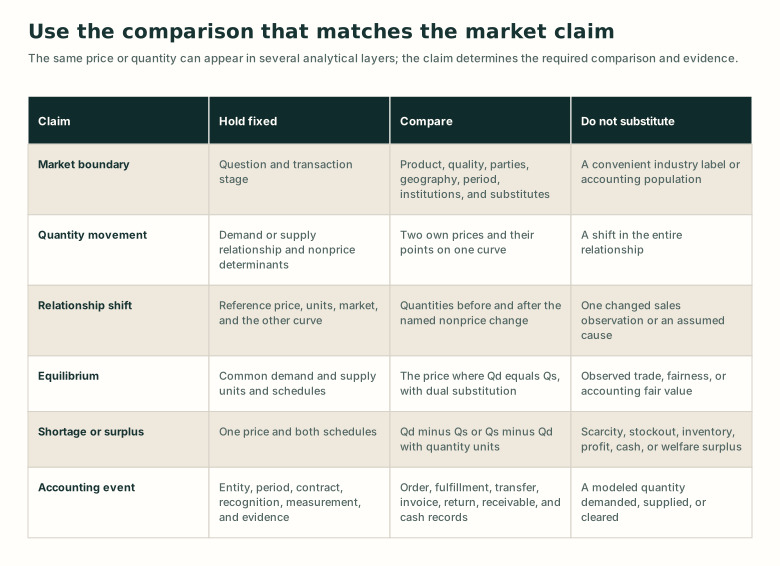
Define a market and transaction layer, distinguish demand and supply relationships from price specific quantities, solve and shift a linear equilibrium, and classify shortage and surplus…
Build documented unit cost layers, distinguish actual unit tracing from a cost flow assumption, and compute periodic and perpetual FIFO.
Preserve transaction classification while deriving the separate exchange rate reconciliation effect.
Build translated statements before computing CTA.
Build the issue map before any specialized calculation.
Separate condition date, qualitative probability, reasonable estimation, recognition, and disclosure without letting a lawsuit caption or percentage shortcut decide the result.
Establish externally marketed software scope and use supplied feasibility and availability dates to separate pre feasibility R&D, qualifying production, and post release costs.
Identify whose activities a report includes, who uses it, and what the information can and cannot tell them.
Distinguish whether an item is recorded, what its amount represents, and when it is removed.
Use relevance, faithful representation, and the supporting qualities to evaluate a reporting proposal and explain what needs to change.
Separate financial statement risks from other communications and analyze post balance sheet evidence through condition dates, specialized guidance, issuance windows, recognition, and…
Find the source that governs an accounting question, read a Codification citation, and check whether the guidance applies to the company's facts.
Compress the close without erasing uncertainty.