“Off balance sheet” describes location, not automatically legitimacy. A valid framework may require disclosure rather than recognition for a particular arrangement. In other cases, an entity may still bear an obligation that was improperly omitted, routed through a related entity, or temporarily removed at period end.
Start with the contract and control facts. Who received cash or assets? Who must repay, guarantee, absorb losses, or repurchase? Did legal release occur? Who controls the other entity? Does the arrangement reverse shortly after the reporting date? Then apply the period-specific reporting requirements.
In Adelphia, for example, the SEC alleged that moving co-borrowing debt to related entities' books did not remove Adelphia's joint-and-several obligation. That is why the contract comes before the ledger label.
Rebuild the exposure
An analyst can create a pro forma exposure schedule without claiming that the schedule is GAAP. Show recognized debt, contractually supported guarantees or repurchase duties, related-party positions, timing reversals, and the evidence for each adjustment. Recalculate leverage under clearly labeled views.
That process separates two questions: whether the financial statements complied with the applicable framework, and whether the recognized balance sheet alone captured the financing risk relevant to a lender or investor. The questions overlap, but one cannot substitute for the other.
Map the economic boundary before accepting the reporting boundary
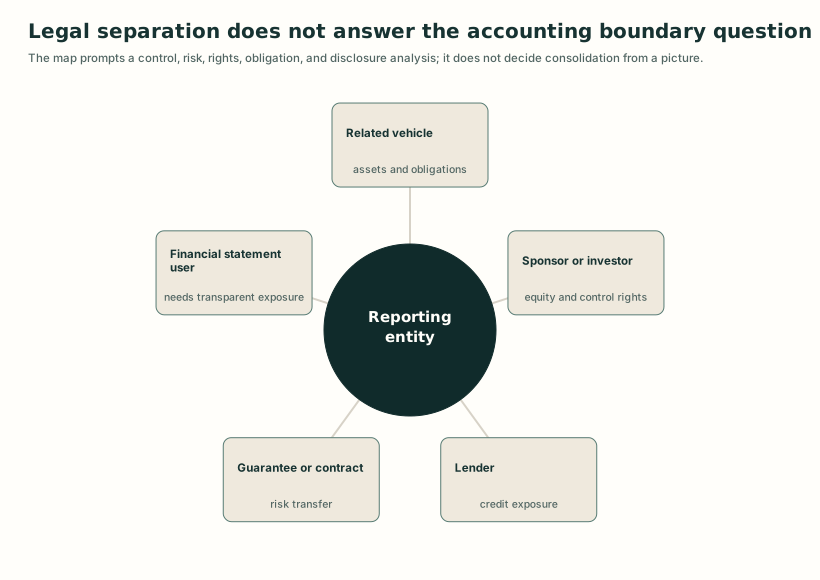
Detailed visual description
The surrounding relationships identify where assets, obligations, control rights, credit exposure, guarantees, and user information needs may cross a legal entity boundary.
Put the concept to work
Understand this concept
- Distinguish valid nonrecognition under a stated reporting framework from omitted obligations, misleading presentation, and colloquial uses of off-balance-sheet financing.
Analyze this concept
- Reconstruct an entity's economic exposure from contracts, guarantees, related entities, transfers, reversals, and disclosures before interpreting leverage.
Learning resources
Choose a lesson, try an application, or inspect the sources behind this concept.
Build on these ideas
- Liability — Understand
To understand this concept: Required. The analysis turns on whether the entity has a present obligation and how the governing framework treats it.
- Off-balance-sheet financing — Understand
To analyze this concept: Required. Exposure reconstruction must not assume every unrecognized arrangement is improperly accounted for.
Lessons
Worked examples and cases
Practice
Common mistaken ideas
Sources
Related concepts
Show 2 more related concepts
Use this idea next
- Off-balance-sheet financing — Analyze
Required level here: understand. Required. Exposure reconstruction must not assume every unrecognized arrangement is improperly accounted for.