Supply is the whole price–quantity relationship for a defined seller population, product, and period. Current inventory is not supply, and production capacity is not quantity supplied. Sellers may withhold inventory, offer future production, or face contractual and legal constraints that separate these measures.
Own price selects a point
When only the product's own price changes, the model moves to another quantity supplied on the same relationship. Input prices, technology, taxes or subsidies, expected future conditions, capacity, regulation, weather, and the number or composition of sellers can shift supply.
The direction requires a mechanism. A software improvement may lower marginal cost and increase supply, but implementation expense, capacity bottlenecks, or a quality requirement can modify that result. A tax can affect different margins depending on its base and administration.
Offers are not completed sales
The supply relationship represents quantities sellers would offer under stated conditions. Actual transactions also require buyers, matching, terms, and fulfillment. Accounting inventory, cost of sales, revenue, and cash flow obey their own recognition, measurement, and period rules.
A supply claim therefore states the market, period, unit, price definition, seller set, nonprice controls, and evidence rather than inferring a curve from one stock or sales figure.
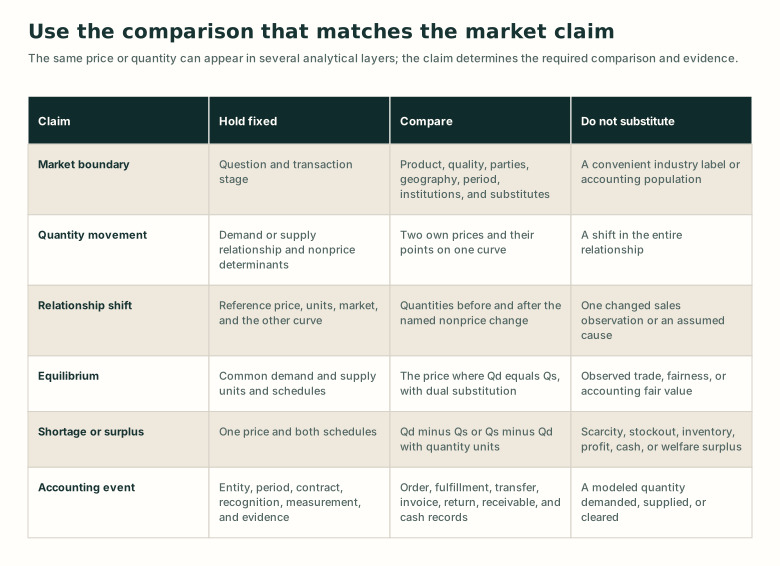
Market claims require different comparisons and records
Detailed visual description
The table requires a defined product, parties, geography, period, institutions, and transaction stage for market boundaries. Quantity movements compare own-price points on one fixed relationship, while shifts compare quantities at a common price after a named nonprice change. Equilibrium requires quantity demanded to equal quantity supplied and does not establish fairness or observed trade. Shortage and surplus retain quantity units and are not scarcity, inventory, profit, or welfare measures. Accounting claims return to entity, contract, event, recognition, measurement, and source records.
Put the concept to work
Analyze this concept
- Distinguish supply from quantity supplied by holding the supply relationship fixed for a price movement and identifying the nonprice determinant, period, producer set, and evidence for a shift.
Learning resources
Choose a lesson, try an application, or inspect the sources behind this concept.
Build on these ideas
- Marginal cost — Apply
To analyze this concept: Helpful. Opportunity and marginal costs help explain why quantities offered can change with price and production conditions.
- Market — Analyze
To analyze this concept: Required. Supply belongs to a defined product, seller population, geography, and period.
Lessons
Worked examples and cases
Practice
Common mistaken ideas
Sources
Related concepts
Show 5 more related concepts
Use this idea next
- Quantity supplied — Apply
Required level here: analyze. Required. A quantity supplied has meaning only as one point on a defined supply relationship.
- Supply curve — Analyze
Required level here: analyze. Required. The curve represents the full supply relationship and its held-constant determinants.