Inflation is a change in a defined price index. It is not a synonym for “prices
are high.” If an index rises from 120 to 123, the rate is (123 - 120) / 120 = 2.5%. A positive rate means the measured price level rose over that interval.
Different indexes cover different transactions and populations. Headline, core, producer, consumer, GDP, monthly, annual, adjusted, and unadjusted rates must not be silently exchanged.
Inflation affects nominal contracts and purchasing power unevenly. It does not by itself reveal causes, welfare, a firm's margin, or the correct policy. Those claims require timing, exposure, quantities, wages, debts, taxes, expectations, institutions, alternatives, and causal evidence.
State the measurement contract
An inflation result should name the index, population, item scope, starting and ending periods, adjustment status, and release vintage. The BLS CPI FAQ explains that CPI represents a defined consumer population and is not each household's personal cost measure. If the same index rises from 123 to 126, the change is about 2.44%, not three percentage points and not 126%. Compare like horizons. A monthly rate, a twelve-month rate, and an annual average can move differently without contradicting one another.
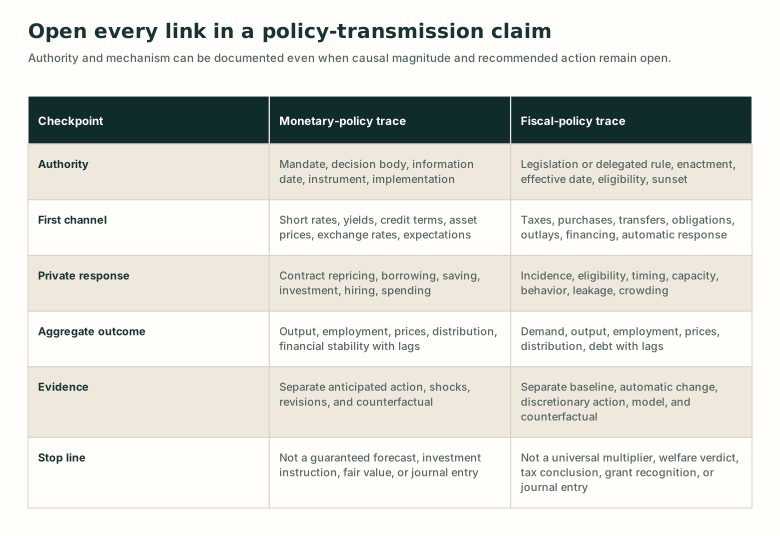
A policy arrow is a chain of testable checkpoints
Detailed visual description
The monetary column begins with mandate and instrument, then financial conditions and private contract responses. The fiscal column begins with legislation or rule, then taxes, purchases, transfers, budget timing, and private incidence. Both proceed to aggregate outcomes, require counterfactual evidence, and stop before forecasts, advice, welfare verdicts, or accounting entries.
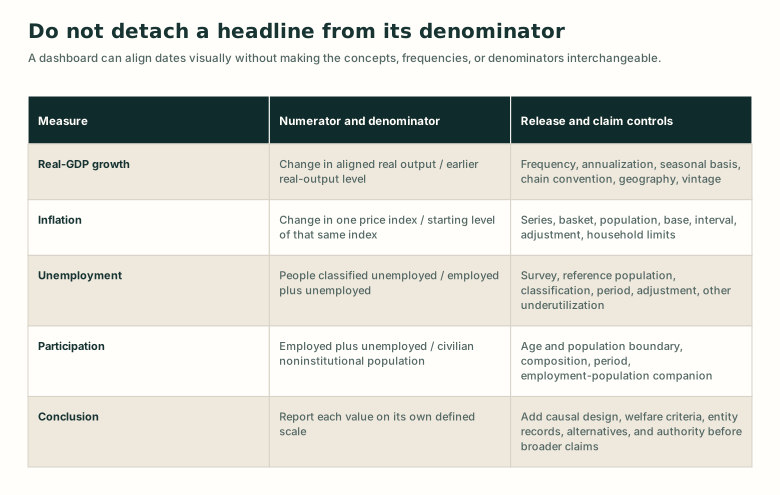
Four familiar indicators use four different comparison contracts
Detailed visual description
Real-GDP growth uses an earlier real-output level. Inflation uses the starting value of the same price index. Unemployment uses the labor force, while participation uses the civilian noninstitutional population. Each row adds frequency, adjustment, population, and release-vintage controls. The final row warns that causal, welfare, accounting, and decision conclusions require separate evidence.
Put the concept to work
Analyze this concept
- Compute inflation from aligned price-index levels and distinguish the rate, price level, purchasing-power implication, and individual experience.
Learning resources
Choose a lesson, try an application, or inspect the sources behind this concept.
Build on these ideas
- Consumer Price Index — Analyze
To analyze this concept: Helpful. CPI supplies one concrete, bounded price-index application.
Lessons
Worked examples and cases
Practice
Common mistaken ideas
Sources
Broader topics
Related concepts
Show 4 more related concepts
Use this idea next
- Deflation — Analyze
Required level here: analyze. Required. Deflation is the negative direction of the same rate concept.
- Disinflation — Analyze
Required level here: analyze. Required. Disinflation compares positive inflation rates across intervals.
- Monetary policy — Analyze
Required level here: analyze. Required. Price-stability claims require a correctly defined price-rate outcome.