Monetary policy begins with an institution and mandate, not a generic interest- rate arrow. In the United States, current Federal Reserve authority, FOMC decisions, and implementation arrangements define who may act and which instruments are in use. Historical tools and operating regimes are not automatically current ones.
A transmission chain might run from a policy instrument to short-term rates, broader yields, credit terms, asset prices, exchange rates, expectations, spending, production, employment, and prices. Every arrow is conditional. Financial contracts reprice at different times; borrowers and lenders differ; expectations can move before implementation; supply constraints can offset demand channels.
An observed rate move followed by lower inflation does not identify the policy's causal effect. Analysis needs the information available at the decision date, anticipated versus unexpected components, contemporaneous shocks, a counterfactual, revisions, and an identification strategy.
For accounting and finance, policy affects discount rates, borrowing terms, liquidity, expected cash flows, valuation inputs, impairments, and disclosures. It does not itself post a journal entry or determine fair value. Entity exposure, contract terms, measurement date, scenario weights, and applicable authority remain necessary.
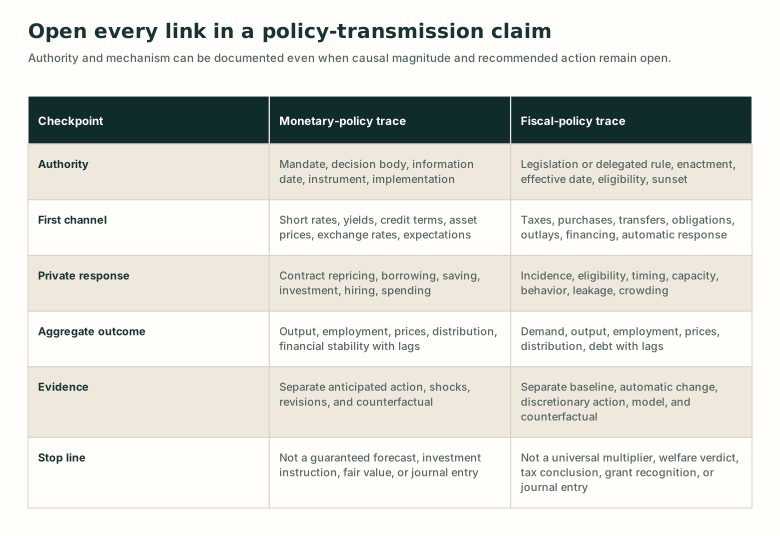
A policy arrow is a chain of testable checkpoints
Detailed visual description
The monetary column begins with mandate and instrument, then financial conditions and private contract responses. The fiscal column begins with legislation or rule, then taxes, purchases, transfers, budget timing, and private incidence. Both proceed to aggregate outcomes, require counterfactual evidence, and stop before forecasts, advice, welfare verdicts, or accounting entries.
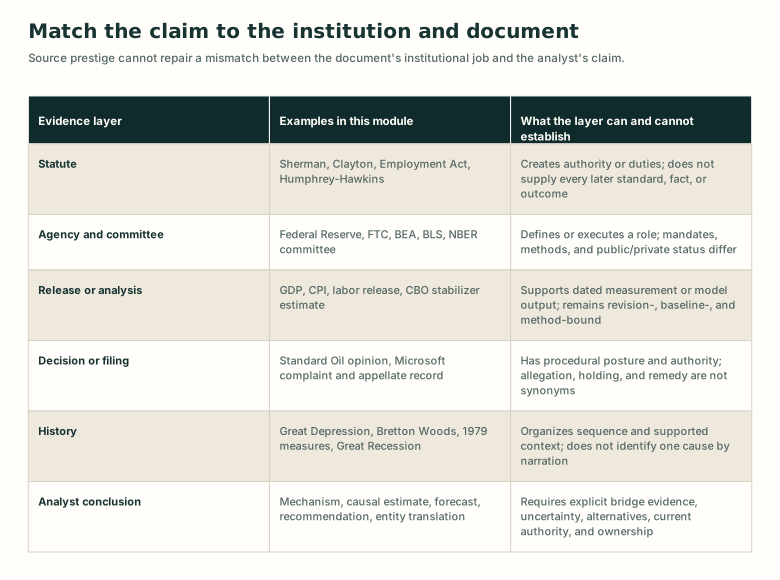
Institutions create different kinds of economic evidence
Detailed visual description
The table separates laws from institutions, statistical releases from analyses, legal complaints from holdings, and historical sequence from causal inference. The final row requires bridge evidence, uncertainty, alternatives, authority, and decision ownership for an analyst conclusion.
Put the concept to work
Analyze this concept
Learning resources
Choose a lesson, try an application, or inspect the sources behind this concept.
Build on these ideas
- Business cycle — Analyze
To analyze this concept: Helpful. Policy operates within changing aggregate conditions rather than outside chronology.
- Inflation — Analyze
To analyze this concept: Required. Price-stability claims require a correctly defined price-rate outcome.