Fiscal policy includes taxes, purchases, transfers, and related financing under legal and budget institutions. Government purchases enter expenditure GDP; transfers do not enter as purchases merely because public cash moves, although recipients may later spend them. Budget outlay, national-account treatment, and entity accounting are separate ledgers.
Automatic stabilizers arise from existing rules as income and eligibility change. Discretionary measures require a new legislative or administrative act within delegated authority. Their enactment, obligation, payment, economic effect, and later measurement can occur on different dates.
The sign of a deficit change does not reveal the discretionary stance. Economic conditions move receipts and spending automatically. Estimating a policy effect requires a baseline, behavioral response, timing, multipliers or other model, monetary and external conditions, financing, distribution, capacity, and a counterfactual.
Fiscal action can alter customer demand, contracts, taxes, grants, costs, and financing. It does not tell a company when to recognize revenue, a tax asset, a grant, a provision, or cash. Those conclusions need the enacted text, effective date, eligibility, measurement, events, and applicable accounting authority.
A policy arrow is a chain of testable checkpoints
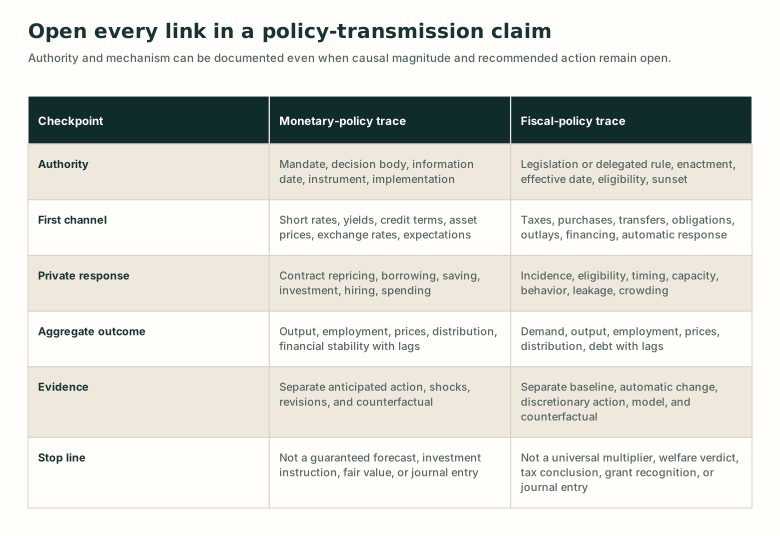
Detailed visual description
The monetary column begins with mandate and instrument, then financial conditions and private contract responses. The fiscal column begins with legislation or rule, then taxes, purchases, transfers, budget timing, and private incidence. Both proceed to aggregate outcomes, require counterfactual evidence, and stop before forecasts, advice, welfare verdicts, or accounting entries.
Institutions create different kinds of economic evidence
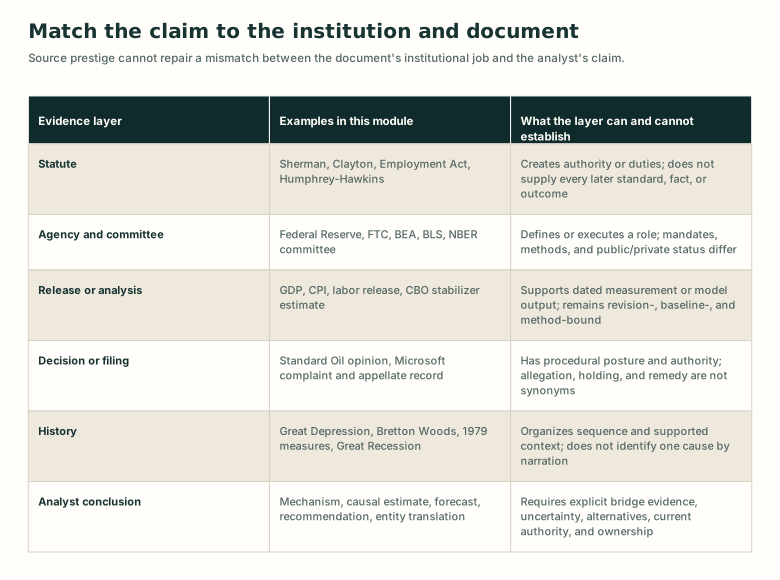
Detailed visual description
The table separates laws from institutions, statistical releases from analyses, legal complaints from holdings, and historical sequence from causal inference. The final row requires bridge evidence, uncertainty, alternatives, authority, and decision ownership for an analyst conclusion.
Put the concept to work
Analyze this concept
Learning resources
Choose a lesson, try an application, or inspect the sources behind this concept.
Build on these ideas
- Gross domestic product — Analyze
To analyze this concept: Required. Aggregate demand and government-purchase claims require the GDP boundary.
- Opportunity cost — Apply
To analyze this concept: Helpful. Public resource choices have alternatives and financing consequences.