GDP organizes production through a geographic and time boundary. The familiar
expenditure identity is C + I + G + (X - M): household consumption, gross
private domestic investment, government consumption and investment, and net
exports. Imports are subtracted because they can appear inside the other
spending components but were not produced domestically.
“Final” prevents ordinary double counting of intermediate inputs. Because the measure is “gross,” depreciation has not been deducted. “Domestic” follows the location of production rather than the owner's nationality. Those boundaries close different interpretation errors; none is decorative wording.
GDP is not one company's revenue, the government's budget, national wealth, or a complete welfare measure. It omits or imperfectly represents distribution, unpaid work, leisure, environmental depletion, household production, quality change, and many external effects. A rise can accompany losses borne unevenly.
Published GDP is an estimate with a vintage. State current or real dollars, level or rate, annual or quarterly period, annualization convention, seasonal adjustment, and release date. Later estimates may revise the same period.
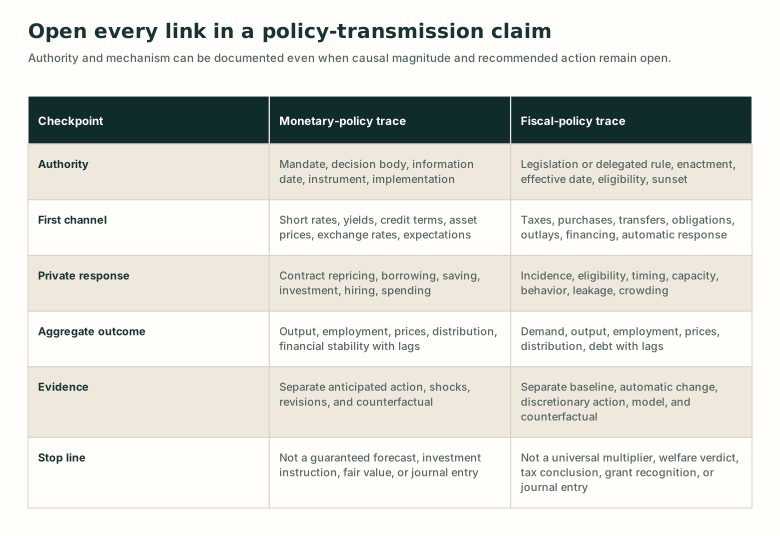
A policy arrow is a chain of testable checkpoints
Detailed visual description
The monetary column begins with mandate and instrument, then financial conditions and private contract responses. The fiscal column begins with legislation or rule, then taxes, purchases, transfers, budget timing, and private incidence. Both proceed to aggregate outcomes, require counterfactual evidence, and stop before forecasts, advice, welfare verdicts, or accounting entries.
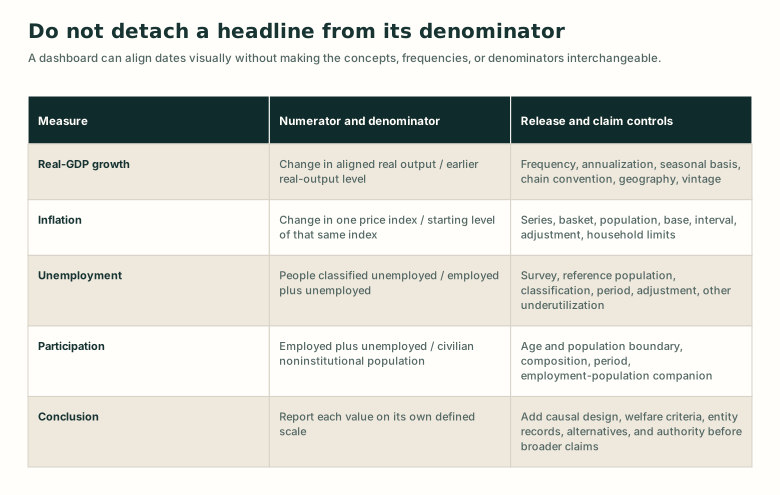
Four familiar indicators use four different comparison contracts
Detailed visual description
Real-GDP growth uses an earlier real-output level. Inflation uses the starting value of the same price index. Unemployment uses the labor force, while participation uses the civilian noninstitutional population. Each row adds frequency, adjustment, population, and release-vintage controls. The final row warns that causal, welfare, accounting, and decision conclusions require separate evidence.
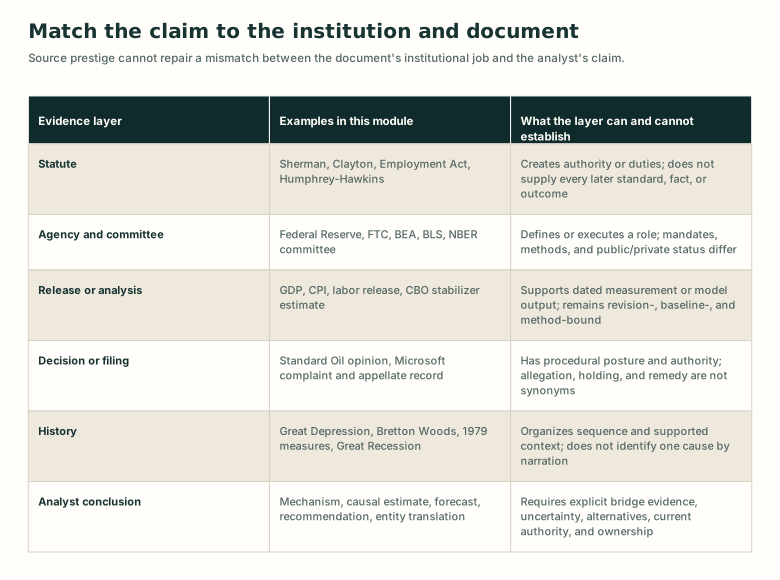
Institutions create different kinds of economic evidence
Detailed visual description
The table separates laws from institutions, statistical releases from analyses, legal complaints from holdings, and historical sequence from causal inference. The final row requires bridge evidence, uncertainty, alternatives, authority, and decision ownership for an analyst conclusion.
Put the concept to work
Analyze this concept
- Reconcile consumption, investment, government purchases, exports, and imports to expenditure GDP, then distinguish domestic production from company revenue, wealth, welfare, and a final release.
Learning resources
Choose a lesson, try an application, or inspect the sources behind this concept.
Build on these ideas
- Economic analysis — Understand
To analyze this concept: Required. GDP is an aggregate measure whose scope and evidence limits must be stated.
Lessons
Worked examples and cases
Practice
Common mistaken ideas
Sources
Broader topics
More specific topics
Related concepts
Show 1 more related concepts
Use this idea next
- Fiscal policy — Analyze
Required level here: analyze. Required. Aggregate demand and government-purchase claims require the GDP boundary.
- Nominal GDP — Analyze
Required level here: analyze. Required. Nominal GDP is one valuation of the broader GDP measure.
- Real GDP — Analyze
Required level here: analyze. Required. Real GDP retains GDP's production boundary.