Tangible-asset accounting contains several linked decisions. A purchase can include asset and period costs, and one price can cover several assets. A self-build can cross cost and interest boundaries. Extraction can create inventory before expense. A retirement obligation can begin with equal asset and liability amounts that later follow different clocks.
Sequence logic
The module begins with asset identity, control, intended-use readiness, and source-role evidence. That foundation supports bundled and noncash acquisition, then the more demanding self-construction and interest-capitalization sequence. Subsequent expenditures and depreciation methods follow because they consume or renew the service potential established at acquisition.
Natural resources add an activity-based allocation and extraction-versus-sale inventory bridge. Asset retirement obligations then add legal scope, expected cash flows, present value, an associated asset cost, and a separate liability rollforward. Exit routing and the final PP&E close require learners to preserve all those identities, dates, and movements across held-and-used, held-for-sale, sale, abandonment, and involuntary-conversion paths.
Identify and measure the asset
├─ Purchased or bundled → readiness-cost and allocation controls
├─ Noncash or contributed → transaction-scope and measurement gates
└─ Self-constructed → cost ledger + capitalization window + interest cap
       ↓
Allocate or renew service potential
├─ Depreciation methods, partial periods, pools, and revisions
└─ Resource extraction → depletion → inventory or expense
       ↓
Recognize and roll retirement obligations
       ↓
Route exit status → reconcile gross, accumulated, net, cash, and disclosure
Accounting and finance lenses
Accounting learners build schedules, entries, subledger controls, rollforwards, and disclosure support. Finance learners examine capital intensity, expense timing, asset turnover, maintenance, replacement, utilization, noncash additions, and cash investment. Both groups must distinguish a mechanical ratio effect from evidence about capacity, economic value, cash generation, or management intent.
Cumulative work
The Linden Peak case asks for acquisition, bundle, construction-interest, subsequent-cost, depreciation, resource, retirement, exit, and PP&E schedules. It also asks for evidence requests, a cash and noncash bridge, disclosure checks, and a bounded release memo. The canonical examples provide Python traces and formula-visible Excel workbooks. Learners must still defend the supplied and withheld judgments.
Lessons 10 through 14 provide a focused consolidation path for the property accounts, deferred-payment cost, depreciation inputs and patterns, and accretion. They connect foundational concept pages to the module's checked examples and practice without replacing the deeper close sequence.
Boundaries and handoffs
The module applies bounded US GAAP facts and current authority records. The
existing M:long-lived-asset-estimates-and-exits supplies deeper prospective
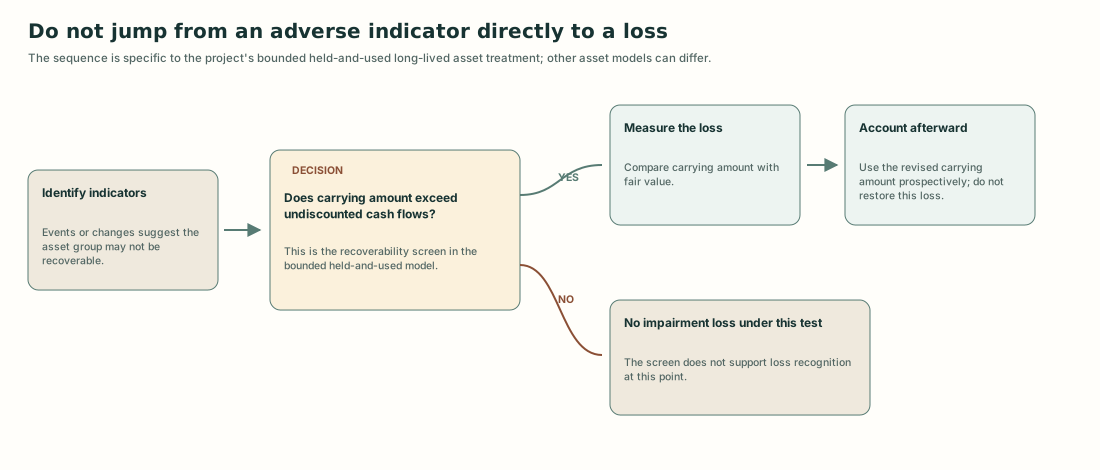
estimate revision, ordinary noncustomer sale, and held-and-used impairment
practice. Discontinued operations receive a separate statement-presentation
test.
Separately researched extensions cover tax depreciation and MACRS, extractive industry models, regulated operations, real estate, leases, and business combinations. IFRS revaluation, component, cash-generating-unit, development-cost, and reversal models also sit outside this module. Completion does not establish professional-exam readiness, publication, or learner mastery.
Module outcomes
Build and reconcile supported initial-cost schedules for cash, bundled, noncash, contributed, and self-constructed tangible-asset acquisitions without inventing scope or measurement evidence.
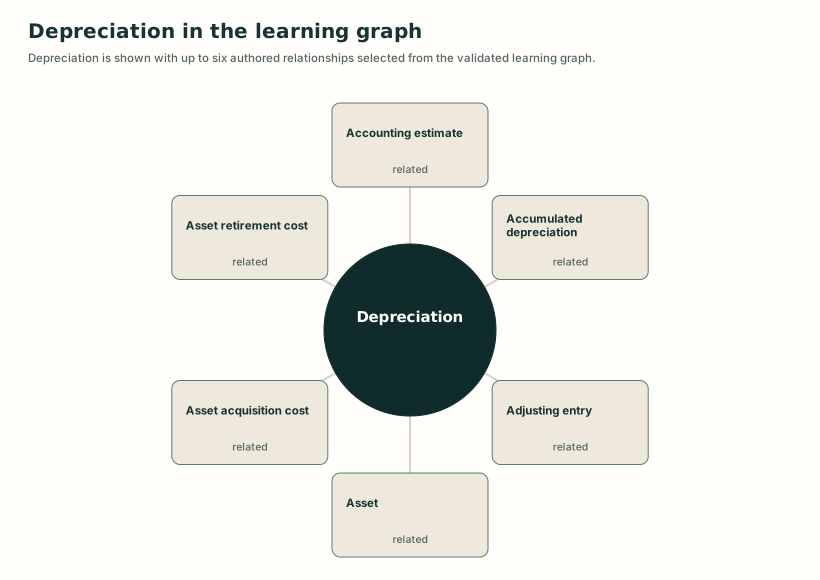
Select and apply depreciation methods and partial-period conventions while preserving residual, carrying-amount, pool, estimate-change, method-change, and error boundaries.
Measure a stipulated retirement obligation, connect its initial asset cost, and reconcile depletion, inventory, expense, accretion, revision, and settlement as distinct movements.
Route held-and-used, held-for-sale, abandonment, sale, and involuntary-conversion facts through dated classification, measurement, derecognition, recovery, cash-flow, and presentation questions.
Release a gross/contra/net PP&E close that separates verified arithmetic, approved judgments, open evidence, noncash additions, disclosures, and bounded finance interpretation.
Learning sequence
Follow the dependency order, or open the lesson you need.
- Lesson 1Control acquisition cost before allocating a bundle
- Lesson 2Route exchanges, shares issued, and contributed assets
- Lesson 3Build and finance a qualifying asset
- Lesson 4Decide what subsequent spending changes
- Lesson 5Allocate cost across methods, periods, and pools
- Lesson 6Extract, allocate, and reconcile natural-resource cost
- Lesson 7Measure and roll an asset retirement obligation
- Lesson 8Route assets leaving use without collapsing the events
- Lesson 9Reconcile and release the tangible-asset close
- Lesson 10Sort land, improvements, and building costs
- Lesson 11Separate asset cost from deferred-payment interest
- Lesson 12Support useful life and salvage value
- Lesson 13Compare four depreciation patterns
- Lesson 14Separate accretion from asset-cost allocation
Capstone and summative assessment
Use the cumulative case first, then test each transfer without exposing answer keys.
Summative sequence
7 scored decisions- Allocate and reconcile a bundled asset price
- Apply expenditure weights and the actual-interest ceiling
- Choose a depreciation pattern and partial period
- Reconcile method schedules and a pooled extension
- Reconcile depletion between inventory and expense
- Measure and roll a stipulated ARO
- Reconcile gross PP&E, accumulated amounts, and cash additions