ACC 300 · Meeting 20 · Tue 11/10
Estimate inventory and analyze the operating cycle
Lecture
Watch this deck
Work in progress
These materials change during the semester. Report an error or an unclear passage.








The PDF is searchable and suitable for printing.
Contents
Jump to a slide
Opening Slides 1–4


Gross profit method Slides 5–16
-
 5 Gross profit method
-
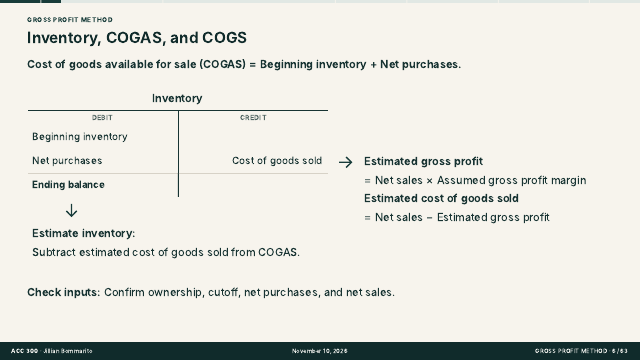
 6 Inventory, COGAS, and COGS
-
 7 Gross profit margin
-
 8 Gross profit method: February records
-
 9 Gross profit method: February estimate
-
 10 July inventory estimate: Practice
-
 11 iClicker 1: Submit the July inventory estimate
-
 12 iClicker 1: Submit the July inventory estimate
-
 13 July inventory estimate: Solution
-
 14 Gross profit method: Markup on cost
-
 15 Evaluating a gross profit estimate
-
 16 Inventory estimates at different gross profit margins
Retail Slides 17–33
-
 17 The retail inventory method
-
 18 Cost and retail records
-
 19 Retail method: April records
-
 20 The cost-to-retail ratio
-
 21 Retail method: April estimate
-
 22 August retail estimate: Practice
-
 23 iClicker 2: Submit the retail inventory estimate
-
 24 iClicker 2: Submit the retail inventory estimate
-
 25 August retail estimate: Solution
-
 26 Cost flows within a retail pool
-
 27 Average-cost and FIFO retail
-
 28 LIFO retail: Retain the opening layer
-
 29 Markdowns under average-cost and conventional retail
-
 30 June markdown estimates: Practice
-
 31 June markdown estimates: Solution
-
 32 Retail inventory and lower of cost or market
-
 33 Checks for a retail inventory estimate
Flows Slides 34–36


Collection Slides 37–40


Payment Slides 41–49
-
 41 Inventory and supplier payment
-
 42 Turning balances into days
-
 43 Inventory turnover and inventory days
-
 44 Purchase adjustments for losses and production costs
-
 45 Turning balances into days
-
 46 Payable turnover and payment days
-
 47 iClicker 3: Calculate payment days
-
 48 iClicker 3: Calculate payment days
-
 49 COGS as a proxy for credit purchases
Synthesis Slides 50–58
-
 50 The cash conversion cycle
-
 51 Operating cycle and cash conversion cycle
-
 52 Sound Decision finances a 56-day cash gap
-
 53 A negative cash conversion cycle
-
 54 2027 cash conversion cycle: Practice
-
 55 iClicker 4: Calculate the 2027 cash conversion cycle
-
 56 iClicker 4: Calculate the 2027 cash conversion cycle
-
 57 Sound Decision, 2027: Worked solution
-
 58 The change in the cash conversion cycle
Evaluation Slides 59–62


Next meeting Slides 63–63

First visit on this browser