ACC 300 · Meeting 14 · Thu 10/15
Measure notes and effective interest
Lecture
Watch this deck
Work in progress
These materials change during the semester. Report an error or an unclear passage.
ACC 300 · Meeting 14 · Thu 10/15
Lecture and AI segment
-
 1 · Thu 10/15 · Lecture
Meeting 14: Measure notes and effective interest
58 slides and the narrated lecture, 35 minutes.
-
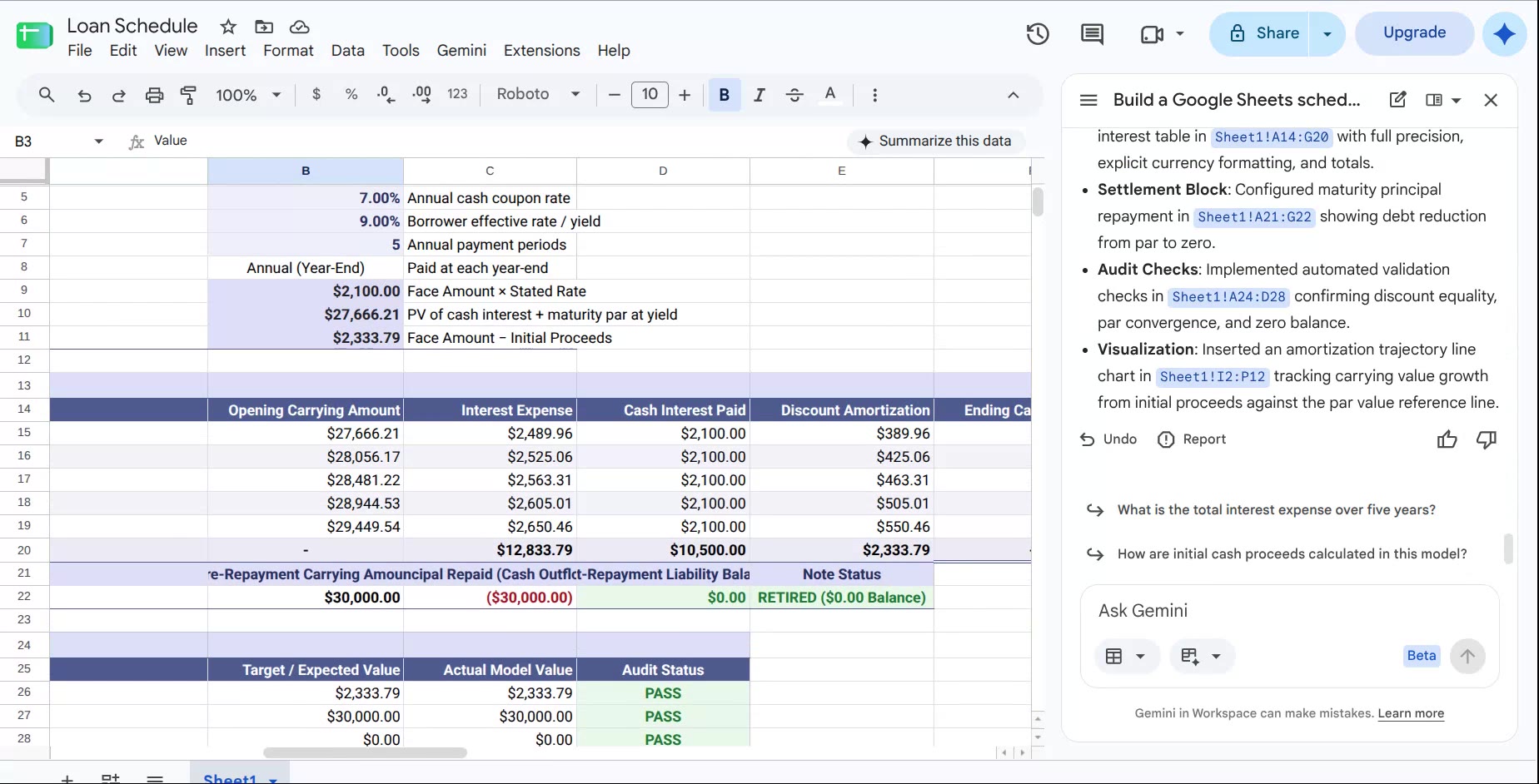 2 · AI segment · Demonstration
Build a note schedule with AI
Watch Gemini in Google Sheets build the schedule, then download both workbooks.


The PDF is searchable and suitable for printing.
Contents
Jump to a slide
Borrowing and dates Slides 1–10
-
 1 Time value of money and borrowing
-
 2 Why payment dates matter
-
 3 A borrower's cash-flow timeline
-
 4 Read the amounts, rate, and periods
-
 5 Calculate one period of interest
-
 6 Calculate a future amount
-
 7 Compare amounts at different dates
-
 8 Amounts at different dates: answer
-
 9 Calculate a present amount
-
 10 Discount a payment due in 18 months
Payment timing Slides 11–22
-
 11 Payment timing and interest rates
-
 12 Match the rate to the period
-
 13 The effective annual rate
-
 14 Equal payments at different dates
-
 15 Calculate the value of equal payments
-
 16 Work through the annuity calculation
-
 17 Select the model from the dates
-
 18 Model selection and present value: solution
-
 19 How does earlier repayment affect the advance?
-
 20 Earlier repayment: answer
-
 21 Calculate the future value of deposits
-
 22 Savings deposits earn different amounts
Note measurement Slides 23–33
-
 23 Measure the note payable
-
 24 Cash received and debt recorded
-
 25 Stated interest and effective interest
-
 26 Interest payments and principal at maturity
-
 27 Value the two promised cash flows
-
 28 Calculate the loan proceeds
-
 29 Calculate both parts of the proceeds
-
 30 Face amount and initial liability
-
 31 Initial liability: answer
-
 32 Face amount, discount, and premium
-
 33 The same note for both parties
Interest and repayment Slides 34–43
-
 34 Interest expense and the liability
-
 35 Why the carrying amount increases
-
 36 A note with no stated interest
-
 37 Interest expense before the payment date
-
 38 Separate interest from principal repayment
-
 39 Divide the first loan payment
-
 40 First payment: solution
-
 41 How much principal is repaid?
-
 42 Principal repayment: answer
-
 43 Solve for the equal loan payment
Google Sheets and Gemini Slides 44–49


Borrower practice Slides 50–57


Coming up Slides 58–58

First visit on this browser