ACC 300 · Meeting 13 · Tue 10/13
Derive and interpret operating cash flows
Lecture
Watch this deck
Work in progress
These materials change during the semester. Report an error or an unclear passage.
ACC 300 · Meeting 13 · Tue 10/13
Lecture and AI segment
-
 1 · Tue 10/13 · Lecture
Meeting 13: Derive and interpret operating cash flows
57 slides and the narrated lecture, 33 minutes.
-
 2 · AI segment · Slides
Build a Visualization with AI
Ask about an example, choose a display, and request a local HTML file.
-
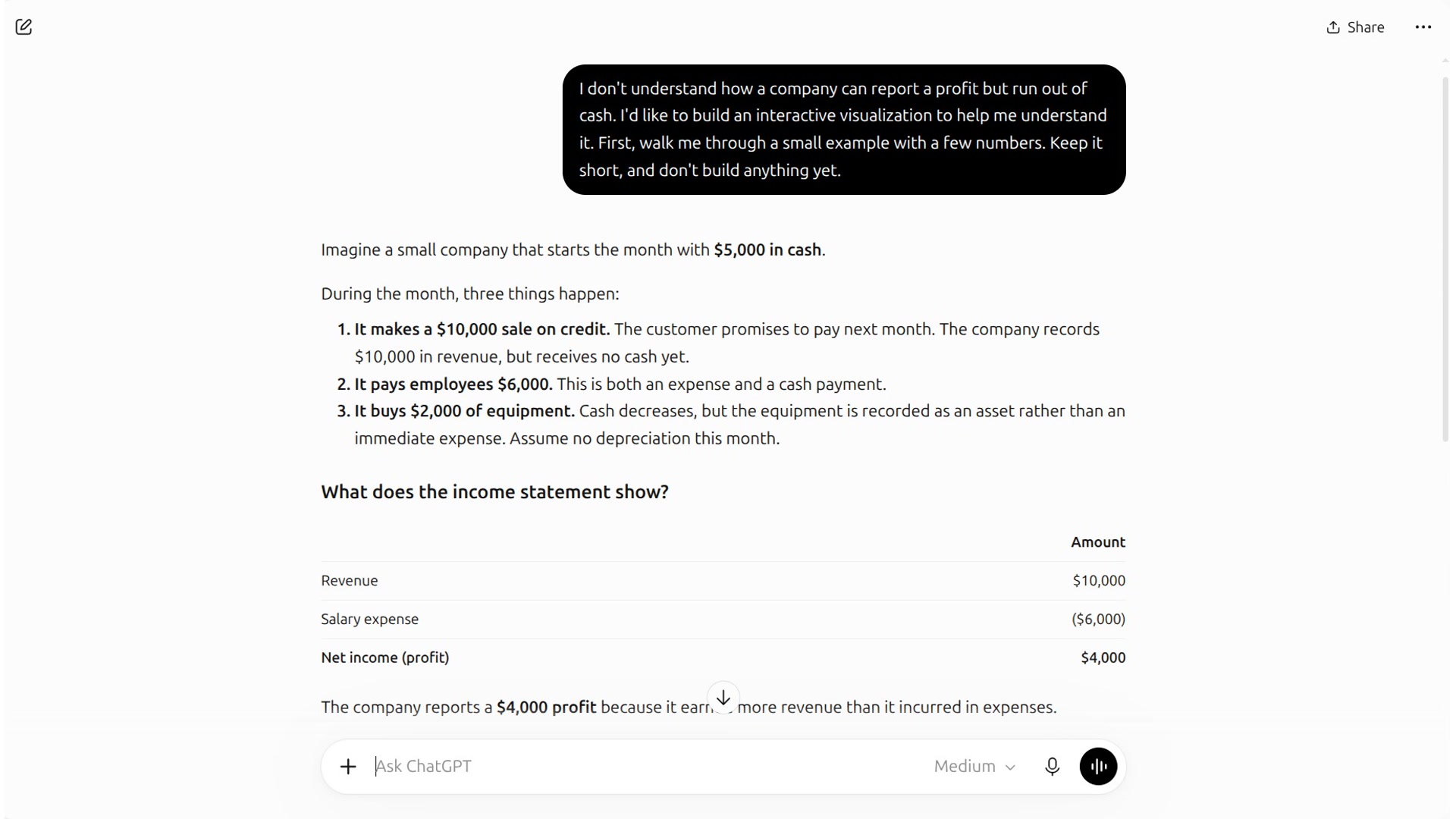 3 · AI segment · Demonstration
Watch the recorded steps
Follow each step of the conversation, then download the HTML file it produced.


The PDF is searchable and suitable for printing.
Contents
Jump to a slide
Today's cash-flow topics Slides 1–2


Direct operating presentation Slides 3–19
-
 3 Prepare the direct operating section
-
 4 Operating receipts and payments
-
 5 Sources of customer cash receipts
-
 6 Cash received from customers
-
 7 Cash received from customers: answer
-
 8 Cash collected on receivables
-
 9 From inventory purchases to supplier payments
-
 10 Calculate cash paid to suppliers
-
 11 Cash paid to merchandise suppliers
-
 12 Expense timing and cash payments
-
 13 Zoomies' total customer receipts
-
 14 Cash payments for accrued expenses
-
 15 Zoomies' cash payment for supplies
-
 16 Cash paid for supplies
-
 17 Cash paid for supplies: answer
-
 18 Zoomies' direct operating section
-
 19 The direct method also requires a reconciliation
Sales and collection timing Slides 20–32
-
 20 Sales and collection timing
-
 21 Revenue timing and cash receipts
-
 22 Cash timing and payment deadlines
-
 23 One Zoomies order across year-end
-
 24 Early, on-time, and late collections
-
 25 Collection timing across two years
-
 26 Profit and receipts across year-end
-
 27 Profit and receipts across year-end: answer
-
 28 Late collections delay cash availability
-
 29 Why receivables increase
-
 30 More sales can increase receivables
-
 31 Longer payment terms and late collections
-
 32 Sales growth versus collection delays
Earnings and operating cash Slides 33–40
-
 33 Compare earnings with operating cash
-
 34 What the cash-income difference means
-
 35 Why Zoomies' operating cash exceeds net income
-
 36 Operating-cash-to-income ratio
-
 37 Is operating cash keeping pace with profit?
-
 38 A falling cash-to-income ratio
-
 39 A falling cash-to-income ratio: answer
-
 40 Limits of the operating-cash-to-income ratio
Free cash flow Slides 41–52
-
 41 Calculate and interpret free cash flow
-
 42 Defining free cash flow
-
 43 Interpreting free cash flow
-
 44 Zoomies' free cash flow
-
 45 Cash purchases in free cash flow
-
 46 Cash purchases in free cash flow: answer
-
 47 Compare two years of free cash flow
-
 48 Equipment spending and free cash flow
-
 49 Delaying equipment purchases
-
 50 Funding needs and the cash balance
-
 51 Free cash flow and financing payments
-
 52 Zoomies' funding and cash increase
Filing application Slides 53–56


Coming up Slides 57–57

First visit on this browser